
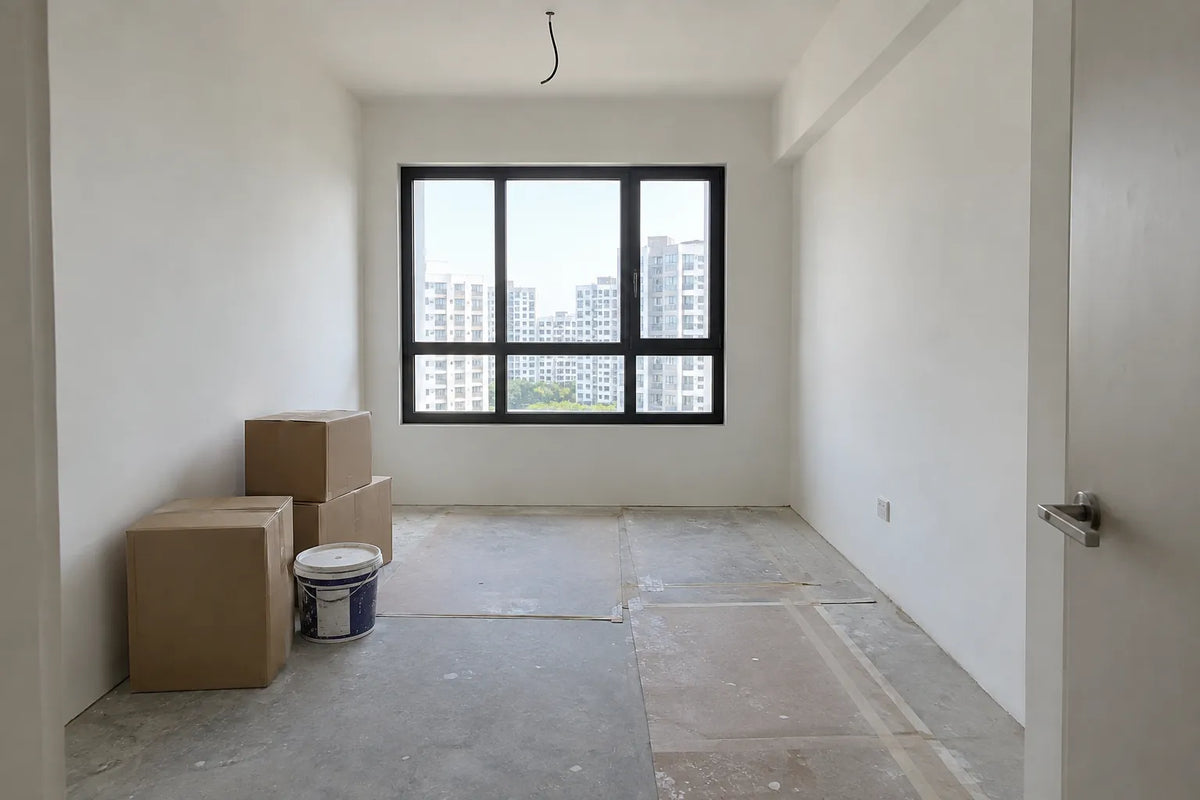

You've just collected the keys to your new BTO flat. Everything looks fresh, but the bathroom tiles aren't quite your style. Before you call a contractor, there's something crucial you need to know: HDB doesn't allow you to remove bathroom tiles for the first three years.
This guide explains why this restriction exists, what happens if you ignore it, and most importantly—how to transform your bathroom legally without waiting.
Understanding the 3-Year Bathroom Tile Restriction
When you receive your BTO flat, the bathrooms come with a waterproofing system installed during construction. This system needs time to stabilize—exactly three years from your flat's Temporary Occupation Permit (TOP) date.
According to HDB's official guidelines at MyNiceHome.gov.sg: "You will have to wait 3 years before removing any wall or floor finishes in the toilets of your BTO flat. Otherwise, the waterproofing works in these wet areas might become damaged."
What this means for you:
-
No hacking bathroom floor tiles
-
No removing bathroom wall tiles
-
Restriction lasts exactly 3 years from TOP date
-
Only applies to bathrooms and toilets
Good news:
-
Kitchen tiles can be changed anytime
-
Living room and bedroom floors are not restricted
-
You can still upgrade fixtures, paint, and use overlay methods
Official Source: HDB Renovation Guidelines
Why HDB Implemented This Rule
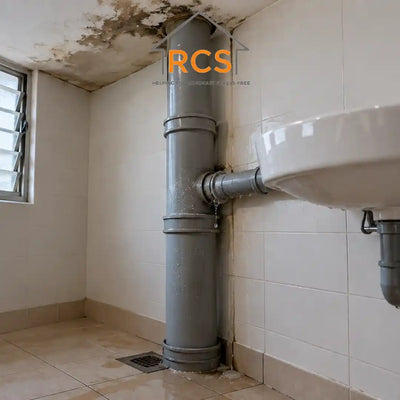
The restriction isn't arbitrary—it protects both you and your downstairs neighbors from expensive water damage.
How Waterproofing Works
Your BTO bathroom has multiple protective layers beneath those tiles:
-
Concrete floor slab
-
Chemical primer that bonds everything together
-
Liquid waterproofing membrane (the critical layer)
-
Protective cement layer
-
Tile adhesive and tiles
The waterproofing membrane is like a rubber sheet that prevents water from seeping through your floor into the ceiling below. But unlike a physical rubber sheet, this membrane is painted on as liquid and needs time to chemically cure and bond with the concrete.
What Goes Wrong When You Hack Early
Hacking tiles before three years creates several problems:
The vibration problem: Hacking tools vibrate powerfully. These vibrations can crack the waterproofing membrane or cause it to separate from the concrete—even if the membrane itself isn't directly hit.
The penetration risk: Sometimes the hacking breaks through the protective cement layer and punctures the waterproofing membrane directly. Even tiny holes allow water to find its way down.
The seam issue: Waterproofing isn't applied as one continuous piece. It's painted in sections that overlap. These overlapping seams need years to properly fuse together. Early hacking can reopen these weak points.
The Real Cost of Water Leakage
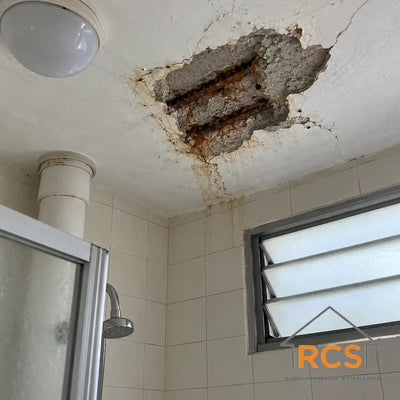
If waterproofing fails, you're legally responsible for:
-
Repairing your downstairs neighbor's ceiling ($3,000-$8,000)
-
Replacing damaged furniture or belongings ($2,000-$15,000)
-
Fixing your own waterproofing system ($8,000-$20,000)
-
Potential mold remediation ($1,000-$5,000)
Total potential liability: $14,000-$48,000
This explains why HDB enforces the rule—not to inconvenience you, but to prevent expensive disasters.
What Actually Happens If You Hack Tiles Anyway
Some homeowners consider ignoring the restriction. Here's what enforcement looks like in practice:
The Permit System
Legitimate renovation contractors submit permit applications through HDB's APEX system. When they indicate bathroom tile hacking for a BTO flat under 3 years old, HDB's system automatically rejects the application with an explanation about the restriction.
Most licensed contractors refuse to hack tiles without permits because they risk losing their HDB registration.
The Liability Problem
If you find someone willing to hack without permits and water leakage occurs:
-
HDB's waterproofing warranty becomes void
-
Your home insurance may deny claims (unauthorized modification)
-
You bear full financial responsibility for all damage
-
Neighbors can pursue legal action against you
There's no criminal fine, but the financial exposure far exceeds any fines HDB might impose.
How to Transform Your Bathroom Without Hacking
The restriction sounds limiting, but modern renovation techniques offer excellent alternatives that many homeowners actually prefer over traditional tile hacking.
Option 1: Vinyl Flooring Overlay
This is the most popular solution for BTO bathrooms. Instead of removing existing tiles, you install new waterproof vinyl flooring directly on top.
Why vinyl works so well:
Modern vinyl—especially SPC (Stone Plastic Composite) types—is completely waterproof and designed specifically for wet areas. It comes in styles that convincingly mimic marble, wood, concrete, and other premium materials.
What makes a successful overlay:
Your existing tiles need to be reasonably flat and firmly attached. A quick test: place a marble on your bathroom floor. If it rolls in one consistent direction, you might need a thin leveling layer first. If it just wobbles randomly, your floor is fine.
Tap each tile with something hard. A solid, uniform sound means good bonding. Hollow sounds mean those specific tiles need regluing before overlay.
Measure your bathroom door's ground clearance. Vinyl adds about 5-8mm height. As long as your door has at least 10mm clearance, you're fine. Less than that, and the door needs slight trimming (contractors do this routinely).
The installation process:
Day 1: Clean existing tiles thoroughly, repair any loose ones, and prepare the surface. This takes a few hours.
Day 2: Install the vinyl flooring. For most BTO bathrooms, this takes 4-6 hours. Seal all edges with waterproof silicone.
Day 3: Final touches and cleanup.
Your bathroom is usable the evening of Day 2 in most cases.
What it costs:
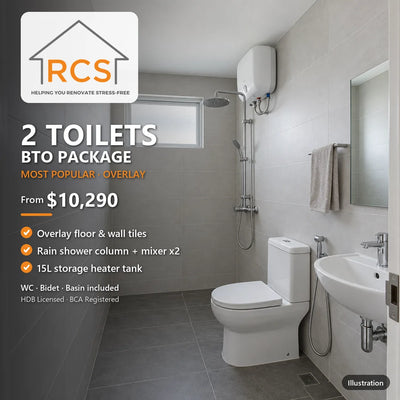
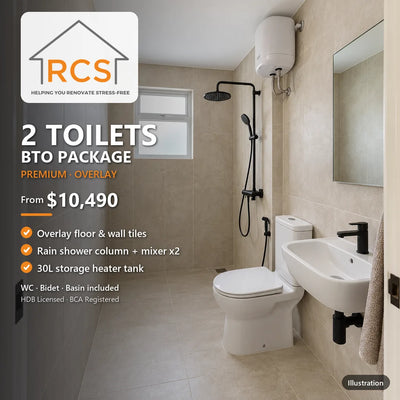
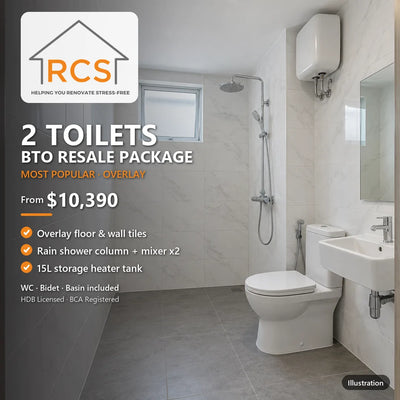
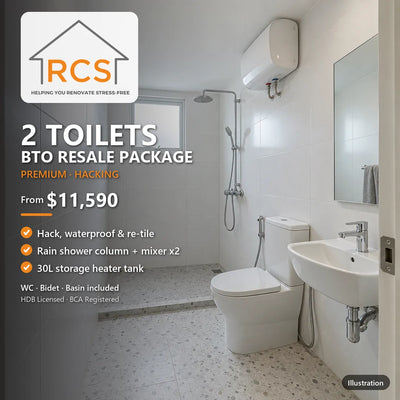
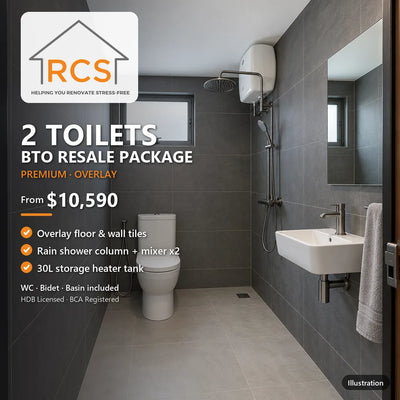
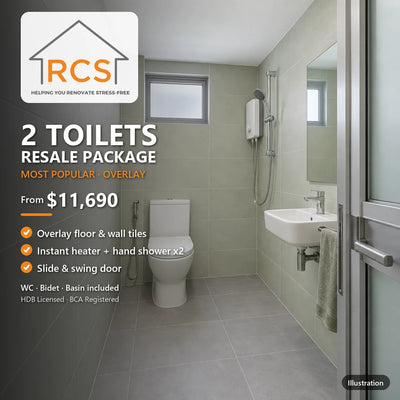
According to verified pricing from RenovationContractorSingapore.com, professional vinyl overlay as part of a complete bathroom package costs $9,990 for a standard 4-room BTO with two bathrooms.
This package includes:
-
Vinyl flooring installation
-
New toilet bowls, basins, and faucets
-
Rain shower systems
-
Storage water heater
-
All accessories and fittings
-
Professional installation and cleanup
-
12-month warranty
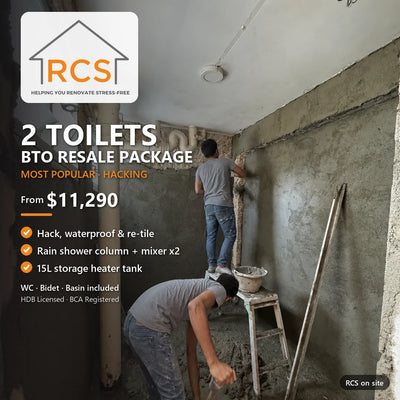
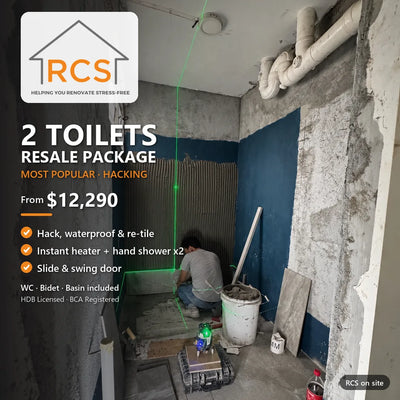
Compare this to hacking: the same work with tile hacking instead of overlay costs $11,990-$12,590—about $2,000 more and takes 2-3 weeks instead of 5-6 days.
Option 2: Upgrade Everything Except the Floor
Many homeowners achieve dramatic transformations by upgrading fixtures while keeping floor tiles intact:
Change your vanity and basin: Replace the basic vanity with a floating unit that looks more expensive. Modern vessel basins or undermount designs completely change the bathroom's character. This costs $300-$1,500 depending on quality.
Upgrade the toilet: Swap the standard two-piece toilet for a sleek one-piece design with soft-close seat. Or go premium with an electronic bidet. Budget $250-$1,800.
Install a proper shower system: Replace basic fixtures with rain shower heads, handheld combinations, or thermostatic mixers that maintain consistent temperature. This costs $150-$800.
Add a glass shower screen: If you're using a shower curtain, installing frameless glass panels instantly modernizes the space. Budget $400-$1,200.
Improve lighting: Basic ceiling lights make bathrooms feel institutional. Modern LED fixtures, mirror lighting, or even waterproof LED strips transform the ambiance. This costs $100-$600.
Upgrade mirrors and storage: Large frameless mirrors, mirrored cabinets, or floating shelves add functionality while looking premium. Budget $150-$700.
Total investment for complete fixture upgrades: $1,350-$5,600
Combined with keeping your existing tiles, this approach works well if you don't mind the tile style but want everything else modernized.
Option 3: Paint Over Tiles
Special waterproof tile paint lets you completely change your bathroom's color without removing tiles. This works best on wall tiles—floors experience too much wear for painted surfaces to last long.
Specialized epoxy-based tile paints are available in hundreds of colors and last 3-5 years when properly applied. Professional application costs $300-$600. DIY costs just $80-$200 for materials.
You can also change grout color using grout stains. Transforming white grout to grey or black dramatically changes how tiles look without touching the tiles themselves. This costs $50-$150 for DIY or $200-$400 professionally.
Real Costs: Complete Comparison
Let's compare actual verified costs for a typical 4-room BTO with two bathrooms:
Overlay Method (Compliant, Available Immediately):
-
Complete package with vinyl floors: $9,990
-
Installation time: 5-6 days
-
Disruption level: Minimal (bathroom closed during work, rest of flat accessible)
-
Mess: Very low (clean installation process)
-
Risk: Zero waterproofing liability
Hacking Method (Only After 3 Years):
-
Complete package with tile hacking: $11,990-$12,590
-
Installation time: 14-21 days
-
Disruption level: High (noise, dust throughout flat)
-
Mess: Significant (dust control required, thorough cleanup needed)
-
Risk: Must ensure proper waterproofing reapplication
Financial analysis: Overlay saves $2,000-$2,600 and completes 60-70% faster.
Source: RenovationContractorSingapore.com verified pricing 2026
Planning Your BTO Bathroom Renovation
Step 1: Check Your Timeline
Find your TOP date on your HDB Sale & Purchase Agreement or key collection documents. Add exactly 3 years. That's your restriction end date.
If you're still within the 3-year period, focus on overlay and upgrade methods. If you're past it, both options are available.
Step 2: Set a Realistic Budget
For BTO flats under 3 years:
-
Basic refresh: $1,500-$3,000 (vinyl overlay + basic upgrades)
-
Complete transformation: $4,000-$8,000 (quality materials + multiple upgrades)
-
Professional package: $9,990-$10,390 (full turnkey renovation)
Step 3: Find Licensed Contractors
Only HDB-registered contractors should handle your renovation. They're listed in HDB's Directory of Renovation Contractors with reference numbers starting with HB-.
Verify any contractor before signing by checking their DRC number. Licensed contractors know exactly what's allowed in BTO flats and won't put you at risk.
Learn more about verifying contractor credentials.
Step 4: Understand What's Included
When getting quotes, confirm:
-
Exactly what materials are included (brand, quality level)
-
Whether labor covers removal, installation, and cleanup
-
How they'll protect your new flat during work
-
What warranty they provide (standard is 12 months)
-
Payment schedule (typical: 30% deposit, 40% mid-work, 30% completion)
Frequently Asked Questions
Does this rule apply to my kitchen?
No, only bathroom and toilet areas. You can change kitchen flooring immediately after moving in, though you'll still need standard renovation permits.
I bought a 2-year-old resale BTO. Can I hack the bathroom tiles?
Yes. The restriction follows the flat's original TOP date, not when you bought it. If the flat's TOP was more than 3 years ago, you can hack tiles immediately.
What if my bathroom is already leaking?
Contact HDB immediately. During your first year (Defect Liability Period), HDB fixes waterproofing issues free. After that but still within 3 years, HDB evaluates coverage. Don't attempt DIY repairs—get official HDB assessment.
Can I do vinyl overlay myself to save money?
Technically yes, but bathroom vinyl installation requires specific skills—cutting precisely around toilet bases and ensuring waterproof sealing at edges. Poor DIY installation can trap moisture. Most homeowners find professional installation worth the cost.
Will vinyl feel different from tiles?
Yes—warmer and slightly softer underfoot. Most people prefer this, especially in air-conditioned Singapore where tiles feel cold. Vinyl also reduces the hollow sound when walking.
How long does vinyl flooring last?
Quality SPC vinyl in bathrooms lasts 10-15 years with normal use and proper maintenance. This often exceeds how long people stay in their first BTO before upgrading.
The Bottom Line
The 3-year restriction initially frustrates many BTO homeowners, but modern overlay methods often produce better results than traditional tile hacking—at lower cost, faster completion, and zero risk.
Most homeowners who choose vinyl overlay report being happy with their decision, especially after seeing friends endure weeks of noise, dust, and expense from traditional hacking renovations.
If you're within your 3-year restriction period, focus on what you can do rather than what you can't. A vinyl overlay with upgraded fixtures transforms your bathroom just as dramatically as hacking would, but you'll be enjoying your new bathroom within a week instead of waiting months or years.
For professional BTO bathroom renovation with full HDB compliance, verified contractors like Renovation Contractor Singapore offer complete packages from $9,990 with 12-month warranties. Their experience with hundreds of BTO flats means they know exactly how to achieve the look you want within HDB's guidelines.
Key Takeaways:
-
The 3-year rule protects expensive waterproofing systems from premature damage
-
Vinyl overlay costs $2,000-$2,600 less than hacking and completes 60% faster
-
You achieve the same visual transformation without waterproofing risks
-
Licensed contractors provide complete packages with warranties
-
Most BTO homeowners are satisfied with overlay results
Official Government Sources: