SingRank Singapore
HDB will offer 440 units in Geylang during the October 2026 BTO exercise, split across 2-room Flexi and 4-room flats, according to the HDB Flat Portal. The official project name, exact unit sizes, and prices have not been released yet. This guide walks through what HDB has confirmed, what analysts expect, how Geylang stacks up against the other towns launching the same month, and how to start budgeting for renovation — down to the actual packages and products worth considering — before the official launch even happens.
Why This Particular Launch Is Worth Watching Closely
Geylang doesn't come up often in the BTO conversation, so when a site does appear on the Flat Portal preview, it tends to draw more attention than its unit count might suggest. Part of that comes down to location: this project sits a five-minute walk from Mattar MRT, tucked near Circuit Road and Canossa Catholic Primary School, according to ERA's preview breakdown of the October 2026 exercise. Part of it comes down to scarcity — both Yahoo News and 99.co flag Geylang as the smallest of the seven projects launching that month, which naturally sharpens interest among buyers who've been watching the city-fringe market for a while.
None of that changes the fundamentals of what's actually confirmed versus what's still speculative, though. So before getting into strategy or renovation planning, it's worth being precise about where the hard data ends and where informed guesswork begins.
What HDB Has Confirmed About the Geylang Project
The HDB Flat Portal's preview page, published in June 2026, confirms three data points for Geylang: a total of 440 units, two flat types (2-room Flexi and 4-room), and a launch window sitting inside the October 2026 sales exercise. Zooming out, the wider October exercise will offer roughly 7,960 to 7,970 flats spread across seven projects in six towns — Bedok, Geylang, Sembawang, Tengah, Toa Payoh, and Yishun — and both Straits Times and ERA confirm this is HDB's final sales exercise of the year.
That confirmation matters for context. October exercises tend to be watched closely because they're the last chance in a calendar year to secure a BTO unit before the pipeline resets for the following year's February launch. For buyers who've been tracking the market since the June 2026 exercise — which offered 6,952 flats across seven projects including Prime sites in Bishan and Bukit Merah — Geylang represents one of the few remaining city-fringe opportunities before 2027.
Flat Types and Unit Count
Geylang's project sticks to just two flat types — 2-room Flexi and 4-room — with 440 units in total, per the Flat Portal preview. HDB hasn't broken down how many units go to each type; that detail usually only surfaces once the full floor plan drops at launch. This absence of a type split is fairly typical at the preview stage. HDB generally releases granular unit breakdowns, block layouts, and orientation data only once the sales exercise formally opens, which means anyone trying to guess exact proportions right now is working from incomplete information.
What is worth noting is the absence of larger flat types. There's no 3-room, 5-room, or 3Gen option in this particular project — a deliberate design choice that likely reflects the physical footprint of the site and its positioning as a smaller infill development rather than a large new precinct. Buyers hoping for a 5-room flat in this exercise will need to look toward other towns; Bedok and Yishun are typically the towns offering a fuller range of flat sizes in a given exercise, based on how past October launches have structured their unit mixes.
Launch Timing: Confirmed vs Not Yet Announced
The exercise month itself is locked in as October 2026, though HDB hasn't announced exact application dates within that window yet, as Straits Times' coverage notes. This is standard practice — HDB typically confirms exact application windows only a few weeks before the exercise opens, giving buyers a narrower runway to finalize paperwork.
One thing worth planning around regardless of the exact date: HDB has, in past October exercises, recommended that buyers submit their HFE (HDB Flat Eligibility) documents by 15 September if they want to join that year's ballot. It's a recommended date rather than a hard legal cutoff, but it carries real weight in practice. HFE letters can take up to 21 working days to process, as this HFE application walkthrough explains, while the BTO application window itself typically stays open for only about a week once it opens. Anyone eyeing the Geylang ballot should get their HFE moving well ahead of that window to avoid getting caught out by processing time alone, rather than any actual eligibility issue.
It's also worth remembering that an HFE letter isn't just a formality for the ballot — it also determines CPF housing grant eligibility and housing loan options, so getting it sorted early has benefits that extend beyond just being ready in time for October.
Likely Classification: Why Analysts Expect a Plus Project
HDB hasn't classified the Geylang project yet — that only gets announced at launch. But OrangeTee's own research team, in their October 2026 launch analysis, already lists Geylang as "expected to be Plus," pointing to its walking-distance access to Mattar MRT and the cluster of amenities around Circuit Road. Worth being clear that this is an analyst's read of the situation, not an HDB decision — the real classification only lands at launch.
There's some historical texture behind that expectation too. Geylang has hosted BTO projects before under earlier classification systems — MacPherson Weave, a 1,382-unit Circuit Road project launched in May 2024, was flagged at the time by analysts (alongside a Bukit Merah project) as likely to draw more than 10 applicants per flat, per Home & Decor's coverage. Since the Standard-Plus-Prime framework took effect, Geylang launches have generally leaned Plus given the town's mature-estate, city-fringe positioning — though again, this specific October 2026 project stays unconfirmed until HDB says otherwise.
Why Classification Matters for Renovation Planning
Plus and Prime flats come with bigger upfront subsidies than Standard flats, but that comes paired with a subsidy clawback owners repay on resale, plus a longer 10-year Minimum Occupation Period versus the usual 5. That combination nudges owners toward staying put longer, since selling early means giving back more value through the clawback.
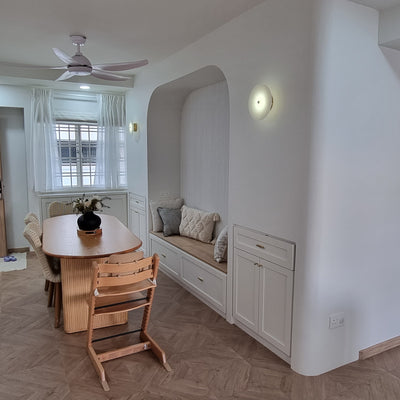
Renovation-wise, that tends to shift priorities toward durability over cosmetic polish — solid flooring, sturdy kitchen cabinetry, proper bathroom waterproofing — rather than finishes picked purely to look good in a quick resale listing. This is a meaningfully different mindset from renovating a flat meant to be flipped within the minimum five-year window. A homeowner planning to stay for a decade or more should be thinking about wear resistance, material longevity, and functional layout adjustments as their family grows, not just what photographs well.
What's Still Unknown, and When You'll Know It
Three pieces of the puzzle remain unreleased: the official project name, internal unit sizes in square metres, and the estimated TOP (Temporary Occupation Permit) date. HDB only opens up all three once the October 2026 sales exercise formally launches, as confirmed in HDB's own press release on the year's full BTO pipeline. Until then, treat any name, floor plan, or completion date floating around elsewhere as unverified speculation.
This gap matters more than it might seem for renovation planning. Without confirmed unit sizes, it's impossible to get a truly precise renovation quote — carpentry costs, tiling area, and even furniture layout planning all depend on knowing exact square footage. What buyers can do in the meantime is work from typical unit size ranges for comparable flat types in other mature estates, which is close enough to build a working budget while waiting for the official numbers.
How Geylang Compares to the Rest of October 2026
Geylang is one of seven projects launching that month, and it sits at the small end of the pack. The Bayshore and Tengah sites, previewed in the same Straits Times report covering Geylang, offer a useful point of comparison for buyers weighing towns against each other before deciding where to place their ballot. Bayshore, in particular, has generated significant interest given its coastal positioning and proximity to East Coast Park, while Tengah continues to draw buyers interested in the eco-town's long-term masterplan even though its MRT connections are still under construction.
For someone deciding between Geylang and one of these other towns, the calculus often comes down to a trade-off between unit availability and location. Geylang's 440 units mean a tighter ballot, but its city-fringe positioning near Mattar MRT offers a commute advantage that a newer town like Tengah simply can't match yet. Buyers who prioritize immediate connectivity over long-term masterplan potential will likely lean toward Geylang, while those comfortable waiting out infrastructure development might find better odds — and lower prices — in Tengah or Sembawang.
Why Renovation Planning Starts Before the Official Launch
Flat type decides most of the renovation scope, which is why it pays to price things out before balloting rather than after. A 2-room Flexi calls for compact, storage-first carpentry given the smaller footprint, while a 4-room flat brings a full kitchen, two bathrooms, and whole-home flooring into play — a meaningfully bigger scope and budget. Since Geylang only offers these two flat types, buyers are choosing between opposite ends of the renovation budget spectrum, which makes early cost estimation genuinely useful groundwork before the ballot, not just a nice-to-have.
This is where working with a licensed renovation contractor early — even before key collection — starts to pay off. Renovation Contractor Singapore (RCS), an HDB-licensed contractor operating since 2017, structures its process around exactly this kind of early engagement. Its five-phase project approach — Plan, Prep, Finalise, Build, and Complete — is designed so that homeowners can lock in a detailed quotation and technical drawings well before actual construction starts, which lines up naturally with the BTO timeline where keys often arrive years after the ballot.
Matching RCS Packages to Geylang's Two Flat Types
Since Geylang's project only offers 2-room Flexi and 4-room units, renovation planning naturally splits into two very different budget tracks. Here's how RCS's existing package structure maps onto each.
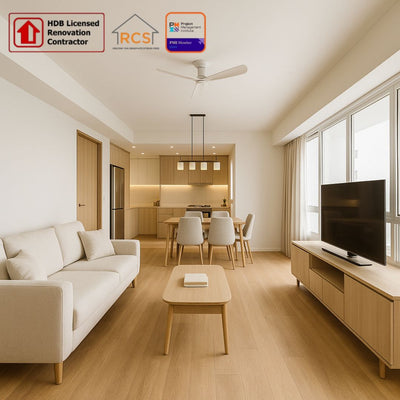
For 4-room flats, the 4-Room HDB Renovation Package covers end-to-end services including space planning, carpentry, flooring, and lighting — essentially the full scope a 4-room unit needs given its larger footprint, full kitchen, and two bathrooms. This is the package most Geylang buyers choosing the 4-room flat type will want to price out early, since it captures the bulk of what a typical 4-room BTO renovation involves.
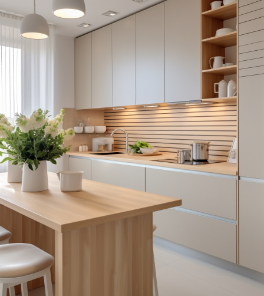
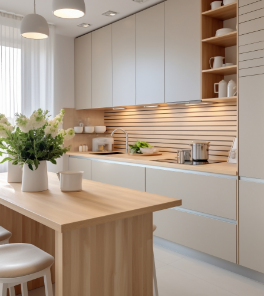
For 2-room Flexi flats, the scope is naturally lighter. RCS doesn't run a dedicated 2-room package in its standard lineup, but its Kitchen Renovation Package and Toilet Renovation Package are directly relevant here, since a compact 2-room Flexi renovation is often really about maximizing a small kitchen and a single bathroom rather than whole-home carpentry. The kitchen package focuses on custom cabinetry, modern countertops, and efficient layouts — exactly the storage-first thinking a smaller unit demands. The toilet package covers waterproofing, plumbing, fixtures, and tiling, which matters just as much in a compact unit as a large one, since water damage risk doesn't scale down with square footage.
For buyers who've already balloted successfully and are closer to key collection, RCS also runs a dedicated BTO Move-In package, referenced in one of its client testimonials involving a 4-room BTO handover in Bidadari — a case where the homeowners engaged the contractor more than six months before key collection and ended up being among the first residents to move into their block. That timeline mirrors almost exactly what Geylang buyers should be doing now: engaging a contractor for early consultation long before the flat is even ready, so that by the time keys arrive, the renovation scope, budget, and materials are already locked in.
What Early Engagement Actually Looks Like
RCS structures its process into five clearly defined phases, and understanding this structure helps explain why early planning genuinely saves time later rather than just being a nice idea in theory.
-
Plan — an initial consultation resulting in a detailed quotation, technical drawings, and a 10% deposit to secure the project slot.
-
Prep — material procurement, HDB permit applications, and site preparation coordination, which can often start well ahead of actual key collection.
-
Finalise — final design confirmation and material selection, ideally locked in once floor plans are officially released.
-
Build — the actual construction phase, broken into masonry, carpentry, and finishing milestones with staged payments tied to progress.
-
Complete — final inspection, defect rectification, and a 12-month warranty activation upon handover.
For a Geylang buyer balloting in October 2026, the "Plan" phase can realistically begin the moment a flat type decision is made — well before the ballot result is even known. Getting a provisional quote for both a 2-room Flexi and a 4-room scenario means that whichever unit type comes through the ballot, there's already a cost picture ready to work from, rather than starting the renovation search cold after key collection.
Typical Cost Ranges to Expect
While exact Geylang pricing will depend on the eventual unit sizes and floor plans, industry-wide averages for HDB renovation give a reasonable starting point for budgeting. Broadly, mid-range 4-room HDB renovations across Singapore tend to fall somewhere between $35,000 and $55,000, depending on the extent of hacking, carpentry customization, and finishing quality selected. Basic-tier 4-room renovations can come in lower, while premium finishes with designer fixtures and extensive built-in carpentry push costs upward from there.
For 2-room Flexi units, renovation scope is inherently smaller, so total costs are typically a fraction of a 4-room budget — often concentrated almost entirely in kitchen and bathroom work plus compact storage carpentry, rather than spread across multiple rooms and larger flooring areas. This is precisely why the kitchen and toilet package structure fits 2-room Flexi buyers so well: the renovation problem to solve is narrower and more contained.
It's worth stressing that these are general market ranges, not Geylang-specific quotes, since HDB hasn't released the unit sizes yet. Once floor plans are confirmed at launch, a contractor can translate these general ranges into a much more precise estimate based on actual square footage, wall configurations, and the specific block's orientation.
Frequently Asked Questions
When will the Geylang October 2026 BTO details be released?
HDB releases full project details — official name, prices, unit sizes, and TOP date — when the October 2026 sales exercise formally opens. The exact application date within October hasn't been announced yet.
How many flats are in the Geylang October 2026 BTO?
440 units in total, confirmed via the HDB Flat Portal preview. HDB hasn't disclosed the split between 2-room Flexi and 4-room. The full October exercise covers roughly 7,960 to 7,970 flats across seven projects in six towns.
Will the Geylang BTO be a Plus flat?
Not officially confirmed — HDB assigns classification only at launch. OrangeTee's research team expects Plus, citing Geylang's Mattar MRT proximity and central location, but that remains an analyst call pending HDB's own announcement.
What flat types can I apply for in the Geylang project?
Two only: 2-room Flexi and 4-room. Buyers wanting bigger flat types like 5-room should look at the other towns in this exercise or the Sale of Balance Flats pool.
When should I start planning my Geylang BTO renovation?
Ideally before balloting. Pricing out both a 2-room Flexi and a 4-room renovation ahead of time gives a fuller cost picture for the flat-type decision — firm quotes usually only come once official floor plans are out.
What renovation packages make sense for a Geylang 2-room Flexi versus a 4-room flat?
A 4-room flat generally needs a full-scope renovation package covering space planning, carpentry, flooring, and lighting across the whole unit. A 2-room Flexi's renovation needs are usually concentrated in the kitchen and single bathroom, making kitchen and toilet-specific renovation packages a more proportionate fit than a whole-home package designed for a larger flat.