
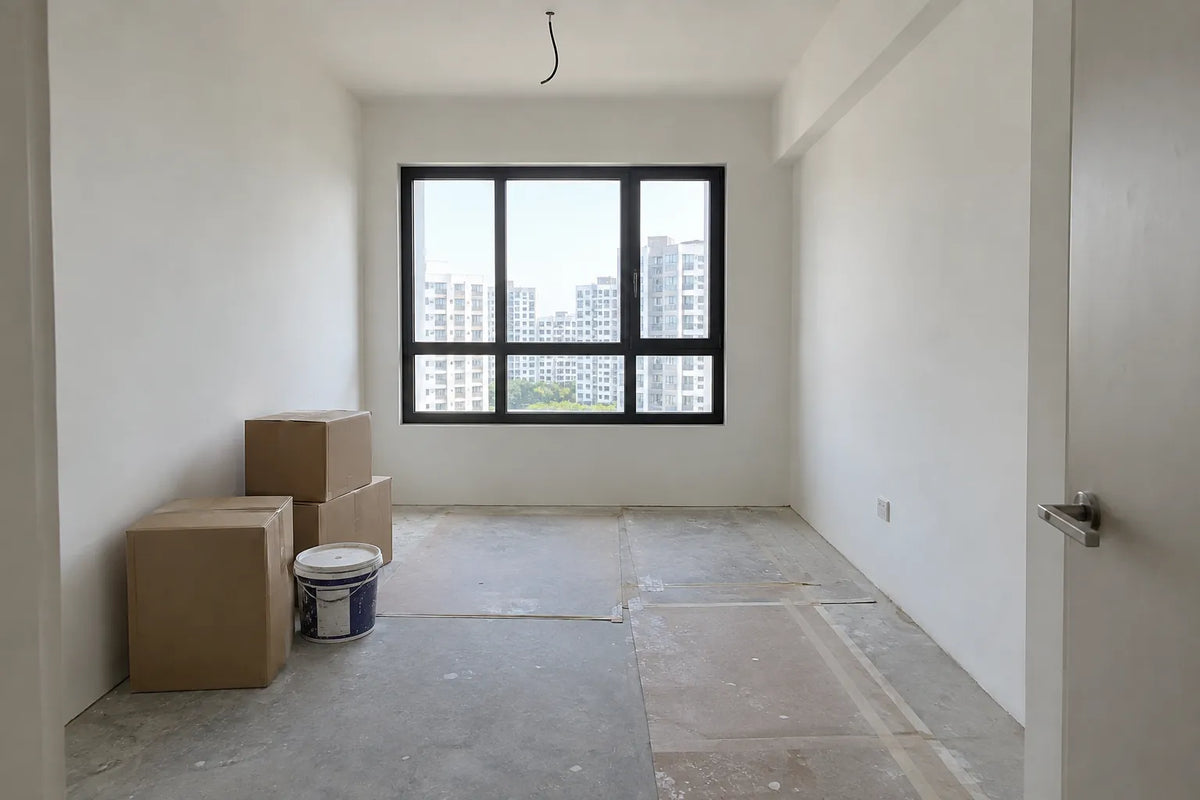

Purchasing a home in Singapore represents one of the most significant financial commitments you'll make in your lifetime. Whether you're drawn to the affordability of HDB flats or the lifestyle appeal of private condominiums, navigating Singapore's property landscape requires careful planning and informed decision-making. This comprehensive guide provides everything you need to know about selecting, purchasing, and preparing your ideal home in 2026.
Understanding Your Options: HDB Flats vs Private Condominiums
The choice between an HDB flat and a private condominium fundamentally shapes your financial trajectory and lifestyle experience. Each property type offers distinct advantages tailored to different needs, budgets, and long-term goals.
The HDB Advantage: Affordability Meets Functionality
HDB flats remain Singapore's most accessible path to homeownership. These public housing units deliver exceptional value, with 4-room resale flats typically priced between S$450,000 and S$800,000 depending on location and age. For first-time buyers, the government provides substantial CPF Housing Grants reaching up to S$80,000 for Build-to-Order (BTO) units and S$50,000 for resale purchases, significantly reducing your net investment.
Beyond affordability, HDB flats offer practical living spaces. A standard 4-room flat provides approximately 90-100 square meters of livable area, while 5-room flats expand to 110-120 square meters. These dimensions comfortably accommodate growing families without the premium price tags associated with private housing.
The Condominium Appeal: Facilities, Flexibility, and Capital Growth
Private condominiums command higher entry prices, generally starting from S$1 million, but deliver compelling benefits that justify the premium. Condo living provides resort-style facilities including swimming pools, gymnasiums, tennis courts, and function rooms. These amenities create a lifestyle experience unavailable in HDB estates.
From an investment perspective, condominiums historically demonstrate stronger capital appreciation. Over the past decade, well-located private properties have delivered absolute dollar gains two to three times higher than comparable HDB flats. While percentage increases may appear similar, a condo purchased for S$1.1 million appreciating to S$1.9 million generates S$800,000 in capital gains compared to S$280,000 for an HDB flat increasing from S$500,000 to S$780,000.
Condominiums also offer greater rental flexibility. Unlike HDB flats restricted by Minimum Occupation Period rules and tenant nationality requirements, condos can be freely rented to anyone immediately after purchase, maximizing your investment flexibility.
Executive Condominiums: The Middle Path
Executive Condominiums bridge the gap between HDB and private housing, offering condo facilities at 25-35% lower prices. These hybrid properties remain under HDB regulations for ten years before converting to fully private status. During this period, buyers benefit from government grants while enjoying condominium amenities, making ECs particularly attractive for middle-income families earning up to S$16,000 monthly.
Choosing Your Location: Where to Buy for Value and Lifestyle
Location determines both your daily quality of life and your property's long-term value trajectory. Singapore's diverse districts each offer unique characteristics appealing to different buyer profiles.
Central Region: Premium Living with Established Infrastructure
Districts 9, 10, and 11 encompassing Orchard Road, Tanglin, and Bukit Timah represent Singapore's traditional prime residential belt. Properties here attract families prioritizing proximity to prestigious schools including Raffles Institution, Nanyang Primary, and Methodist Girls' School. Research consistently demonstrates that properties within 1km of top-tier primary schools command 5-20% premiums and appreciate faster than comparable units farther away.
While central properties require substantial budgets exceeding S$1.5 million for entry-level condos, they deliver unmatched convenience, proven appreciation, and rental resilience during economic downturns.
East Coast: Beach Living with Family Appeal
District 15 covering Marine Parade, Katong, and East Coast provides waterfront access combined with excellent schools and family-oriented amenities. The relaxed atmosphere and proximity to East Coast Park create an enviable lifestyle balance. Upcoming developments including the Founders' Memorial further enhance long-term value prospects in this mature estate.
North-East Growth Corridor: Modern and Affordable
Punggol and Sengkang offer budget-friendly options without compromising modern infrastructure. Punggol's transformation through the Punggol Digital District and Singapore Institute of Technology campus has significantly elevated the area's profile. The upcoming Cross Island Line dramatically improves connectivity, making these estates increasingly attractive for young families and first-time buyers seeking growth potential.
Hougang Central emerges as a particularly compelling 2026 hotspot, benefiting from integrated developments and dual MRT line access through both the North East Line and future Cross Island Line. This rare connectivity combination positions the area for sustained demand and capital appreciation.
Northern Gateway: Woodlands and Beyond
Woodlands benefits from enhanced accessibility via the Thomson-East Coast Line, substantially reducing travel times to the city center. As Singapore's northern gateway near Johor Bahru, Woodlands offers affordability while gaining momentum from commercial developments and cross-border opportunities.
Critical Location Factors
Regardless of which district appeals to you, prioritize properties within 400-800 meters of MRT stations. Research confirms these units command 10-20% premiums, with properties near interchange stations enjoying additional appreciation advantages. Similarly, proximity to good primary schools creates pricing resilience and faster transaction velocities during both boom and correction cycles.
Investment Property vs Owner-Occupied Home: Strategic Differences
Your purchase approach differs dramatically depending on whether you're buying to live in or invest.
Owner-Occupier Priorities
When buying your own home, prioritize daily convenience and lifestyle fit over pure financial calculations. Consider your workplace commute distance, children's school access, proximity to aging parents, and availability of amenities you'll actually use. The Proximity Housing Grant provides up to S$30,000 for resale HDB purchases near parents or married children, making multigenerational planning financially rewarding.
HDB flats excel as owner-occupied homes because monthly mortgage payments can be serviced entirely through CPF contributions, minimizing cash outflow and preserving liquidity for other needs. The 5-year Minimum Occupation Period ensures neighborhood stability and community integration.
Investment Considerations
Private condominiums significantly outperform HDB flats as pure investment vehicles. While HDB rental yields of 5-7% exceed condo yields of 2-3% in percentage terms, condos generate higher absolute rental income. A well-located 3-bedroom condo can achieve S$4,000-6,500 monthly rental compared to S$2,500-3,800 for a comparable HDB flat.
More importantly, condos deliver superior capital appreciation due to broader buyer pools including foreigners and investors, freehold or longer leasehold tenures, and premium positioning. However, be mindful of Additional Buyer's Stamp Duty regulations. Singapore Citizens purchasing a second property face 20% ABSD, while Permanent Residents pay 30%. These significant costs must factor into your investment calculations.
Executive Condominiums as Transition Strategy
ECs offer strategic value for upgraders seeking investment potential while accessing HDB subsidies. After ten years, ECs achieve full privatization, allowing sales to foreigners and potentially commanding private condo valuations. This "value unlock" makes ECs particularly attractive for owner-occupiers planning future asset progression.
Understanding Property Sizes: What Space Do You Actually Get?
Singapore's land constraints necessitate efficient space utilization, with property sizes varying significantly across flat types and eras.
HDB Flat Dimensions
Modern HDB flats measure smaller than older equivalents due to standardized measurement methodologies:
-
3-room flats: 65-70 square meters (700-750 sq ft)
-
4-room flats: 85-95 square meters (915-1,022 sq ft)
-
5-room flats: 110-120 square meters (1,184-1,291 sq ft)
Contemporary HDB units measure up to 20% smaller than 1980s-era flats, though today's designs maximize livable space through improved layouts and reduced wastage.
Private Condominium Sizing Trends
Condominiums have experienced significant downsizing over the past decade. Today's 3-bedroom units average 1,000-1,100 square feet, making them comparable to 4-room HDB flats. Some recent Central Region launches have introduced 3-bedroom units as compact as 667 square feet.
This trend means buyers must carefully evaluate whether unit sizes genuinely accommodate their living requirements. Smaller units command higher price-per-square-foot metrics but may feel cramped for families with multiple children or those who work from home.
Renovation Planning: Maximizing Your Property's Potential
Understanding renovation possibilities before purchase prevents costly surprises and helps you realize your home's full potential. Whether you're buying a new BTO or an older resale flat, renovation requirements and budgets vary dramatically.
HDB Renovation Guidelines and Restrictions
HDB flats operate under strict renovation regulations designed to maintain structural integrity and neighborhood harmony. You cannot hack load-bearing walls, columns, beams, or structural slabs without professional engineering assessments and approvals. Flooring thickness cannot exceed 50mm including screed and finishes. New BTO flats prohibit bathroom tile replacement for three years from key collection.
Window replacements must maintain facade uniformity and use BCA-approved contractors listed in HDB's Directory of Renovation Contractors. All renovation work requires permits submitted at least two weeks before commencement, with standard approvals typically processed within 1-3 weeks.
For comprehensive guidance on HDB renovation rules, consult the detailed HDB Renovation Guide 2025 which covers complete regulations, permit procedures, and budget calculators.
Budgeting for HDB Renovations
Renovation costs vary substantially based on flat type, age, and scope:
BTO Renovations:
-
3-room: S$25,000-S$45,000
-
4-room: S$30,000-S$50,000
-
5-room: S$35,000-S$60,000
Resale Renovations:
-
3-room: S$35,000-S$55,000
-
4-room: S$40,000-S$70,000
-
5-room: S$45,000-S$85,000
Resale renovations cost significantly more due to demolition requirements, electrical rewiring, plumbing system upgrades, and waterproofing repairs. Professional contractors recommend budgeting a 10-20% contingency buffer for unexpected structural issues or hidden defects discovered during works.
For detailed cost breakdowns and real pricing examples, review the HDB Renovation Budget 2026 Complete Cost Guide which provides comprehensive pricing intelligence.
Renovation Packages and Cost Optimization
Many homeowners achieve substantial savings through renovation packages that bundle multiple areas together. Kitchen and bathroom renovations typically consume 20-25% of total budgets, making these areas prime candidates for package deals.
For BTO owners, explore affordable options through 3-Room BTO Renovation Packages or BTO Renovation Collections that provide transparent pricing and comprehensive scope coverage.
If you're purchasing a resale flat, specialized packages address the unique challenges of older properties. The 4-Room Resale Renovation Guide explains why resale renovations cost more and what to expect during the process. You can also browse 5-Room Resale Renovation Packages or access the complete Package Overview for Resale Properties to compare options.
Kitchen and Bathroom Renovation Specifics
Kitchens and bathrooms represent critical functional spaces requiring special attention. Complete kitchen renovations including cabinets, countertops, backsplash tiling, sink, tap, hood, and hob typically range from S$13,000 to S$18,000 depending on materials and finishes selected.
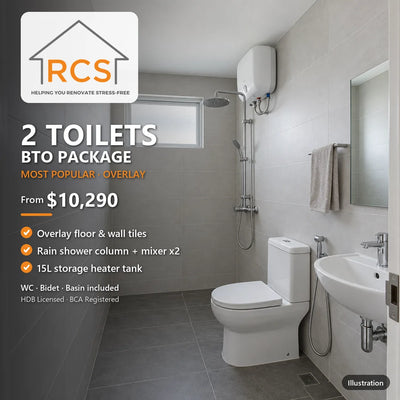
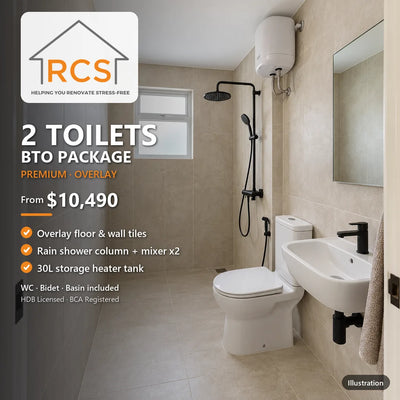
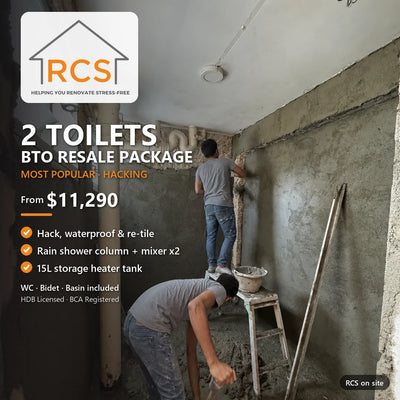
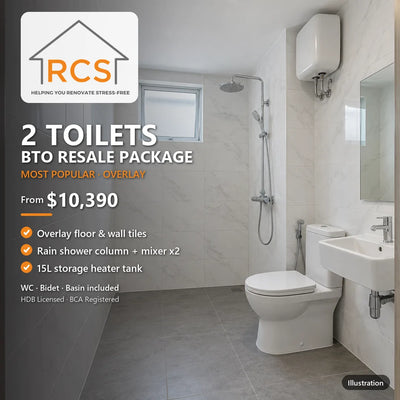
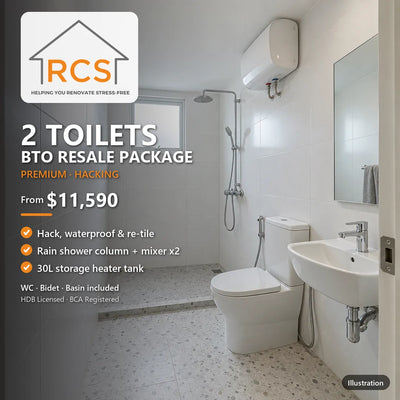
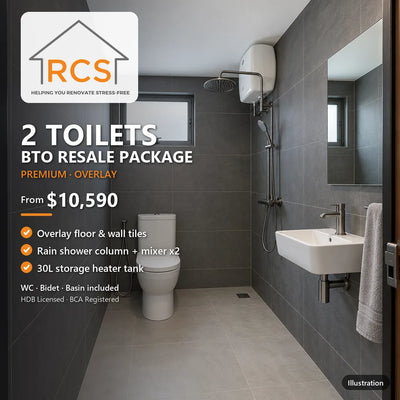
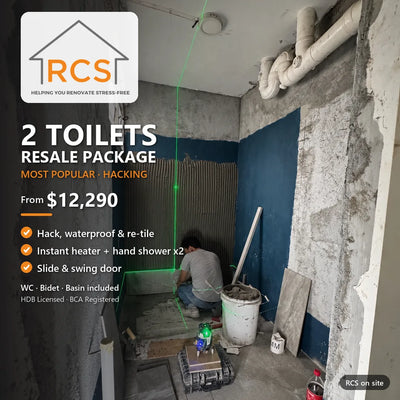
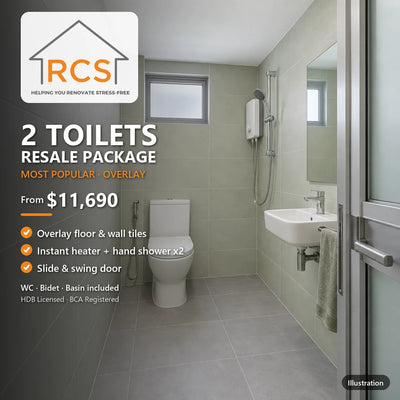
Bathroom renovations vary based on whether you're doing simple overlay work or complete hacking and reconstruction. Overlay methods cost S$8,000-S$10,000 per bathroom, while full hacking increases costs to S$10,000-S$14,000 per bathroom including waterproofing, tiling, sanitary fixtures, and accessories.
For compact spaces, refer to the Small Bathroom Renovation Guide which provides creative solutions for maximizing functionality in limited areas.
Condo Renovation Considerations
Condominium renovations require Management Corporation Strata Title (MCST) approval before work commences. Each development operates under specific by-laws governing working hours, noise restrictions, and structural modifications. Condo renovations typically impose stricter working hour limitations and may require renovation deposits ranging from S$3,000 to S$10,000.
For condo-specific guidance, explore Condo Renovation Singapore specialized services that navigate MCST requirements and deliver premium finishes appropriate for private housing.
Renovation Timeline Planning
Renovation timelines vary substantially based on property type and scope:
-
BTO 3-4 room: 6-8 weeks
-
BTO 5-room: 8-10 weeks
-
Resale 3-room: 8-10 weeks
-
Resale 4-5 room: 10-12+ weeks
Always add 2-4 week buffers for material delivery delays, weather disruptions, and regulatory approvals. Coordinate your renovation timeline carefully with your move-in date and current accommodation arrangements to avoid paying dual housing costs.
For comprehensive renovation planning including detailed timelines and process explanations, review the HDB Resale Renovation Guide which provides step-by-step guidance and professional tips.
Choosing the Right Contractor
Contractor selection profoundly impacts your renovation experience and outcomes. Before engaging any contractor, verify their credentials including HDB licensing, BCA registration, and BizSafe certification. Review their portfolio of completed projects, read customer testimonials, and obtain at least three detailed quotations for comparison.
For guidance on contractor evaluation, read What Are The Key Factors to Consider Before Engaging a Contractor which outlines essential considerations.
Financing Your Property: Mortgages, Grants, and Stamp Duties
Mortgage financing significantly impacts affordability and cash flow management. Understanding your financing options helps you maximize borrowing capacity while minimizing interest costs.
HDB Loan vs Bank Loan
HDB Concessionary Loans offer 2.6% fixed interest rates with minimal cash downpayment requirements—just 5% cash plus 20% CPF, totaling 25% downpayment. This structure makes HDB loans extremely attractive for first-time buyers with limited cash reserves. However, eligibility restricts household income to S$14,000 monthly for families and S$7,000 for singles.
Bank loans require higher upfront cash—25% total downpayment with at least 5% in cash—but offer competitive variable rates starting from 1.35-1.78% as of January 2026. For loan amounts above S$600,000, bank floating rate packages can deliver substantial interest savings despite higher initial cash requirements.
CPF Housing Grants: Reducing Your Net Cost
First-time buyers can access substantial grants that dramatically reduce effective purchase costs:
-
Enhanced CPF Housing Grant: Up to S$80,000 for BTO/new flats
-
CPF Housing Grant: Up to S$50,000 for resale flats
-
Proximity Housing Grant: S$20,000-S$30,000 for staying near parents
-
EC Family Grant: S$10,000-S$30,000 for Executive Condos
These grants can be strategically combined, potentially reducing your net purchase price by S$100,000 or more. Eligibility criteria vary based on income levels, citizenship status, and first-timer status, so review current requirements carefully before finalizing your purchase decision.
Additional Buyer's Stamp Duty Considerations
Singapore's cooling measures significantly impact multiple-property owners. Current ABSD rates as of 2026:
-
Singapore Citizens: 0% (1st property), 20% (2nd property), 30% (3rd+ properties)
-
Permanent Residents: 5% (1st property), 30% (2nd property), 35% (3rd+ properties)
-
Foreigners: 60% (any property)
Plan your purchase timeline meticulously to avoid triggering ABSD. If you're selling your HDB before buying a condo, ensure the HDB sale completes first or be prepared to pay ABSD upfront and claim refunds later—a process that ties up substantial capital for 6-12 months.
Property Viewing Checklist: Essential Inspection Points
Thorough property inspections prevent costly post-purchase regrets. Approach viewings systematically with a comprehensive checklist.
Essential Items to Bring
Pack a smartphone for photos and measurements, a small phone charger to test electrical outlets, a notepad for recording observations, and a measuring tape for verifying room dimensions against floor plans.
Structural and Condition Checks
Examine walls carefully for hairline cracks, water stains, or signs of seepage indicating waterproofing failures. Check floor tiles by tapping with your knuckles—hollow sounds indicate poor adhesion and potential future breakage. Inspect ceiling corners for mold growth, discoloration, or water damage patterns that suggest roof leaks or aircon condensation issues.
Test all windows and doors for smooth operation, proper sealing, and secure locking mechanisms. Open all wardrobes and cabinets checking for damp smells, water damage, or pest infestation signs. In bathrooms, run water at full pressure assessing flow strength and drainage speed.
Electrical and Plumbing Systems
Test every electrical outlet with your phone charger verifying functionality. Turn lights on and off checking for flickering or non-functional switches indicating wiring problems. In older resale properties, inquire about electrical system age and whether rewiring has been completed.
Run hot water in bathrooms and kitchen verifying water heaters function properly and achieve adequate temperature. Check under sinks for signs of leakage or water damage to cabinetry. Flush toilets observing refill time and listening for unusual sounds indicating cistern problems.
Noise and Environmental Assessment
Visit properties at different times of day assessing noise levels from traffic, neighbors, nearby commercial activities, or playgrounds. Stand quietly in bedrooms detecting sounds from corridors, adjacent units, or external sources. Check whether windows effectively block external noise when closed.
Defect Inspections for New Properties
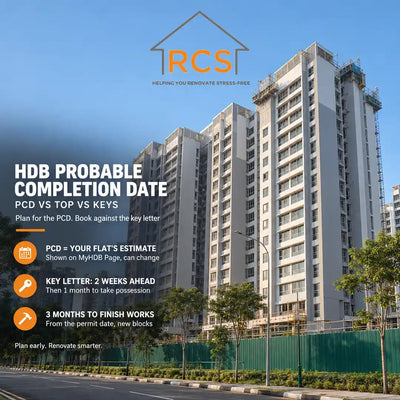
For newly completed BTOs, ECs, and condos, conduct comprehensive defect inspections within the Defects Liability Period—typically one year from key collection. HDB BTO defects must be reported within seven days of key collection for rectification responsibility.
Professional defect inspection services cost S$330-S$680 for HDB flats and S$390-S$900 for condos depending on package comprehensiveness. These services identify construction defects, prepare submission reports, attend joint inspections with builders, and verify proper rectifications.
Common defects include flooring and tiling cracks, hollow tiles, cabinet misalignment, plumbing leaks, electrical issues, aircon water leakage, and window or door sealing gaps. Document everything with detailed photos and descriptions ensuring proper rectification.
Understanding Lease Decay and Long-Term Value
Singapore's leasehold system profoundly impacts property values over time, particularly for HDB flats operating on 99-year leaseholds.
The 99-Year Lease Reality
All HDB flats decline toward zero value as leases expire. Properties with longer remaining leases command substantial premiums—newer flats that just completed MOP typically achieve highest valuations. Research indicates that leasehold properties begin experiencing accelerated value decline once remaining leases drop below 60-70 years.
Financing becomes increasingly difficult when leases fall under 40 years, as banks restrict loan amounts and CPF usage becomes limited. This shrinks the buyer pool and accelerates value depreciation, creating a downward spiral for very old properties.
Strategic Implications for Buyers
Younger buyers should prioritize properties with substantial remaining leases—ideally 80+ years—to maximize long-term appreciation potential and maintain resale flexibility. Properties in mature estates with 50-60 years remaining may offer attractive entry prices but provide limited upside and increasing difficulty selling as time progresses.
For investment purposes, properties in their "growth stage" (first 30-40 years of leasehold) deliver optimal returns. Properties entering "stagnation stage" (40-60 years) see slowing appreciation, while those beyond 60 years enter "decline stage" with falling values.
Freehold Condo Advantage
Freehold or 999-year leasehold private condominiums avoid lease decay entirely, maintaining value indefinitely. This permanence commands 10-20% premiums compared to 99-year leasehold equivalents but provides superior long-term wealth preservation and intergenerational asset transfer potential.
Market Outlook 2026: Timing Your Purchase
Understanding current market dynamics helps optimize purchase timing and negotiation positioning.
HDB Market Conditions
Approximately 13,500 HDB flats will reach Minimum Occupation Period in 2026, adding supply to the resale market. This increased supply should stabilize prices, with modest 1-3% growth projected for HDB resale transactions. HDB remains the most accessible entry point for first-time buyers, with government-provided stability through BTO supply management and comprehensive grant programs.
Private Condo Market Trends
Private condo prices remain elevated in 2026, with new launches exceeding S$2.5 million for many prime location units. Limited land supply and high development costs continue supporting premium valuations. The Greater Southern Waterfront, Hougang Central, and well-connected northern areas like Woodlands emerge as 2026 investment hotspots, benefiting from infrastructure improvements and urban transformation initiatives.
Interest Rate Environment
Singapore's interest rate environment has begun stabilizing after years of increases, providing mortgage borrowers with improved certainty. Fixed-rate packages offer stability for risk-averse buyers, while floating-rate mortgages provide potential savings if rates decline further. Carefully evaluate your risk tolerance and cashflow stability when selecting mortgage structures.
Final Thoughts: Making Your Home Purchase Decision
Purchasing an HDB flat or condominium in Singapore requires balancing financial considerations with lifestyle preferences and long-term goals. Start by clarifying whether you're buying primarily for owner-occupation or investment, as this fundamental decision shapes all subsequent choices.
Prioritize location carefully, recognizing that proximity to MRT stations, good schools, and established amenities creates both daily convenience and long-term value resilience. Don't compromise excessively on location to afford larger spaces—a well-located smaller unit typically outperforms a spacious property in a less desirable area.
Budget realistically for renovations, especially when purchasing resale properties. Older flats require substantially more investment in demolition, rewiring, plumbing upgrades, and waterproofing repairs. Factor these costs into your total purchase budget rather than treating them as afterthoughts.
Finally, work with reputable professionals throughout the process—experienced property agents, licensed contractors, and knowledgeable mortgage brokers all contribute to successful outcomes. The money saved through professional guidance far exceeds the costs of engaging these experts.
With careful planning, thorough research, and realistic budgeting, you can confidently navigate Singapore's property market and secure a home that serves your needs today while building wealth for tomorrow.
Ready to Start Your Renovation Journey?
Whether you're renovating a new BTO or transforming a resale flat, professional guidance makes all the difference. Explore comprehensive HDB Renovation Packages & Price List Singapore 2026 for transparent pricing and detailed package comparisons. For personalized quotations and expert consultations, connect with licensed renovation specialists who understand Singapore's unique requirements and deliver quality results on time and within budget.