

Planning an HDB renovation in Singapore? You're likely searching for clear answers about costs, timelines, permits, and choosing the right contractor. This guide answers the exact questions Singaporean homeowners ask when preparing their renovation journey, with transparent pricing and practical insights you can trust.
How Much Does 3-Room HDB Renovation Cost in Singapore?
What's the Cost for 3-Room BTO Renovation?
If you've just collected keys to your new 3-room BTO flat, you'll need between $14,290 to $16,690 for a complete bare unit package that makes your flat move-in ready. The Standard package with vinyl flooring starts at $14,290, while if you prefer the durability and aesthetic of tiles, the Premium package costs $16,690.
These 3-room BTO renovation packages cover everything essential: complete bathroom setup with fixtures and waterproofing, full kitchen installation with cabinets and countertops, flooring throughout your entire flat, electrical wiring with adequate power points, lighting fixtures for all rooms, interior painting with quality finish, and thorough final cleaning.
The $2,400 price difference between vinyl and tile options reflects both material costs and installation complexity. Vinyl flooring installs faster and costs less upfront, making it ideal if you're working with a tighter budget or want to move in quickly. Tiles offer superior long-term durability and maintain their appearance better over years of use, especially in high-traffic areas.
How Much Does 3-Room Resale Flat Renovation Cost?
Resale flats require significantly higher budgets because you're not starting with a blank canvas. Your 3-room resale renovation will cost between $29,890 to $36,990 depending on whether you choose overlay or complete hacking methods.
The 3-room resale packages offer several approaches:
-
Standard package with vinyl overlay (no hacking): $29,890
-
Standard package with complete hacking and tiles: $35,590
-
Premium package with vinyl overlay: $31,790
-
Premium package with hacking and tiles: $36,990
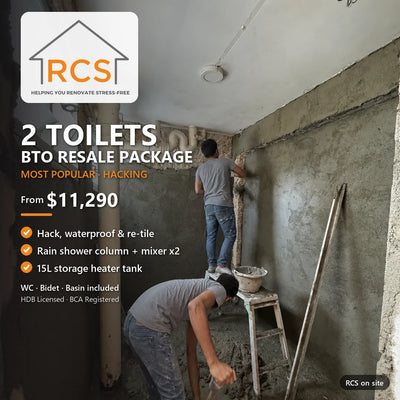
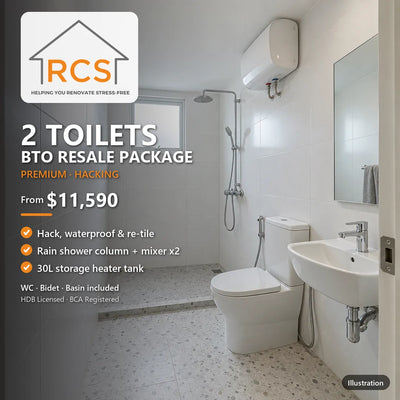
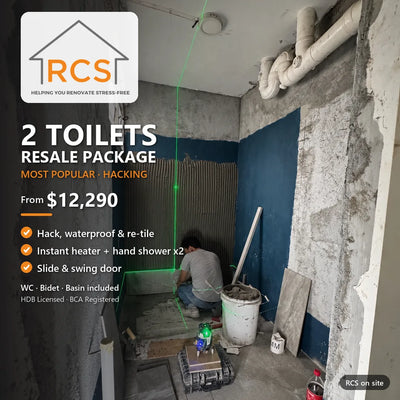
Why the substantial cost increase compared to BTO? Resale renovations involve demolishing existing fixtures and tiles, disposing of renovation debris properly, repairing underlying damage like cracks or water stains, updating old electrical wiring to current safety standards, replacing aging plumbing systems, reapplying waterproofing in wet areas, and addressing structural issues before installing new finishes.
Should I Choose Overlay or Hacking Method?
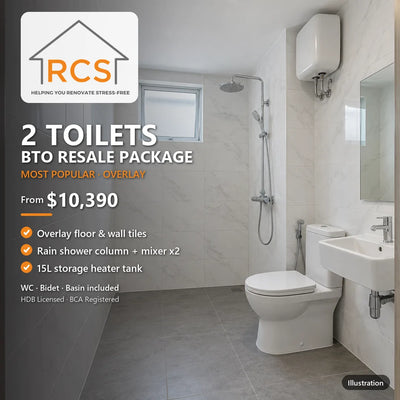
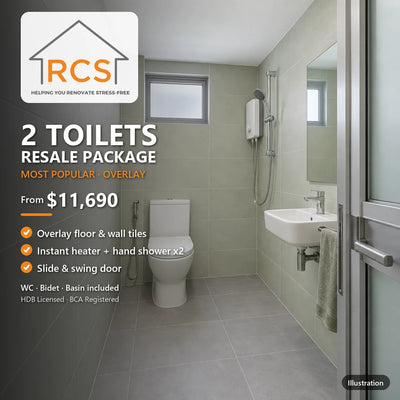
The overlay method saves you approximately $5,000 to $6,000 by applying new finishes over existing surfaces without demolition. This approach makes sense when your existing tiles and infrastructure remain structurally sound without cracks, water damage, or outdated systems.
Complete hacking, while more expensive, delivers superior results when your resale flat shows signs of deterioration. You'll want hacking if existing tiles have cracks or hollow sounds indicating poor adhesion, bathrooms show water seepage or persistent dampness, you're reconfiguring room layouts or plumbing locations, electrical systems use outdated wiring that doesn't meet current codes, or you simply want the assurance of starting fresh with new waterproofing and infrastructure.
How Much Does 4-Room HDB Renovation Cost in Singapore?
What's the Budget for 4-Room BTO Renovation?
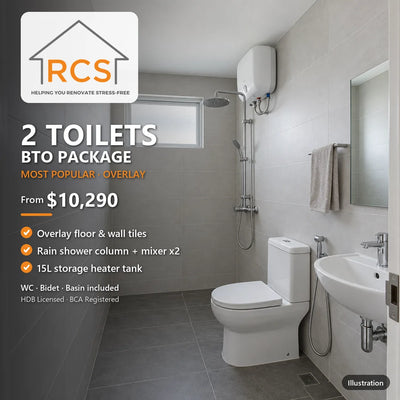
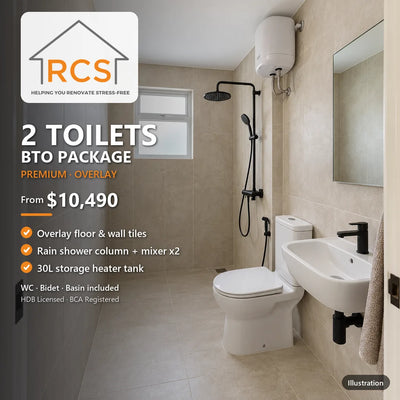
For new 4-room BTO flats, budget between $16,890 to $19,390 for complete bare unit renovation. If your BTO came with pre-installed toilets and you're choosing the overlay method to refresh them, focused toilet upgrade packages range from $9,990 to $10,390.
The 4-room BTO renovation packages scale appropriately for the larger space:
-
Standard bare unit package with vinyl flooring: $16,890
-
Premium bare unit package with tiles: $19,390
-
Toilet upgrade package (Standard): $9,990
-
Toilet upgrade package (Premium): $10,390
These comprehensive packages handle the increased square footage of 4-room flats efficiently. Your investment covers all three bedrooms, living and dining areas, kitchen setup, bathroom installations, service yard preparation, and painting throughout the entire unit.
How Much for 4-Room Resale Flat Renovation?
4-room resale units require $30,199 to $38,490 for whole house renovation depending on your package selection and whether you opt for overlay or hacking methods.
The 4-room resale renovation packages offer flexible pricing:
-
Most Popular package with vinyl overlay: $30,199
-
Most Popular package with hacking and tiles: $36,990
-
Premium package with vinyl overlay: $31,880
-
Premium package with hacking and tiles: $38,490
The "Most Popular" packages represent the sweet spot where most homeowners find optimal balance between cost efficiency and quality outcomes. These packages include essential upgrades while maintaining competitive pricing through strategic material selection and efficient project management.
Why Do 4-Room Renovations Cost More Than 3-Room?
Beyond obvious square footage differences, 4-room flats require additional materials, more carpentry for extra bedroom storage, increased electrical points and lighting fixtures, longer installation time for flooring and painting, and more complex project coordination across additional rooms. The cost increase typically ranges 15-20% compared to 3-room equivalents for similar package levels.
How Much Does 5-Room HDB Renovation Cost in Singapore?
What Should I Budget for 5-Room BTO Renovation?
Larger 5-room BTO flats require $17,490 to $20,690 for complete bare unit renovation packages. The Standard package with vinyl flooring starts at $17,490, while Premium packages with tiles reach $20,690.
Your 5-room BTO renovation investment covers comprehensive work including all bedrooms (typically three bedrooms), spacious living and dining areas, complete kitchen installation, two bathrooms in larger layouts, service yard setup, and painting throughout the expansive unit.
The larger floor area requires proportionally more materials, but economies of scale mean the per-square-foot cost actually decreases slightly compared to smaller flats. You're getting more space renovated for a relatively smaller premium.
How Much for 5-Room Resale Renovation?
5-room resale flats represent the highest renovation investment, ranging from $31,290 to $41,590 depending on package selection and renovation approach.
The 5-room resale packages offer these options:
-
Most Popular package with vinyl overlay: $31,290
-
Most Popular package with hacking and tiles: $39,990
-
Premium package with vinyl overlay: $32,990
-
Premium package with hacking and tiles: $41,590
The $8,000+ difference between overlay and hacking methods reflects the substantial demolition work, debris disposal, and infrastructure renewal required for complete hacking in larger units. However, many homeowners find the investment worthwhile for the peace of mind that comes with entirely new waterproofing, wiring, and plumbing systems.
Is 5-Room Renovation Worth the Investment?
If you're planning to stay long-term, the higher upfront investment in 5-room renovation pays dividends through enhanced living quality in your spacious home. The additional rooms provide flexibility for growing families, home offices, guest rooms, or hobby spaces. Quality renovation in larger flats also maintains better resale value because buyers appreciate well-maintained spacious units.
How Long Does HDB Renovation Take in Singapore?
What's the Actual Renovation Timeline?
Most HDB renovations complete within 4-8 weeks from the day contractors start work until handover. BTO renovations typically finish faster at 4-6 weeks because there's no demolition phase. Resale renovations need 6-8 weeks due to hacking, repairs, and addressing unexpected issues discovered during demolition.
However, the complete timeline from your first contractor meeting to moving in spans approximately 10-14 weeks when you include planning, design, material selection, and permit approval phases before physical work begins.
What Happens During Each Renovation Week?
Weeks 1-2: Planning and Design
You'll meet contractors, review quotations, finalize design concepts, select materials at showrooms, and sign contracts. Don't rush this phase—solid planning prevents costly changes mid-renovation.
Week 3-4: Permit Processing
Your contractor submits renovation permits to HDB while ordering materials and scheduling work crews. Most standard permits approve within 1-2 weeks.
Week 5: Demolition (Resale Only)
For resale flats, hacking existing tiles and fixtures happens quickly over 3-5 days. The unit looks worse before it improves—this is normal.
Weeks 6-7: Infrastructure Work
Plumbers install new pipes, electricians run wiring, waterproofing teams seal wet areas, and masons prepare surfaces. This unsexy but critical phase establishes quality foundations.
Weeks 8-11: Carpentry and Installation
Custom carpentry arrives sequentially. Kitchen cabinets, wardrobes, feature walls, and built-ins take shape. This longest phase requires patience as craftsmen ensure precise fitting.
Week 12: Finishing Touches
Painters complete final coats, flooring installers finish their work, fixtures get mounted, lights turn on, and cleaners prepare for handover.
Week 13-14: Inspection and Move-In
Walk through with your contractor to identify any defects. Quality contractors rectify issues within days, then you receive keys and move in.
Can Renovation Be Completed Faster?
While aggressive timelines can compress to 3-4 weeks for simple BTO packages, rushing risks quality issues. Certain processes require time—waterproofing needs proper curing, paint needs adequate drying between coats, custom carpentry can't be rushed without compromising fit. Most contractors recommend standard timelines for best results.
What Permits Do I Need for HDB Renovation?
Do I Always Need HDB Renovation Permits?
Not all renovation work requires formal permits, but many common activities do. You need HDB approval when hacking any walls, whether structural or partition walls, installing new floor finishes that raise floor levels, relocating toilets or adding new water points, replacing windows or installing metal grilles, or performing any work affecting building structure.
You don't need permits for simple painting and wallpapering, installing furniture and curtains without wall modifications, laying floating floors like laminate without changing levels, or replacing light fixtures and outlets on one-to-one basis without additional wiring.
When uncertain whether your planned work needs approval, always check with your contractor. Starting work without required permits risks fines up to $5,000 and orders to stop work until proper authorization is obtained.
How Long Does Permit Approval Take?
HDB typically processes straightforward renovation permit applications within 1-2 weeks after submission with complete documentation. Complex applications involving structural modifications or requiring clarifications may extend to 3 weeks.
Your licensed contractor handles permit applications on your behalf as part of their service. They'll prepare renovation plans showing work scope, provide their contractor license credentials, and submit your homeowner authorization. Most package renovations involve standard work that HDB routinely approves without issues.
What Are HDB Renovation Working Hours?
HDB enforces strict working hours to respect all residents sharing high-density housing. General renovation work is allowed Monday to Saturday, 9:00 AM to 6:00 PM. No renovation work of any kind is permitted on Sundays or public holidays.
Noisy work like hacking, drilling, and hammering faces stricter limits: weekdays only, Monday to Friday, 9:00 AM to 5:00 PM. The restricted hours for noise-generating activities balance renovation progress needs with neighbor consideration.
Professional contractors strictly follow these regulations. Violations result in neighbor complaints, formal warnings, and potential fines. Repeated violations can lead to permit suspension and contractor debarment from HDB's approved list.
What Can and Cannot Be Renovated in HDB Flats?
Can I Remove Walls in My HDB Flat?
Load-bearing walls, columns, and beams cannot be removed or modified under any circumstances—they're essential for building structural integrity. Even drilling into these structural elements requires careful execution with HDB approval.
Non-structural partition walls can potentially be removed with proper HDB approval, but you must verify wall classification before planning removal. Some partition walls house electrical conduits or plumbing pipes that complicate relocation. Your contractor can assess which walls are removable during site inspection.
What Renovation Activities Are Prohibited?
HDB explicitly prohibits converting any residential space into commercial use beyond allowable home-based business guidelines. Installing platform floors that reduce ceiling height below minimum standards violates building codes. Creating floor openings, internal staircases, or mezzanine levels is not allowed in standard HDB flats.
Bomb shelters in newer HDB units must remain accessible and unmodified. You cannot seal bomb shelter entrances, remove components, or convert them into permanent storage or rooms. These civil defense spaces must stay ready for emergency use.
Any fixtures or modifications that obstruct common corridors, fire escape routes, or emergency access points violate safety regulations. All renovation plans must maintain clear evacuation paths.
Why Is Waterproofing So Important?
Proper waterproofing in bathrooms, kitchens, and service yards prevents water seepage that damages your lower neighbor's ceiling—one of the most common and expensive post-renovation problems. Quality waterproofing requires proper surface preparation, correct membrane application with adequate thickness, sufficient curing time before tiling, and proper floor trap installation for drainage.
Reputable contractors perform flood testing before installing tiles to verify waterproofing integrity. This involves flooding the waterproofed area and checking for leaks from below, ensuring the membrane works properly before covering it with permanent finishes.
Waterproofing failures discovered after tiling require expensive rectification: removing new tiles, reapplying waterproofing, and retiling. Worse, if water damages your neighbor's flat, you're liable for repair costs and potential compensation. Investing in quality waterproofing from the start prevents these headaches.
How Do I Choose the Right Renovation Contractor?
What Licenses Should My Contractor Have?
Only contractors listed in HDB's Directory of Renovation Contractors (DRC) can legally perform HDB renovation work. HDB licensing requires contractors to be Singapore Citizens or Permanent Residents who completed the mandatory 'Renovation for Public Housing' training course covering HDB-specific regulations, safety requirements, and building standards.
Verify your contractor appears in the HDB Directory before signing any contracts. This simple check confirms they hold proper authorization for HDB renovations. Hiring unlicensed contractors exposes you to project abandonment risks, substandard workmanship without recourse, voided renovation permits, and potential liability for unauthorized work.
What Questions Should I Ask Potential Contractors?
During initial meetings, ask contractors how long they've operated in Singapore and how many HDB projects they've completed. Request their HDB license number and BCA registration for verification. Ask to see portfolios of recently completed projects similar to your requirements.
Request client references you can contact directly to ask about their experience. Inquire about their typical project timeline and how many projects they handle simultaneously. Understand who will supervise your project daily and how often they'll be on-site. Clarify what their quotation includes and excludes to avoid surprise charges later.
Ask about their payment schedule and what milestones trigger each payment. Understand their defect liability period and warranty terms. Question how they handle unexpected issues or change requests mid-project.
How Many Quotations Should I Compare?
Obtain at least three detailed quotations from different contractors before making your decision. More quotations provide better market understanding, but beyond five becomes diminishing returns. Focus on comparing scope, materials, timelines, and value rather than simply choosing the lowest price.
The cheapest quotation isn't always the best value. Extremely low quotes may indicate cut corners, inferior materials, or hidden charges emerging later. The highest quotes don't guarantee superior quality either. Seek contractors offering fair pricing with clear specifications, transparent processes, and solid reputations.
What Should a Proper Quotation Include?
Detailed quotations break down costs by category: carpentry, electrical work, plumbing, flooring, painting, materials, and labor. Each line item should specify materials or fixtures by brand and model where applicable. The quotation should clearly state what's included and what's not covered.
Payment terms should outline the schedule, showing how much you pay at signing, after demolition, after carpentry, and at project completion. The quotation should specify project timeline with start and end dates. Warranty terms and defect liability periods should appear clearly. Both contractor and homeowner contact information and license numbers should be present.
Red flags include vague descriptions like "renovation works as discussed," lump sum pricing without breakdown, requests for large upfront payments exceeding 30%, no specified materials or brands, missing timeline or warranty information, and missing contractor license numbers.
How Can I Save Money on HDB Renovation?
Should I Renovate Immediately or Wait?
If you've just collected BTO keys, renovating immediately makes sense—you'll live in a fresh, functional home from day one. For resale flats without urgent issues, consider whether you can delay non-essential work. However, if existing waterproofing shows problems, electrical systems seem outdated, or plumbing needs replacement, address these immediately before cosmetic improvements.
Phasing renovations over time spreads costs but increases overall expense due to repeated mobilization fees and material price inflation. Unless budget constraints demand phasing, completing renovation in one project typically costs less.
Where Can I Reduce Costs Without Sacrificing Quality?
Choose vinyl over tiles for bedrooms and low-traffic areas while using tiles only in wet areas and living spaces. This hybrid approach saves substantially while maintaining durability where needed. Opt for laminate countertops instead of quartz or granite—modern laminates look attractive and perform well for most households.
Simplify carpentry designs by avoiding complex curves, multiple finishes, and intricate details that require extensive labor. Straightforward designs using standard dimensions reduce both material and labor costs significantly. Select mid-range fixtures and fittings rather than premium designer brands—functional quality doesn't always require luxury pricing.
Handle appropriate tasks yourself like painting accent walls, shopping for furniture and décor, installing curtains and blinds, and simple assembly work. Reserve professional services for technical work requiring specialized skills like plumbing, electrical, waterproofing, and carpentry.
What Should I Never Compromise On?
Never cut corners on waterproofing—this foundational element prevents expensive future problems. Never skimp on electrical safety by reducing power points or using substandard wiring. Never rush contractor selection by choosing based solely on lowest price. Never skip essential repairs to aging infrastructure in resale flats.
Proper waterproofing, quality electrical systems, licensed experienced contractors, and sound infrastructure protect your investment long-term. Cutting costs in these areas creates risks far exceeding initial savings.
Ready to Start Your HDB Renovation?
Whether you're renovating a new BTO or transforming a resale flat, understanding costs, timelines, requirements, and contractor selection empowers confident decision-making. With transparent pricing ranging from $14,290 for 3-room BTO packages to $41,590 for premium 5-room resale renovations, you can budget accurately for your project.
Most HDB renovations complete within 6-10 weeks once work begins, transforming your flat into the comfortable home you envision. By choosing licensed contractors, securing proper permits, respecting working hour regulations, and investing wisely in quality where it matters, your renovation journey proceeds smoothly toward successful outcomes.
Visit our specialized pages for detailed package information for your specific flat type: 3-room BTO, 4-room BTO, 5-room BTO, 3-room Resale, 4-room Resale, or 5-room Resale.
Renovating to Sell, Not to Stay
Cost changes meaning when the flat is going on the market. You are no longer buying comfort, you are buying a valuation, and the two want different things.
- Does renovation add value when you sell
- What to fix before you list
- What to do before putting the flat on sale
- Toa Payoh resale prices and what buyers look at
The short version, if you only read one: buyers price the things they cannot easily change. A sound bathroom and a working kitchen move a valuation. A feature wall does not.