SingRank Singapore
Planning your kitchen renovation? Singaporean homeowners consistently ask the same critical questions about costs, timelines, materials, and contractor selection. This comprehensive guide provides verified answers with transparent pricing directly from licensed HDB renovation contractors, ensuring you make informed decisions without surprises.
How Much Does Kitchen Cabinet Installation Cost in Singapore?
What's the Exact Price for BTO Kitchen Cabinets?
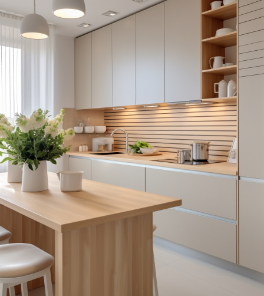
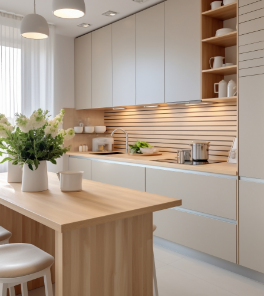
For new BTO flats requiring kitchen cabinet installation, budget $5,490 for Most Popular or $6,090 for Premium packages. These BTO kitchen cabinet packages cover approximately 10 linear feet of cabinetry (10ft bottom + 10ft top cabinets) and include professional project management, design consultation with 3D visualization, complete cabinet fabrication using marine-grade plywood, soft-closing hinges rated 50,000+ cycles, Quartz Tier 1 countertop installation, and hood point electrical connection.
The Most Popular package at $5,490 delivers quality construction with moisture-resistant plywood carcasses surviving Singapore's humidity, premium laminate door finishes in various wood-grain or solid colors, internal white carcass finish, ABS door trimmings preventing water damage at edges, and standard soft-closing mechanisms ensuring gentle door closure. This foundation package provides 15-20 year lifespan when properly maintained in Singapore's tropical climate.
The Premium upgrade at $6,090 adds $600 additional investment bringing meaningful enhancements: internal color carcass options beyond standard white allowing coordinated aesthetics, enhanced laminate selections up to $60 per piece featuring ultra-realistic wood grains, improved soft-closing mechanisms with superior dampening technology, additional electrical points accommodating multiple appliances, and premium hardware finishes in brushed nickel or matte black.
Installation completes within 7-10 working days because cabinet-only projects involve straightforward mounting without structural modifications, plumbing work, or tiling—perfect for homeowners collecting BTO keys wanting immediate move-in readiness.
How Much for Resale Flat Kitchen Cabinets?
Resale flat kitchen cabinet packages cost $5,590 for Most Popular or $6,190 for Premium—representing $100 additional compared to equivalent BTO packages. This slight price increase reflects site-specific considerations in older flats: walls may have slight unevenness requiring additional shimming during installation, existing electrical points might need relocation for optimal hood placement, older flats sometimes have non-standard dimensions requiring custom adjustments, and additional site protection is needed protecting existing flooring and surfaces from construction dust.
These resale kitchen cabinet packages include identical quality materials and installation standards as BTO packages—marine-grade plywood construction, soft-closing hardware, Quartz countertops, and professional installation. The minor price difference compensates for additional complexity working within existing spaces rather than brand-new bare units.
What's Included in Cabinet-Only Packages?
Understanding exact inclusions prevents surprises and helps compare quotations accurately. The $5,490-6,190 packages include:
Design and Planning:
Professional design consultation discussing your cooking habits, storage needs, and aesthetic preferences. Three-dimensional rendering visualizing your kitchen from multiple angles with selected materials. Material selection guidance at showroom visits touching and seeing actual finishes.
Cabinetry:
Bottom cabinets (typically 10 linear feet) with adjustable shelving, soft-closing doors, and moisture-resistant construction. Top cabinets (typically 10 linear feet) with similar quality construction optimized for upper storage. All cabinets feature marine-grade plywood carcasses with E0/E1 formaldehyde ratings, premium HPL laminate finishes, soft-closing hinges rated 50,000+ cycles, and full-extension ball-bearing drawer slides.
Countertops:
Quartz Tier 1 countertops with professional templating after cabinet installation ensuring perfect fit. Standard edge profiles (square or eased edges). Sink cutout fabrication and mounting if sink supplied.
Installation:
Professional installation by experienced carpenters. Precise leveling ensuring proper door and drawer operation. Hardware adjustment for smooth functionality. Site protection during installation. Final cleanup and debris removal.
Project Management:
Dedicated coordinator managing timeline and trades. Quality inspection before handover. Warranty documentation and support contacts.
Can I Get Just Cabinets Without Countertops?
Yes, contractors offer flexible configurations if you're sourcing countertops separately or prefer alternative materials. Cabinet-only pricing typically reduces $800-1,200 from standard packages since Quartz countertops represent substantial material and installation cost. However, most homeowners find integrated packages more convenient—contractors handle complete installation coordination ensuring cabinets and countertops integrate seamlessly without gaps or misalignment issues common when using separate suppliers.
How Much Does Complete Kitchen Renovation Cost?
What's the Total Cost for Full BTO Kitchen Setup?
Complete BTO kitchen renovations including cabinets, plumbing, electrical, and all finishes cost significantly more than cabinet-only packages. Based on verified 2025 pricing data, expect to budget $11,000-12,000 for standard complete BTO kitchen packages depending on specific inclusions.
Complete packages build upon the $5,490-6,090 cabinet foundation by adding essential infrastructure: complete plumbing installation connecting sink and water supply lines using PUB-licensed plumbers, full electrical wiring for range hood, induction hob or gas hob, built-in oven if specified, and adequate appliance outlet circuits using EMA-licensed electricians, HDB permit application preparation and submission, comprehensive site protection materials preventing damage to your new flat's surfaces, and professional debris removal following NEA disposal regulations.
The approximately $5,500-5,900 additional investment beyond cabinet costs breaks down as plumbing work comprising $800-1,100, electrical rough-in and final connections representing $1,200-1,600, permit processing and documentation costing $150-250, site protection and project management adding $500-700, and miscellaneous materials, hardware, and cleanup accounting for $800-1,200.
Complete BTO kitchen renovations require 3-4 weeks from permit approval to completion: Week 1 sees permit processing while cabinets fabricate, Weeks 2-3 involve plumbing and electrical rough-in then cabinet installation, and Week 4 completes countertop templating and installation, backsplash tiling, final electrical connections, and handover.
How Much More Do Resale Kitchen Renovations Cost?
Complete resale kitchen renovations require $14,000-15,000 budgets—approximately $3,000-3,500 more (27% premium) compared to equivalent BTO packages. This substantial cost difference reflects legitimate additional work required for older flats built 15-30 years ago.
Resale-specific costs include demolition of existing cabinets and countertops requiring careful disconnection of plumbing and electrical systems ($500-800), complete removal of old kitchen floor and wall tiles generating substantial debris ($600-900), structural inspection for hidden water damage or substrate deterioration that accumulated over decades ($200-300), new waterproofing membrane application to walls and floor following current PUB standards ($600-800), cement screeding and floor leveling correcting settlement and creating proper drainage slopes ($400-600), complete re-tiling with quality tiles, proper adhesive, and grout ($1,200-1,800), plumbing system inspection with potential pipe replacements if corrosion or leaks detected ($400-700), and electrical rewiring if original systems don't meet current EMA safety codes or lack capacity for modern appliances ($600-900).
Resale kitchen renovation timelines span 6-8 weeks total: Weeks 1-2 for planning and permit approval while cabinets fabricate, Week 3 for demolition and hacking, Weeks 4-5 for waterproofing, tiling, and infrastructure renewal, Weeks 6-7 for cabinet installation and countertops, and Week 8 for final connections and handover.
Is Kitchen + Bathroom Combo Package Worth It?
Absolutely. Combining kitchen and bathroom renovations delivers exceptional value through consolidated project management. While specific combo pricing varies by flat size and bathroom count, the principle holds: simultaneous wet area renovation costs 10-15% less than sequential separate projects.
The savings materialize through consolidated site protection setup serving all wet areas, coordinated plumbing work optimizing pipe routing and minimizing redundant labor, unified electrical planning ensuring proper circuit distribution, bulk material ordering reducing per-unit costs, single permit application covering all work, and streamlined project timeline eliminating demobilization and remobilization costs.
Beyond cost savings, integrated projects complete 2-3 weeks faster than managing kitchen and bathrooms separately. You benefit from consistent design language across all wet areas creating cohesive aesthetic flow, unified waterproofing ensuring consistent standards, coordinated fixture finishes, and single contractor accountability from start to finish.
What Kitchen Components Cost the Most?
How Much Do Kitchen Cabinets Really Cost Per Linear Foot?
Singapore kitchen cabinets cost approximately $450-620 per linear foot for quality marine-grade plywood construction with premium finishes and soft-closing hardware. This calculation derives from $5,490-6,190 packages covering 20 linear feet total (10ft bottom + 10ft top), excluding countertops which add separately.
Breaking down per-linear-foot costs helps compare quotations accurately when contractors quote by footage rather than package pricing. Bottom cabinets cost more per foot than top cabinets—typically $280-350/ft bottom versus $170-270/ft top—because bottom cabinets require more robust construction supporting countertop weight, deeper carcasses using more material, and drawer slides adding hardware costs.
Material selection dramatically impacts per-foot pricing. Particle board or MDF construction costs $200-300/ft but deteriorates within 5-8 years in Singapore's humidity. Marine-grade plywood delivering 15-20 year lifespan justifies $450-620/ft premium. Aluminum cabinets command $700-950/ft but provide 25+ year lifespan with zero moisture concerns.
What Do Kitchen Countertops Cost?
Kitchen countertops represent your second-largest expense after cabinetry, consuming 15-20% of total renovation budget. Material selection determines durability, maintenance requirements, and aesthetic impact.
Quartz Countertops (Most Popular Choice):
Engineered stone quartz dominates Singapore's market because it delivers exceptional durability without sealing requirements of natural granite. Quartz is non-porous preventing bacteria growth, stain-proof withstanding coffee, wine, and cooking oils, scratch-resistant handling knife impacts better than marble, and available in countless colors matching any design aesthetic. Expect $80-150 per square foot installed for quality quartz brands. Standard 4-room HDB kitchens measuring 25-30 square feet require $2,200-4,000 total for complete countertop coverage.
Granite Countertops (Natural Stone Option):
Natural granite offers unique veining patterns making each installation one-of-a-kind, but requires annual sealing preventing staining. Granite costs slightly lower at $60-120 per square foot but factor ongoing maintenance time and sealing material costs throughout 15-20 year lifespan. Heat resistance surpasses quartz, allowing hot pots directly on surface—advantage for serious cooks.
Sintered Stone (Premium Option):
Sintered stone represents cutting-edge material technology with superior heat resistance withstanding temperatures up to 300°C, scratch-proof hardness exceeding natural stone, UV-stable colors never fading, and zero porosity preventing all staining. Premium performance commands $120-200 per square foot—worthwhile for luxury renovations or serious cooking enthusiasts demanding ultimate durability.
Solid Surface (Budget Option):
Acrylic-based solid surfaces like Corian work for budget-conscious renovations at $30-60 per square foot. Seamless joins create smooth continuous surfaces, and minor scratches sand out. However, expect visible wear within 5-7 years especially around sink areas and high-use zones. Heat resistance is poor—hot pots damage surfaces requiring professional repair.
How Much Does Kitchen Plumbing Work Cost?
Professional plumbing installation by PUB-licensed plumbers costs $800-1,100 for standard 4-room HDB kitchens. This investment covers sink installation with proper drainage connections, hot and cold water supply connections using quality shut-off valves, dishwasher preparation if planned including water supply and drainage stub-outs, floor trap maintenance ensuring proper function and preventing sewer gas entry, and water pressure testing verifying leak-free connections throughout the system.
Sink relocation adds $300-500 because plumbers must reroute supply lines and drainage pipes, hack flooring to access pipes below, install new floor trap at relocated position, repair substrate and waterproofing at old location, and verify proper drainage slopes preventing standing water. HDB regulations require sinks maintain minimum 0.6 meter distance from gas pipes for safety—confirm relocation plans comply before finalizing design.
Dishwasher installation preparation adds $200-350 for dedicated water supply line with shut-off valve, drainage connection to sink drain or dedicated drain line, and electrical outlet positioning (handled by electrician separately). Many homeowners initially skip dishwashers then regret lacking proper rough-in when adding later—consider future-proofing even if not purchasing immediately.
What Does Kitchen Electrical Work Cost?
Kitchen electrical upgrades by EMA-licensed electricians cost $1,200-1,600 for comprehensive work meeting current safety codes. Modern kitchens demand significantly more electrical capacity than older installations designed for basic lighting and single outlet.
Standard electrical work includes range hood dedicated circuit (typically 13A), induction hob or electric oven dedicated circuits (15-20A depending on appliance specifications), adequate countertop outlets (minimum 4-6 outlets distributed along counter), under-cabinet lighting circuits if included, and proper circuit breaker panel capacity verification ensuring existing MCB can handle additional load.
Built-in oven and induction hob combinations draw 15-20 amps collectively—often exceeding existing circuits rated for 10-13 amps in older flats. Circuit upgrades require additional MCB installation, panel capacity verification, and potentially service upgrade if existing panel lacks capacity. This essential safety investment prevents circuit overload, breaker tripping during cooking, and potential electrical fires from overloaded circuits.
Kitchen electrical work requires HDB permit approval when adding new circuits beyond basic one-to-one outlet replacement. Licensed contractors handle permit submissions including electrical schematics, load calculations, and electrician credentials as part of their service.
How Long Does Kitchen Renovation Actually Take?
What's the Realistic Timeline for Cabinet-Only Installation?
Cabinet-only installations without plumbing or structural work complete within 7-10 working days from commencement to handover. This accelerated timeline works for BTO homeowners wanting quick setup or resale flat owners replacing cabinets without layout changes.
Day 1-2 sees site protection installation and cabinet carcass delivery with positioning. Days 3-5 involve cabinet mounting using laser levels ensuring perfect horizontal alignment, securing to walls with proper anchors, and leveling each unit individually. Days 6-7 complete door and drawer front installation with hardware adjustment for smooth operation. Days 8-9 handle countertop templating, fabrication offsite, then installation with sink cutout and mounting. Day 10 finalizes backsplash tiling if included, hardware final adjustment, and thorough cleanup.
This timeline assumes cabinets arrive fabricated and ready for installation—fabrication happens during preceding 10-15 days overlapping with design finalization and permit processing if required.
How Long for Complete BTO Kitchen Renovation?
Complete BTO kitchen renovations require 3-4 weeks from permit approval to handover. This duration accommodates sequential trades completing work in proper order preventing rework.
Week 1 begins after permit approval with site protection installation and plumbing rough-in positioning supply and drainage lines according to final layout. Electrical rough-in runs concurrently with conduits for hood, hob, oven, and outlets. Cabinet carcasses arrive and mount following plumbing and electrical completion.
Week 2-3 continues cabinet installation with doors, drawers, and hardware adjustment. Countertop fabricators template installed cabinets then return to factory for precision cutting—never pre-sized because even 5mm discrepancies create visible gaps. Countertop installation happens 3-4 days after templating.
Week 4 completes backsplash tiling, electrical finals including hood mounting and wiring, outlet installation, and under-cabinet lighting if included. Plumbing finals activate water supply with sink and faucet installation. Final inspection verifies everything functions before handover.
Why Do Resale Kitchens Take 6-8 Weeks?
Resale renovation timelines double BTO durations due to demolition and infrastructure renewal phases. Week 1-2 handles planning and permit approval while cabinets fabricate. Week 3 demolishes existing kitchen with careful utility disconnection, tile hacking following HDB noise restrictions (weekdays 9AM-5PM only), and debris removal.
Weeks 4-5 prove most critical for long-term performance. Waterproofing membrane application requires 48-hour curing before proceeding—cannot be rushed without compromising effectiveness. Floor tiling needs 24-48 hours adhesive curing before grouting and additional 24 hours grout curing before cabinet installation. Rushing these timelines creates tiles that pop loose or grout that cracks requiring expensive rectification.
Weeks 6-7 proceed identically to BTO installations with cabinet mounting, countertop templating and installation, and fixture connections. Week 8 allows buffer for addressing unforeseen issues common in older flats—hidden water damage requiring additional repair, outdated electrical requiring upgrades, or plumbing leaks discovered during renovation.
Can I Rush Kitchen Renovation to Complete Faster?
While cabinet-only projects can compress to 7 working days in urgent situations, rushing complete renovations risks quality issues creating expensive long-term problems. Certain processes demand adequate time: waterproofing needs 48+ hour curing preventing future leaks, tile adhesive requires proper curing preventing failures, electrical work demands careful verification ensuring family safety, countertop templating needs installed cabinets for accurate measurement, and permit approvals follow government timelines beyond contractor control.
Professional contractors recommend standard timelines producing superior results. Pushing artificially fast completion often creates defects like leaking waterproofing discovered months later, loose tiles requiring replacement, electrical issues causing safety hazards, or poorly fitted cabinets with doors not closing properly. Rectifying these defects ultimately extends total project duration when repair time factors into actual completion.
Should I Choose Open or Closed Kitchen Design?
What Are the Pros and Cons of Open Kitchens?
Open kitchen layouts removing walls between kitchen and living/dining areas dominate modern BTO designs and renovation trends. Approximately 70% of recent Singapore renovations incorporate open or semi-open kitchen concepts according to interior designer surveys.
Open Kitchen Advantages:
Space feels significantly larger—removing walls creates visual continuity making compact HDB flats feel spacious. Natural light penetrates deeper into flat—windows in living areas now illuminate kitchen spaces. Social interaction improves—hosts interact with guests while cooking rather than isolation. Resale appeal increases—modern buyers prefer open layouts matching contemporary lifestyle. Flexibility for future changes—fewer structural walls provide easier reconfiguration.
Open Kitchen Disadvantages:
Cooking odors spread throughout flat—stir-frying with garlic, frying fish, or strong spices permeate living areas and bedrooms. Noise travels freely—range hood operation, appliance sounds, and dishwashing disturb living and sleeping areas. Kitchen mess becomes visible—dirty dishes and cooking clutter always show from living areas requiring constant tidiness. Fire safety considerations—open layouts provide less containment if cooking fires occur.
When Should I Keep a Closed Kitchen?
Closed kitchens remain practical for specific cooking habits and household situations. Choose closed layouts when you frequently cook with heavy oils and strong spices generating substantial odors—especially common in Asian cooking using wok hei techniques, stir-frying with high heat, or deep-frying. You have young children requiring separation from kitchen hazards like hot surfaces, sharp utensils, and cleaning chemicals. You prefer privacy during food preparation not wanting guests seeing cooking process or mess. You're light sleepers—kitchen noises from refrigerator, dishwasher, or early morning cooking disturb bedroom areas in open layouts.
Semi-Open Compromise:
Sliding glass doors or bi-fold partitions offer optimal flexibility—open during casual cooking or entertaining, closed during heavy cooking or when containing odors. Glass maintains visual connection and light penetration while providing sound and odor barriers when needed. This hybrid approach costs $800-1,500 for quality sliding door systems but delivers best-of-both-worlds functionality.
Does Kitchen Layout Affect Renovation Cost?
Yes, substantially. Maintaining existing kitchen layout using current plumbing and electrical locations represents most cost-effective approach—your $11,000-12,000 complete BTO package or $14,000-15,000 resale package assumes standard layout without major relocations.
Kitchen reconfiguration relocating sink, hob, or adding islands increases costs significantly. Sink relocation adds $800-1,200 for extended plumbing runs, floor hacking to access pipes, new floor trap installation, and waterproofing repairs. Moving gas point requires PUB-licensed plumber and HDB approval adding $600-900. Kitchen island installation adds $2,000-4,000 depending on size, requiring additional electrical circuits, extended countertop fabrication, and custom cabinet work.
Converting closed kitchen to open layout requires wall removal (if non-structural), HDB permit approval, structural engineer verification if wall type uncertain, proper lintel installation supporting loads above if removing partition, and floor tile matching or complete re-tiling to unify spaces—collectively adding $2,500-5,000 to standard renovation budgets.
What Kitchen Materials Work Best in Singapore?
Why Is Marine-Grade Plywood Essential for Kitchen Cabinets?
Singapore's tropical climate with 80-90% year-round humidity destroys inappropriate cabinet materials while properly selected materials remain virtually unaffected for decades. Marine-grade plywood represents the proven standard because cross-laminated construction prevents warping under humidity exposure—each layer oriented perpendicular to adjacent layers creates dimensional stability.
Particle board and MDF alternatives cost 30-40% less initially but deteriorate visibly within 5-8 years in Singapore. Moisture infiltration causes swelling at seams, delamination of surface veneers, musty odors from mold growth within carcasses, and structural weakness causing sagging shelves. The $5,490-6,190 cabinet packages use marine-grade plywood specifically because contractors guarantee 15-20 year lifespan—impossible with inferior materials.
E0 or E1 grade plywood ensures low formaldehyde emissions creating healthier indoor air quality for families. Singapore's climate intensifies formaldehyde off-gassing from inferior materials—E2 grade plywood or particle board releases substantially more formaldehyde causing respiratory irritation and long-term health concerns. Quality marine-grade plywood meets international standards for indoor air safety.
What Cabinet Hardware Actually Matters?
Cabinet hardware directly impacts daily satisfaction because you interact with cabinets constantly—opening doors 8-12 times daily multiplied across 15-20 years means soft-closing hinges experience over 50,000 open-close cycles. Premium hinges rated 50,000+ cycles deliver full product lifespan. Budget hinges fail around 10,000-15,000 cycles (5-7 years) when they loosen, rattle, lose dampening function, and eventually break requiring replacement.
Soft-closing mechanisms prevent door slamming protecting cabinet structure, reduce noise critical in open-concept layouts, and provide quality feel every interaction. The technology works through hydraulic dampening—cylinder filled with viscous fluid gradually slows door closure over final 15-degrees of travel. This precision engineering costs more but transforms daily experience.
Full-extension ball-bearing drawer slides rated 35-45kg capacity provide complete drawer access—pulling entire drawer out allowing easy reach to items at backs. These premium slides operate smoothly throughout 15+ year lifespan without binding or sticking. Cheap slides extend only 75% providing frustrating partial access and stick midway through travel requiring forceful pulling damaging drawer boxes.
Hardware finishes matter critically in Singapore's humid environment. Stainless steel with corrosion-resistant coating maintains appearance under constant exposure to cooking humidity and occasional water contact. Regular steel hardware develops rust spots within 2-3 years showing unsightly deterioration especially on hinges and slides near sink areas.
Should I Choose Quartz or Granite Countertops?
Quartz engineered stone dominates Singapore's 2026 market capturing approximately 75% of new kitchen installations because it delivers superior performance for typical homeowner needs:
Quartz Advantages:
Non-porous surface prevents bacteria growth and staining—coffee, wine, cooking oils, turmeric, and other common stains wipe clean without penetrating. No sealing required ever—unlike granite requiring annual sealing, quartz remains maintenance-free throughout lifespan. Consistent coloring and patterns—factory manufacturing ensures uniformity unlike natural stone's variations. Scratch-resistant surface withstands knife impacts and daily wear better than marble or solid surface alternatives. Wide design variety with contemporary solid colors and realistic stone patterns matching any aesthetic.
Quartz Limitations:
Heat resistance lower than natural stone—placing extremely hot pots (above 150°C) directly on surface risks damage requiring trivets for protection. Higher upfront cost at $80-150/sqft versus granite's $60-120/sqft. Visible seams in L-shaped or large kitchens—though modern fabrication minimizes appearance.
Granite Advantages:
Unique natural veining makes each installation one-of-a-kind. Superior heat resistance allows placing hot pots directly on surface. Slightly lower cost and premium varieties feature spectacular exotic patterns.
Granite Disadvantages:
Requires annual sealing preventing stains—maintenance that many homeowners neglect causing permanent staining. Porous structure harbors bacteria if improperly sealed. Natural variations mean sample might not perfectly match installed stone.
Verdict: Quartz delivers better value for 80% of homeowners prioritizing convenience and consistency. Choose granite if you love natural stone aesthetics and commit to annual sealing maintenance.
Do I Need Permits for Kitchen Renovation?
What Kitchen Work Requires HDB Approval?
Not all renovation work requires formal HDB permits, but many common kitchen activities mandate approval before commencing work. You absolutely need HDB permits when hacking any walls whether structural or partition walls, installing new floor finishes raising floor levels above original height, relocating sinks beyond minor adjustments (must maintain 0.6m minimum distance from gas pipes per PUB regulations), moving gas points requiring PUB-licensed plumber involvement and HDB safety review, adding new electrical circuits beyond basic one-to-one outlet replacement, or any work affecting building structure or external appearance.
You don't need permits for straightforward cabinet replacement using existing cabinet footprint without wall modifications, countertop installation or replacement, painting walls and ceilings, hardware changes like new handles or hinges, or under-cabinet lighting installation using existing electrical points—these cosmetic improvements proceed without formal HDB approval.
When uncertain whether planned work needs approval, always verify with your licensed contractor before starting any physical work. Commencing renovation without required permits risks fines up to $5,000 and formal orders to cease work until proper authorization obtains—delays that disrupt your entire moving timeline and damage contractor reputations.
How Do I Apply for Kitchen Renovation Permits?
Licensed HDB contractors handle permit applications on your behalf as included service—they understand exactly what documentation HDB requires and how to present information for smooth approval. The application process requires renovation plans showing detailed work scope including cabinet layout, plumbing modifications, electrical additions, and structural changes if any. Contractor license credentials proving authorization for HDB work. Material specifications for compliance verification. Homeowner authorization legitimizing the application.
Most contractors include permit processing in their $11,000-15,000 complete package pricing—verify this inclusion when comparing quotations. Some budget operators quote lower prices then add $150-250 permit processing fees as extras—hidden costs inflating total investment.
HDB's online portal accepts applications with typical processing times of 7-14 days for straightforward kitchen renovations. Complex applications involving structural modifications or requiring clarifications from technical departments may extend to 2-3 weeks. Incomplete submissions lacking proper documentation get rejected requiring resubmission—working with experienced contractors prevents these delays.
Start permit applications early—don't wait until you're ready to commence work. Smart contractors submit permits immediately after contract signing while simultaneously fabricating cabinets. This parallel processing means cabinet fabrication completes precisely when permits approve, allowing immediate installation commencement.
Can I Start Renovation Before Permit Approval?
No, never start work requiring permits before receiving official HDB approval. Unauthorized work triggers neighbor complaints, HDB inspections finding violations, formal orders to cease work immediately, fines up to $5,000, and potential orders to remove completed work restoring original condition—extremely expensive rectification.
Some contractors suggest "starting quietly" to save time—reject this dangerous advice immediately. These contractors prioritize their schedule over your legal compliance, leaving you liable for penalties while they move to next project. Professional contractors strictly follow regulations, wait for permit approval before commencing, and build permit processing time into realistic project schedules.
Cabinet fabrication can proceed before permit approval—this happens offsite in workshops not subject to HDB regulations. The strategic approach involves finalizing designs, ordering materials, fabricating cabinets, and submitting permits simultaneously. When permits approve after 7-14 days, cabinets arrive ready for immediate installation without delays.
How Do I Choose Quality Kitchen Renovation Contractor?
What Contractor Licenses Matter for Kitchen Renovation?
Only contractors holding HDB Directory of Renovation Contractors (DRC) licensing can legally perform HDB kitchen renovation work. HDB licensing requires contractors be Singapore Citizens or Permanent Residents who completed mandatory 'Renovation for Public Housing' training covering HDB-specific regulations, safety requirements, building standards, and permit procedures.
Verify contractor appears in official HDB Directory before signing contracts or making deposits—this simple check available on HDB's website confirms proper authorization. Hiring unlicensed contractors exposes you to project abandonment risks with no regulatory recourse, substandard workmanship without oversight, voided renovation permits if HDB discovers unauthorized contractors, and potential personal liability for unauthorized work, code violations, and damages to neighboring units.
Beyond HDB licensing, quality contractors maintain BCA registration for employing skilled foreign tradesmen legally, comprehensive insurance covering public liability ($1M+) and workmen's compensation protecting you from liability if workers injure on your property, active business registration with ACRA showing legitimate operation and financial stability, and PUB/EMA licensed specialists for plumbing and electrical work meeting safety codes.
What Questions Must I Ask Before Hiring?
During initial consultations evaluating contractors, ask these critical questions revealing competence and professionalism:
Experience and Credentials:
"What's your HDB contractor license number?"—verify in HDB Directory. "How long have you specifically done HDB kitchen renovations in Singapore?"—recently established contractors lack track record. "How many kitchen projects do you complete monthly?"—extremely high volume may indicate rushed work, too few suggests lack of demand. "Can I see portfolios of completed projects similar to my requirements?"—photos prove actual work quality. "Will you provide client references I can contact directly?"—quality contractors willingly share references, poor contractors make excuses.
Project Specifics:
"What exactly is included in your $5,490-6,190 cabinet package pricing?"—verify against standard inclusions. "Are permits, site protection, and debris removal included or additional charges?"—hidden costs inflate final investment. "Who supervises my project daily and how often will they be on-site?"—absent supervision causes quality issues. "What's your typical timeline from permit approval to completion?"—unrealistic fast timelines signal rushed work or inexperience.
Materials and Methods:
"What cabinet material do you use—marine-grade plywood, particle board, or MDF?"—only marine-grade suits Singapore. "What's the formaldehyde rating of your plywood—E0, E1, or E2?"—lower numbers mean healthier air quality. "What brand soft-closing hinges and drawer slides do you install?"—reputable brands like Blum or Hettich ensure longevity. "How do you handle waterproofing in kitchen wet areas?"—proper answer includes membrane type, application method, and flood testing.
Business Practices:
"What's your payment schedule?"—reasonable schedule is 30% deposit, 40% at installation start, 30% at completion. Avoid contractors demanding 50%+ upfront. "What warranty do you provide and what specifically does it cover?"—minimum 1-year defect liability is standard. "How do you handle defects discovered after completion?"—quality contractors rectify promptly. "What happens if project delays beyond committed timeline?"—professional contractors have contingency plans.
How Do I Compare Quotations Effectively?
Obtain three detailed quotations minimum from different licensed contractors providing sufficient market understanding without overwhelming analysis. Comparing quotations requires looking beyond bottom-line pricing—evaluate scope, materials, timeline, and value proposition comprehensively.
Create comparison spreadsheet listing: contractor name and license number, total package price, cabinet material specifications (marine-grade plywood vs alternatives), hardware brands (hinges, slides), countertop material and thickness, electrical scope (how many outlets, circuit upgrades), plumbing inclusions, permit handling, site protection and cleanup, payment schedule, timeline commitment, and warranty terms.
The cheapest quotation rarely delivers best value—extremely low quotes indicate corner-cutting on materials using particle board instead of marine-grade plywood, budget hardware failing within 5-7 years, inexperienced labor producing poor workmanship, hidden charges emerging during construction inflating final cost, or financially unstable contractors risking project abandonment.
The highest quotes don't guarantee superior quality either—some contractors simply charge premium pricing based on branding or fancy showrooms rather than meaningfully better execution. Mid-range quotations from established contractors with verifiable references typically deliver optimal value.
Red flags demanding immediate contractor rejection include reluctance providing HDB license number, unwillingness sharing client references, vague quotations listing "renovation works as discussed" without detailed breakdown, requests for deposits exceeding 40%, promises of completion timelines substantially faster than industry norms, and inability answering basic questions about materials and methods.
Ready to Transform Your Kitchen?
Whether you're installing cabinets in your new BTO or completely renovating a resale kitchen, understanding costs, timelines, materials, and contractor selection empowers confident decision-making. With verified kitchen cabinet packages starting from $5,490 for BTO and $5,590 for resale cabinet-only installations, or $11,000-15,000 for complete renovations, you can budget accurately without surprises.
Most kitchen projects complete within 2-8 weeks depending on scope—cabinet-only installations finish fastest while complete resale renovations require full duration. By choosing HDB-licensed contractors, securing proper permits, selecting appropriate materials for Singapore's climate, and investing wisely in quality where it matters, your kitchen renovation delivers lasting value and daily satisfaction for 15-20 years.