

Roughly one in five HDB flats will ever face compulsory acquisition under Singapore's oldest redevelopment scheme. Fewer, in fact — SERS remains highly selective, and HDB itself now says there are no plans to select any further blocks. Yet the word still unsettles homeowners in older estates whenever it comes up at a dinner table or a renovation consultation. This guide explains what SERS Singapore actually involves: the compensation formula, the realistic timeline, and — because we are renovation contractors, not property lawyers — what it should and shouldn't change about your renovation plans.
SERS (Selective En bloc Redevelopment Scheme) pays owners the market value of their flat plus a moving allowance, and eligible households can receive a $30,000 SERS grant toward a fresh 99-year-lease flat. HDB has stated there are currently no plans for further SERS projects, so the scheme should rarely factor into a renovation decision.
What Is SERS? Understanding the Selective En Bloc Redevelopment Scheme
SERS is the scheme HDB uses to acquire and redevelop old blocks with strong land-use potential, offering residents a brand new flat with a fresh 99-year lease in return. It began in August 1995 as part of HDB's programme to renew ageing estates, according to HDB's official SERS page. The scheme sits alongside other upgrading programmes — the Home Improvement Programme and Lift Upgrading Programme address ageing buildings without acquisition, while SERS goes further and takes over the whole site.
Why HDB Introduced SERS in 1995
HDB created SERS to optimise land use in mature estates while giving residents of the oldest blocks a route to modern housing. Rather than repair a fifty-year-old block indefinitely, HDB acquires it, clears the site, and builds new flats — sometimes on the same land, sometimes nearby.
According to HDB, SERS involves compulsory acquisition and is highly selective — which means the decision sits entirely with HDB, not the residents, and only a small fraction of ageing blocks are ever chosen. The largest single SERS exercise to date covered the Tanglin Halt Road and Commonwealth Drive precinct, with residents rehoused across five separate replacement developments. That project is long since completed; it illustrates scale, not a current pipeline.
Blocks selected for SERS tend to sit on land HDB can redevelop at meaningfully higher density. A single low-rise block from the 1970s might free up space for several taller towers once cleared — the land-use gain that makes acquisition worthwhile for the state.
SERS Eligibility: How Blocks Get Selected — and Why Yours Probably Won't Be
There is no published checklist a flat owner can run through to predict SERS eligibility for their block. Selection depends on HDB's internal planning assessment of redevelopment potential, land use, and estate renewal priorities — factors outside any individual owner's knowledge or control. Building age alone is not the deciding factor either; BCA's building inspection regime and HDB's own Home Improvement Programme already handle structural upkeep for most ageing blocks without any need for acquisition.
What HDB Has Actually Said About Future Selections
This is the fact that matters most for renovation planning: HDB's own website states plainly that "there are currently no plans for more SERS projects as most of the projects with high redevelopment potential have already been selected." That statement, last updated 20 March 2026, comes directly from HDB — not from a property blog's speculation.
Which means the realistic base rate for any given flat facing SERS in the near term is close to zero, according to HDB's own disclosure — a very different picture from the folklore that circulates in older estates. Homeowners who have delayed renovation for a decade "just in case" have, in most cases, delayed for nothing.
The exception is a flat that has already received formal SERS notice from HDB directly. If that has happened to you, this article's general information matters less than your SERS Journey Manager's specific instructions — always follow HDB's direct correspondence over any third-party guide, including this one.
SERS Compensation: How HDB Calculates What You Receive
HDB pays compensation based on the market value of your flat at the point of the SERS announcement, plus reasonable expenses to help you move. A licensed private valuer assesses each flat individually — this is not a flat-rate payout across a precinct.
Market Valuation Factors HDB Considers
The valuer weighs transacted prices of comparable resale flats nearby, then adjusts for your specific unit: type and size, storey height, balance lease remaining, the extent of renovations you have made, and which direction the flat faces. This is according to HDB's official guide, My Guide to a New Beginning with SERS. No two flats in the same block necessarily receive identical figures, since storey and orientation alone can shift a valuation meaningfully.
One detail catches many owners off guard: fixtures and fittings — built-in wardrobes, air-conditioners, water heaters, gates, grilles — are included in the valuation and must not be removed before handover. A $10,000 removal allowance is added on top to cover moving costs, along with stamp and legal fees for a replacement flat of equivalent value.
Renovation spend does not vanish from the compensation calculation entirely, but it is only one input among several, weighted against comparable resale transactions. An owner who has just completed a $60,000 renovation should not expect a dollar-for-dollar addition to the payout.
The SERS Grant, Ex-Gratia Payment and Resale Levy
Eligible Singapore citizen households buying a replacement flat directly from HDB can receive a SERS grant of $30,000 — reduced to $15,000 for single-citizen and non-citizen-spouse households — credited to the CPF Ordinary Account and usable only toward the new flat.
Owners who prefer not to take a replacement flat can instead choose an ex-gratia payment of $30,000 plus the SERS grant if eligible, paid 50% in cash and 50% into CPF, according to HDB's guide. Any resale levy on a future subsidised flat purchase is waived for owners who bought the SERS flat directly from HDB, and capped at $30,000 otherwise — which means the downside of taking a replacement flat is bounded, not open-ended.
After collecting keys to the new flat, owners may draw an advance of up to $35,000 from their balance compensation specifically for renovating the new home, subject to a $1,000 retention sum. That detail matters for what comes later in this guide.
The SERS Timeline: From Announcement to Moving Day
HDB's published guide lays the SERS journey out as six broad stages: announcement, valuation of your flat, co-designing the new precinct's shared spaces, making your rehousing choice, booking a new flat, and finally moving out. A parallel administrative track runs alongside it — sharing sessions, a compensation notice, flat registration, key collection, and the move itself.
Why the Process Runs Several Years, Not Months
In HDB's own published SERS guide, the documented example ran roughly five to six years from the announcement date to the move-out window, with the replacement flat's construction taking the bulk of that time. This reflects the reality of building an entirely new precinct — foundations, superstructure, and fit-out do not compress just because residents are waiting.
Once the new flat is ready, HDB gives owners up to four months to renovate and move in, after which the old SERS flat is handed back and any balance compensation is settled. Five years is also the Minimum Occupation Period before a replacement flat can be sold or fully rented out — a restriction worth factoring into any longer-term plans for the new home.
Your Rehousing Options Under SERS
HDB does not force a single path on affected owners. According to the official guide, four broad options exist once a block is announced, and the right one depends on family circumstances more than finances alone.
Replacement Flat, Resale, or Cash — Weighing the Trade-Offs
Owners can take up the new 99-year-lease flat at the offered replacement site, apply for a flat elsewhere under a BTO or Sale of Balance Flats exercise, sell or transfer the SERS flat while passing the rehousing benefits to the buyer, or take the ex-gratia payment and walk away from public housing rehousing benefits entirely. Households applying elsewhere get up to 10% priority allocation under HDB's Resettlement, Relocation, SERS and Tenants' Priority Scheme, according to the official guide — a meaningful queue advantage over a standard BTO application.
[Assessment] Most households with young families lean toward the replacement flat, since it resets the lease to a full 99 years and comes with a modern layout. Retirees weighing a move closer to adult children sometimes find the "apply elsewhere" route or the cash-out option better suited — there is no universally correct choice, only the one that fits your household's next decade.
SERS and Your Renovation Decisions: Separating Real Risk from Habit
Here is where nine years of quoting HDB renovations, since RCS started in 2017, gives us something a government guide won't: a read on how homeowners actually behave. We still get owners in 1970s and 1980s blocks who ask us to quote a "basic" package because they're "not sure if this flat will still be here in ten years."
Why Some Owners Under-Invest in Older Flats
The instinct is understandable — nobody wants to spend $40,000 on a kitchen only to hand the flat back for compensation a few years later. But given HDB's own statement that no further SERS projects are currently planned, that fear is doing more work in the decision than the actual probability supports. This SERS renovation hesitation shows up most often in units built before 1990, where owners assume age alone signals risk. [Opinion] We would rather tell a client the honest odds than take a bigger job we can't justify.
The cost of under-investing shows up quietly: leaking old waterproofing, tired wiring rated for 1980s appliance loads, layouts that never adapt to a growing family. Those problems compound every year they're deferred, while the SERS risk they're hedging against has, for most blocks, already effectively closed.
Why Most Estates Are Never Selected — and Why Living Well Still Matters
HDB has completed dozens of SERS exercises since 1995, each covering a handful of precincts out of well over a thousand HDB blocks islandwide. The overwhelming majority of blocks — including most built in the same decades as any that were selected — were never touched. Living in an older estate is not, by itself, meaningful evidence that SERS is coming.
A renovation that makes your current flat genuinely comfortable is rarely wasted money, even under a small residual chance of future acquisition, because compensation already accounts for a fairly assessed market value, and you get years of better living in the meantime. Defer only the renovations you'd defer anyway on cost grounds — not out of a fear the numbers don't actually support.
Renovating Your New Flat After SERS: A Fresh Start, Much Like a BTO
If your block genuinely does receive a SERS notice, the renovation conversation flips entirely. You are no longer protecting a flat you might lose — you are fitting out a brand new 99-year-lease home from a blank slate, much like renovating a freshly collected BTO.
What Changes When You Move Into a Replacement Flat
New SERS replacement flats come with standard finishes and, often, an Optional Component Scheme letting buyers add fittings before handover — similar to the choices new BTO owners face. The renovation advance of up to $35,000 from balance compensation, released after key collection, gives most households real working capital before a single tile is laid.
Our own 3-room BTO renovation guide walks through exactly this kind of fresh-start project — new layout, new wiring standards, and a permit process to plan around from day one. The same planning logic applies whether the flat came from a BTO queue or a SERS replacement site: renovation works still fall under HDB's renovation guidelines, and our HDB renovation permit guide is worth reading before finalising any layout changes, since new blocks carry the same approval rules as any other HDB flat.
For owners still years away from a possible move, sound budget planning does not need to sit on hold. Our HDB renovation cost guide breaks down realistic pricing for the improvements most older flats actually need now, regardless of what happens decades down the line.
Renovation Packages, Whenever You're Ready
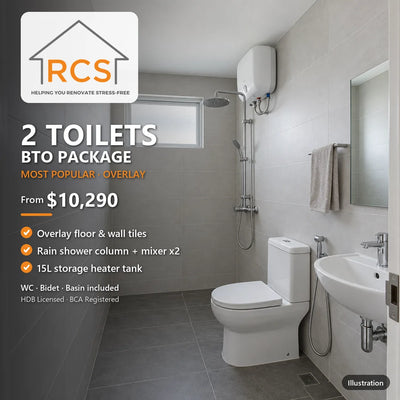
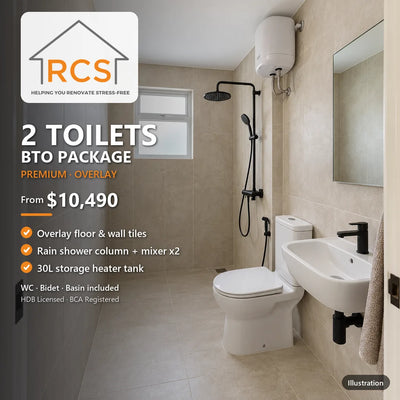
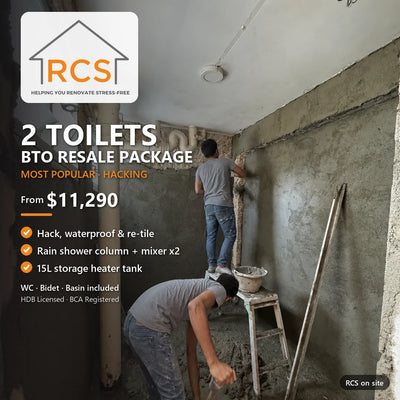
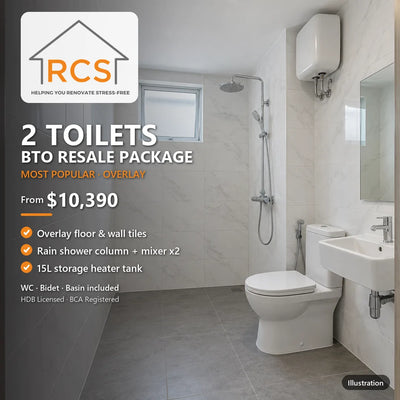
Whether you're refreshing your current flat now or planning ahead for a future replacement unit, here's what a full renovation costs by flat size:
| 3-Room | Resale packages | BTO packages |
| 4-Room | Resale packages | BTO packages |
| 5-Room | Resale packages | BTO packages |
| Kitchen / Toilet only | Resale adhoc | BTO adhoc |
All packages carry transparent, all-inclusive pricing — whole-house resale packages start from S$28,990, BTO move-in packages start from S$7,290. Get an exact quote for your flat →
Frequently Asked Questions
What is SERS in Singapore?
SERS stands for the Selective En bloc Redevelopment Scheme, HDB's programme for compulsorily acquiring selected old blocks and offering residents a replacement flat with a fresh 99-year lease. It began in August 1995 and remains highly selective, according to HDB's official SERS page. Only blocks HDB assesses as having strong redevelopment potential are ever chosen.
How is SERS compensation calculated?
HDB pays the market value of your flat as at the SERS announcement date, assessed by a licensed private valuer, plus reasonable moving expenses including a $10,000 removal allowance. Valuers weigh comparable resale transactions, flat size, storey, remaining lease, and renovation condition. Fixtures and fittings stay with the flat and are included in the valuation.
What is the SERS grant and how much is it?
The SERS grant is a subsidy toward a replacement flat bought directly from HDB — $30,000 for most eligible Singapore citizen households, or $15,000 for single-citizen and non-citizen-spouse households. It is credited to the CPF Ordinary Account and can only be used toward the new flat's purchase price, not withdrawn as cash.
How long does the SERS process take from announcement to moving out?
HDB's published SERS guide documents a process running roughly five to six years from the initial announcement to the move-out window, since building an entirely new replacement precinct takes years of construction. Owners then get up to four months after key collection to renovate and move into the new flat before returning the old one.
Can I choose not to take a replacement flat under SERS?
Yes. HDB offers alternatives including applying for a flat elsewhere under a BTO or Sale of Balance Flats exercise, selling or transferring the SERS flat with its rehousing benefits intact, or accepting an ex-gratia payment of $30,000 plus the SERS grant instead of rehousing benefits. Each path carries different eligibility and resale-levy conditions worth checking with HDB directly.
Should I renovate my HDB flat if I'm worried about SERS?
In almost all cases, yes. HDB states there are currently no plans for further SERS projects, and most HDB blocks — including older ones — have never been and will likely never be selected. A well-planned renovation improves daily living now and is not meaningfully offset against a risk HDB itself describes as effectively closed.
Plan Your Renovation Around Real Numbers, Not SERS Folklore
Whether you're weathering an ageing kitchen in a 1980s block or fitting out a freshly collected replacement flat, the renovation decision deserves the same rigour we bring to every HDB project: proper scoping, an HDB-compliant permit process, and pricing you can actually verify. Every SERS Singapore homeowner's situation is different, and a five-minute conversation usually settles more than another hour of forum reading. Book a consultation with RCS and we'll walk your specific flat through what's worth doing now versus what can wait — no SERS scare tactics, just an honest assessment from a licensed contractor.
Written by M. Aidil, RCS — licensed renovation contractor (HDB Licence HB-11-5877Z · BCA · PMI · BizSafe Level 3).
Disclaimer: SERS selection is determined entirely at HDB's discretion. This article does not predict, imply, or speculate about the SERS status of any specific block, precinct, or estate. Compensation figures, grant amounts, and timelines described here reflect HDB's published policy and guides as at the time of writing and may change; always refer to HDB's official announcements and your SERS Journey Manager for information specific to your flat.
Strategic Content by SingRank.