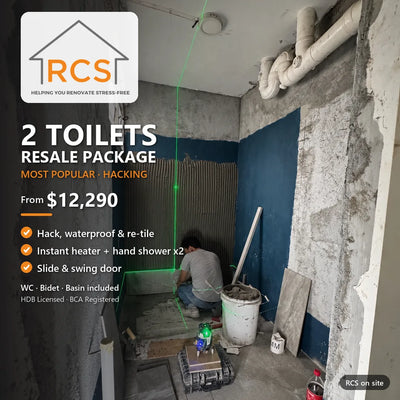



Waterproofing is the most integral part of wet works when it involves the toilets and kitchen. It must be done by trained and highly qualified tradesmen, under close supervision of Project Managers. Other than this, the materials used during the process from start to finish also plays a very important function to the overall outcome.
The materials used, and the process of using it is usually where the waterproofing becomes solid or where future leaks will occur. Now, how can you possibly know this?
Read on.
Materials such as waterproof screed and 104 are mainly the go to materials, trusted by all tilers working in this industry. However, if the process is done too quickly or not used enough. Future leaks will happen. Even after doing water tests, this also does not guarantee that the waterproofing will not fail. Now, what can you do when you are already using industry standard materials approved by HDB mainly and still encounter waterproofing failures?
When such an incident happens, it will cause a big headache to everyone. To the homeowner, and also to the neighbor downstairs. HDB gets called in, everyone’s schedule is interrupted. Life is affected as someone is going through an inconvenience.
Now, what I am going to share with you here is not usually used. Some may even tell you that they don’t use this and they have been doing this for decades. No matter what they say, this material is the one that is going to guarantee your waterproofing does not fail a few months or even years down the road.
This material is a cement with the name of Non Shrinking Grout. This cement when used on bare flooring, will seep through all cracks and seal it up. After this is done, then we use the usual 104. Followed by the waterproof screed. After all this then we lay the floor screed, and finally comes the laying of the tiles.
You can see that by doing this added step using an additional material, the protection of waterproofing goes up tremendously. And followed by peace of mind for years to come.
I hope that this article has benefited you, and please do share this around if you feel many others can benefit as well from it.
Reach out to us should you need further information on the steps for the masonry works, or even to engage us for all your tiling needs.
Till the next article!