
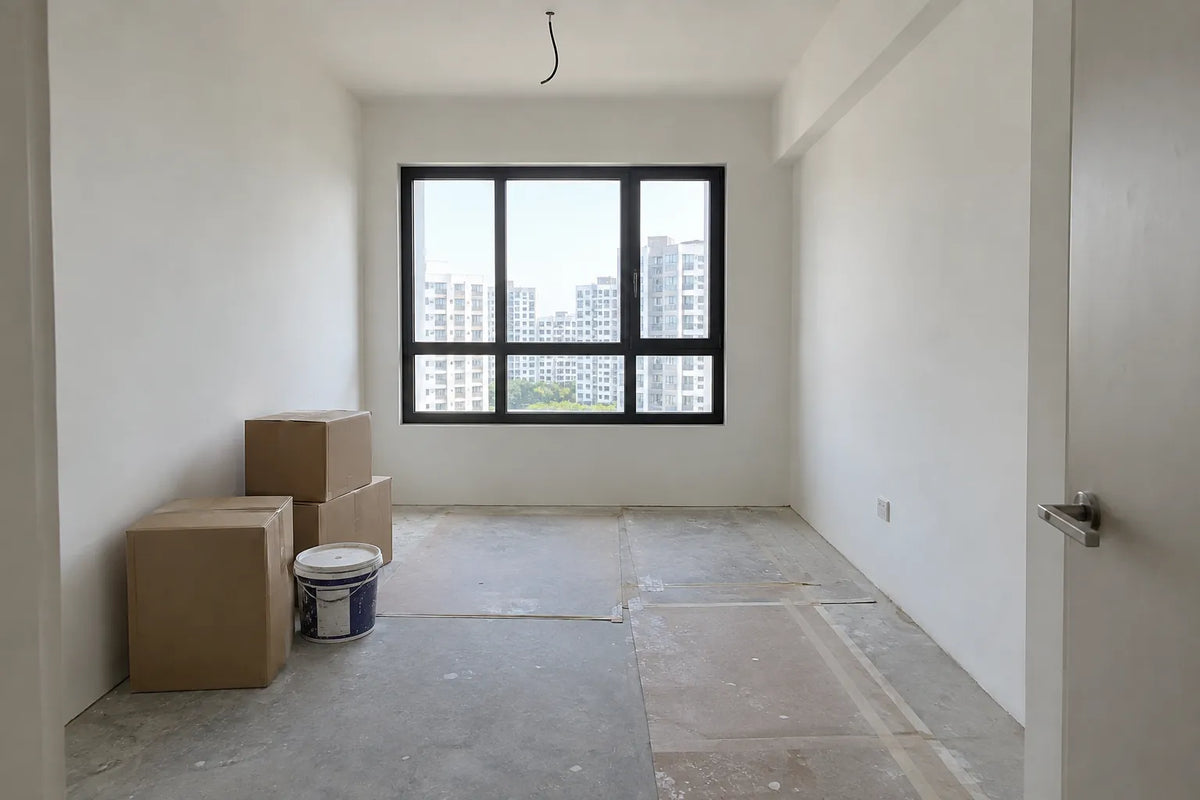

Uneven tiles. Shadows under lighting. One edge higher than the next. These are signs of tile lippage—a preventable installation defect that affects thousands of Singapore HDB flats and private properties annually.
When homeowners notice these issues, many contractors deflect responsibility with familiar excuses: "The tiles are bent." "Manufacturing defects." "Poor tile quality." This deflection masks an uncomfortable reality in Singapore's renovation industry: most lippage results from installation failures, specifically the decision to skip tile levelling systems.
At Renovation Contractor Singapore, tile levelling systems are mandatory on every tiling installation. This article explains why skipping levellers creates lippage, what professional installation requires, and how Singapore homeowners can verify contractor quality.
Common Excuses Used by Poor-Quality Tilers
When lippage appears after installation, certain explanations appear repeatedly. Recognizing these excuses helps identify when contractors deflect responsibility rather than acknowledging installation defects.
Excuse 1: "These Tiles Are Bent From the Manufacturer"
Tiles have manufacturing tolerances for warpage. International standards (ISO 10545-2) permit specific dimensional variations—a 600mm tile can have up to 4-5mm center bowing and still meet quality specifications. Large-format tiles exhibit more warpage than smaller formats due to kiln firing dynamics.
However, manufacturing warpage and installation lippage are distinct issues. Tile levelling systems exist specifically to compensate for manufacturing variations by applying controlled pressure during adhesive curing. When contractors cite "bent tiles" without demonstrating measurement against manufacturing standards, they typically deflect from installation deficiencies.
Excuse 2: "The Tile Quality Is Too Low"
Quality tiles from established manufacturers comply with international dimensional standards (ISO 10545 or equivalent). These standards specify acceptable tolerance ranges for thickness variation, warpage, and edge straightness.
Poor-quality tiles can contribute to installation challenges, but professional installation techniques compensate for reasonable material variations. When contractors cite "low quality" without specifying which dimensional tolerance was violated, this indicates installation failures rather than material defects.
Excuse 3: "The Substrate Wasn't Flat Enough"
Substrate flatness directly affects tile installation quality. Singapore Building and Construction Authority (BCA) standards specify substrate flatness requirements, and proper methodology includes substrate assessment and remediation before tiling begins.
Professional contractors measure substrate flatness during site assessment and document remediation requirements before installation. When substrate problems are cited post-installation without pre-installation documentation, this indicates inadequate preparation.
Excuse 4: "Large Format Tiles Are Difficult to Level"
Large-format tiles (800x800mm, 1200x600mm planks) require specific installation techniques including back-buttering, increased levelling clip density, proper trowel sizing, and extended curing times.
Difficulty does not justify defective work. Large-format tiles are standard in modern Singapore renovations. Contractors citing difficulty with large formats signal inadequate training or unwillingness to apply proper technique.
The Real Causes of Uneven Tiles: Technical Explanation
Understanding lippage mechanisms clarifies why tile levelling systems are essential for professional installation.
Adhesive Inconsistency and Differential Settling
Tile adhesive (thinset mortar) requires consistent application thickness and proper trowel technique. Inconsistent adhesive creates varying bed thicknesses beneath different tiles. As adhesive cures, it undergoes slight shrinkage. Tiles positioned over thicker adhesive beds experience more vertical displacement during curing than tiles over thinner beds.
Without levelling systems maintaining uniform pressure during the 24-hour curing period, this differential settling creates lippage. Tiles settle at different rates based on:
-
Local adhesive bed thickness variations
-
Tile weight differences
-
Substrate absorption rate variations
-
Ambient temperature and humidity affecting cure rates
Tile levelling systems mechanically hold tiles at uniform heights throughout the critical curing window, preventing differential settling.
Substrate Irregularities Transferred to Tile Surface
Substrate flatness tolerances specify maximum deviation over given distances. ANSI A108.02 specifications require flatness within 3mm deviation over 2 meters for standard installations, with tighter tolerances (1.5mm over 2m) for large-format tiles.
When substrate deviations exceed these tolerances without remediation, those irregularities transfer directly to the tile surface. Installing tiles over non-compliant substrates without levelling systems compounds substrate problems with installation deficiencies.
Tile Warpage Amplification Without Constraint
Manufacturing warpage exists within tolerance specifications but becomes problematic during installation when not properly managed. Tiles with center bowing will settle according to that geometry as adhesive cures—unless mechanically constrained.
Tile levelling clips positioned at tile edges apply localized downward force at junction points between adjacent tiles. This force counteracts upward forces from warped tiles, effectively flattening tiles at edges where lippage is measured.
Without levelling systems, tile warpage is unconstrained during curing. Tiles settle according to their geometry, not required flatness specifications.
Inadequate Adhesive Coverage
Proper tile installation requires minimum 95% adhesive coverage for interior dry areas and 100% coverage for wet areas. Inadequate coverage occurs through incorrect trowel size selection, improper trowel technique, failure to back-butter large tiles, or allowing adhesive to skin before tile placement.
When adhesive coverage is inadequate, tiles have inconsistent support. Unsupported tile areas flex under load, and inadequately bonded tiles settle unpredictably during curing, creating lippage and subsequent problems including hollow-sounding tiles, grout cracking, and eventual debonding.
Why Tile Levelling Systems Are Essential in Modern Tiling
Tile levelling systems have become standard professional practice for technical reasons, not marketing preferences.
Mechanical Enforcement of Flatness During Curing
Levelling systems physically hold adjacent tiles at identical heights while adhesive transitions from plastic to set state over approximately 24 hours. During this curing window, adhesive undergoes chemical hydration reactions creating bonding strength while simultaneously causing slight shrinkage.
Without mechanical constraint, tiles settle according to local conditions. With levelling systems, tiles are mechanically prevented from settling differently—they are held in plane regardless of local variations.
This mechanical function cannot be replicated by skill alone. Even experienced installers cannot manually maintain uniform tile heights over hundreds of tiles throughout a 24-hour curing period.
Compensation for Manufacturing Tolerances
Tile manufacturing involves high-temperature kiln firing that creates dimensional variations within specified tolerances. These variations include center warpage, edge warpage, thickness variation, and slight dimensional differences in tile length and width.
Levelling systems apply force at tile edges to counteract center warpage. A tile with 3mm center bowing can be installed with zero edge lippage when levelling clips apply sufficient downward force at edges during adhesive cure. This applies controlled pressure within material tolerances to achieve specification compliance at the critical measurement point.
Consistent Grout Joint Spacing
Modern levelling systems function as precision spacers. Clip bases are manufactured to exact widths corresponding to desired grout joint spacing (typically 2mm, 3mm, 5mm, or 6mm).
When clips are positioned consistently, they enforce uniform grout joint widths throughout installation, creating geometric regularity in grout lines—a defining characteristic of professional installation.
Reduced Installation Variance
Installation quality varies based on installer skill, experience, and attention level. Levelling systems reduce quality variance by mechanically enforcing flatness regardless of installer skill level or fatigue state.
A trained installer using levelling systems produces more consistent results across morning versus afternoon installation, first day versus last day, and first year versus tenth year of experience. The mechanical enforcement creates a quality floor below which results cannot fall.
Reduced Callbacks and Remediation Costs
Lippage complaints generate expensive callbacks. Remediation options include grinding high spots (damages tile surface), partial tile replacement (difficult color matching), or complete reinstallation (200-300% of original cost).
Professional contractors recognize that levelling system costs (approximately SGD 110-385 per typical 50 square meter project based on Singapore 2026 pricing) represent insurance against callbacks potentially costing thousands of dollars plus reputation damage.
Professional Tiling Installation Process at RCS
Renovation Contractor Singapore's tiling methodology integrates levelling systems as one component of comprehensive installation standards.
Pre-Installation Assessment and Documentation
Before tiles are purchased or installation begins, substrate conditions are assessed and documented:
Flatness Measurement: Substrates are measured using 2-meter straight edge to identify deviations exceeding tolerance specifications. Measurements are taken in multiple directions across the installation area.
Moisture Testing: Substrate moisture content is measured using electronic moisture meters. Excessive moisture (typically above 2% for cementitious substrates) requires remediation before installation proceeds.
Structural Soundness: Substrates are inspected for cracks, delamination, hollow areas, and structural defects requiring repair before tiling.
Photographic Documentation: Substrate conditions are photographed for project records.
This assessment identifies remediation requirements before installation, preventing post-installation discovery of substrate issues.
Substrate Preparation and Remediation
Based on assessment findings, substrate preparation is completed to specification:
Flatness Correction: Substrates exceeding flatness tolerances are ground for high spots or filled with self-leveling compound for depressions to achieve specification compliance.
Crack Repair: Structural cracks are repaired according to BCA standards. Movement joints are installed where specified to accommodate building movement.
Waterproofing: Wet areas receive complete waterproofing membrane installation before tiling, tested for water-tightness according to Singapore standards. Our HDB bathroom renovation services include comprehensive waterproofing with 24-hour ponding tests.
Priming: Substrates are primed using appropriate primers to control absorption and improve adhesive bonding.
Adhesive Selection and Application
Adhesive selection matches tile characteristics and installation location:
Modified Thinset for Large Format: Tiles 600x600mm and larger require modified thinset with improved bonding strength and reduced shrinkage.
Waterproof Adhesive for Wet Areas: Bathrooms, kitchens, and balconies receive waterproof adhesive formulations. Our kitchen renovation packages include appropriate adhesive specifications for wet area installations.
Proper Trowel Sizing: Trowel notch size is selected based on tile size:
-
300x300mm tiles: 6mm x 6mm notch
-
600x600mm tiles: 10mm x 10mm notch
-
800x800mm and larger: 12mm x 12mm notch
Consistent Application Technique: Adhesive is applied using consistent trowel angle (45 degrees) and pressure to create uniform ridge height.
Tile Levelling System Installation Protocol
Levelling systems are installed according to manufacturer specifications and professional standards:
Clip Density Based on Tile Size:
-
600x600mm tiles: 4 clips per tile (one per side, 50mm from corners)
-
800x800mm tiles: 6 clips per tile (two per long side)
-
1200x600mm planks: 8 clips per tile
Proper Clip Positioning: Clips are inserted immediately after tile placement while adhesive remains plastic. Clips are positioned perpendicular to tile edges with bases fully embedded in adhesive.
Wedge Tightening Protocol: Wedges are inserted and tightened using levelling pliers (not by hand) to achieve consistent pressure. Tightening continues until slight resistance is felt—adequate to level tiles without over-stressing.
Back-Buttering Large Format Tiles: Tiles 600x600mm and larger receive additional adhesive application on tile backs to ensure minimum 95% adhesive coverage.
24-Hour Minimum Curing: Levelling systems remain installed for minimum 24 hours before removal, regardless of stated adhesive "walk-on time." Full curing is required before mechanical constraint is removed.
Quality Control Inspection Points
Multiple inspection stages ensure specification compliance:
During Installation Inspection: Site supervision verifies proper adhesive application, correct clip positioning and density, appropriate wedge tightening, and compliance with installation sequence.
Pre-Removal Inspection: Before levelling systems are removed after 24-hour cure, tile surface is inspected using 2-meter straight edge to verify flatness compliance.
Post-Grouting Final Inspection: After grouting completion, final inspection verifies flatness, grout joint consistency, proper tile alignment, absence of hollow tiles (tested by tapping), and overall installation quality.
Visual Proof: Tile Levelling Systems in Professional Installation
Professional installation technique is demonstrated through documentation. Below are descriptions of what professional tiling installation documentation should include:
Tile levelling clips positioned at tile edges during installation: Clips visible under tile edges at regular intervals, typically 50mm from corners.
Wedges inserted into clips with levelling pliers: Wedges fully engaged in clip mechanisms, tightened to proper tension using specialized pliers.
Multiple tiles with levelling systems showing clip density: Overview showing consistent clip placement across entire installation area with appropriate density for tile size.
Close-up of clip and wedge assembly at tile junction: Detail showing proper clip positioning perpendicular to tile edge, wedge engagement, and uniform grout joint spacing.
Completed tile surface before levelling system removal: Installation after 24-hour cure showing levelling systems still in place before removal.
Final completed installation showing uniform grout lines: Finished surface demonstrating flat tiles, consistent grout joint widths, and professional alignment.
RCS provides photographic documentation of levelling system usage on all projects. This documentation is routine because levelling system usage is standard methodology, not exceptional practice.
Technical Specifications: Professional Installation Requirements
Professional tile installation in Singapore complies with specific technical requirements:
Flatness Tolerances
ANSI A108.02 Specifications (international standard):
-
Maximum 3mm deviation over 2 meters for standard tile installations
-
Maximum 1.5mm deviation over 2 meters for large-format tiles (600mm+)
-
Maximum 1.5mm lippage for grout joints 6mm or wider (plus inherent tile warpage per ANSI A137.1)
Adhesive Coverage Requirements
Minimum Coverage Standards:
-
Interior dry areas: 95% coverage
-
Wet areas (bathrooms, kitchens): 100% coverage
-
Exterior areas: 100% coverage
-
Large-format tiles (all locations): 100% coverage
Levelling System Specifications
Clip Density Requirements:
-
Minimum 4 clips per tile for standard installations
-
Increased density (6-8 clips per tile) for large-format tiles
-
Clip positioning 50mm from tile corners
-
Clips positioned on all four sides of each tile
Curing Duration:
-
Minimum 24 hours before levelling system removal
-
Extended to 36-48 hours in high-humidity conditions
-
No foot traffic during curing period
Singapore-Specific Requirements
HDB Renovation Guidelines:
-
Licensed contractor requirement for wet area tiling
-
Maximum combined tile and screed thickness: 50mm
-
Mandatory waterproofing in bathrooms and kitchens
-
Permit requirements for tile replacement in wet areas
-
3-year restriction on bathroom tile replacement in BTO flats
View our complete HDB bathroom renovation guidelines for detailed regulatory requirements.
BCA CONQUAS Standards:
-
Tiling workmanship evaluated in quality assessment scoring
-
Maximum 0.5mm lippage tolerance between adjacent tiles
-
Water-tightness testing for wet area installations
-
Pull-off tests for internal wall tiles (1 set per 10,000 square meters)
BCA CONQUAS 2022 data shows 25% reduction in major defects including improper internal wall tile installation for inspections from 2013-2022 compared to 2003-2012, reflecting industry adoption of professional installation techniques.
What Singapore Homeowners Should Verify
When evaluating contractors for tiling work in HDB flats or private properties, specific verification points distinguish professional installation from substandard work:
Contractor Qualification Questions
"Do you use tile levelling systems on all installations?"
Professional answer: "Yes, on every installation regardless of tile size or project scope."
Warning sign: "Only if requested" or "Only for large-format tiles" or "We don't need them—our workers are experienced."
"What specific levelling system brand and type do you use?"
Professional answer: Names specific manufacturer and system type (wedge/clip, spin cap, etc.).
Warning sign: Cannot name specific system or says "various systems depending on project."
"How many clips per tile do you install for 600x600mm tiles?"
Professional answer: "4-6 clips per tile depending on tile characteristics."
Warning sign: "Whatever is needed" or significantly lower density.
"How long do levelling systems remain installed before removal?"
Professional answer: "Minimum 24 hours for full adhesive cure."
Warning sign: "8-12 hours" or "Until we can walk on it."
"Can you provide recent installation photos showing levelling systems in place?"
Professional answer: Provides multiple project photos showing systems during installation.
Warning sign: Cannot provide photos, only shows finished installations, or becomes defensive.
"Are you HDB-licensed and BCA-registered?"
Professional answer: "Yes, we are HDB DRC-registered and BCA CRS-registered."
Warning sign: Claims licensing but cannot provide registration numbers or verification method.
"Do you have BizSafe Level 3 certification?"
Professional answer: "Yes, we are BizSafe Level 3 certified with valid risk management documentation."
Warning sign: "Not required for renovation work" or cannot provide certification evidence.
Documentation Requirements
Professional contractors provide:
-
Pre-installation substrate assessment reports
-
Installation methodology statements specifying levelling system usage
-
Progress photographs showing levelling systems during installation
-
Post-installation inspection reports with flatness verification
-
Comprehensive warranty covering installation workmanship
-
Valid HDB DRC registration certificate
-
Valid BCA CRS registration certificate
-
Valid BizSafe Level 3 certificate
Red Flags Indicating Substandard Practice
Price Significantly Below Market Rate: Professional installation has defined material and labor costs. Based on Singapore 2026 market rates, tiling labor costs SGD 6-8 per square foot for HDB living areas and SGD 7-9 per square foot for walls, plus materials (SGD 2-3 per square foot) and tiles (SGD 3+ per square foot). Quotes significantly below these ranges likely indicate shortcuts including levelling system omission.
Unusually Fast Timeline Promises: Proper tiling requires preparation time, installation time, and mandatory curing periods. Our bathroom renovation timeline typically requires 5-6 days for proper execution.
Defensive Responses to Technical Questions: Professional contractors explain methodology clearly and welcome detailed questions.
Cannot Provide Installation Documentation: Professional projects are documented photographically throughout execution.
Post-Installation Blame Assignment: When lippage appears, professional contractors assess installation methodology to identify root causes rather than immediately blaming tiles or substrate.
Cannot Verify HDB/BCA Registration: Homeowners can verify contractor registration through HDB InfoWEB DRC portal and BCA eBACS system. Contractors unable or unwilling to provide verification details signal potential registration issues.
Cost Reality: Material Costs vs. Remediation Expenses
Economic analysis demonstrates that skipping levelling systems creates false economy.
Material Cost Comparison (Singapore 2026 Pricing)
Standard 50 Square Meter Tiling Project:
Levelling system costs (based on Singapore 2026 supplier pricing):
-
Clips (1,100-1,500 units @ SGD 0.05-0.15): SGD 55-225
-
Wedges (400-600 reusable units @ SGD 0.10-0.20): SGD 40-120
-
Pliers (one-time investment): SGD 15-40
-
Total: SGD 110-385
This represents 1.5-3% of typical tile installation cost for 50 square meters (SGD 4,000-6,000 including materials and labor based on Singapore market rates).
Remediation Cost Comparison
Lippage Remediation Costs:
Minor lippage (grinding high spots):
-
Professional grinding: SGD 80-120 per square meter
-
50 square meter project: SGD 4,000-6,000
-
Plus resealing costs: SGD 500-1,000
Major lippage (partial tile replacement):
-
Tile removal and replacement: SGD 50-100 per square meter
-
Matching grout color difficulty
-
Risk of damaging adjacent tiles
-
50 square meter project: SGD 2,500-5,000
Complete reinstallation:
-
Full removal and reinstall: 200-300% of original cost
-
50 square meter project: SGD 8,000-18,000
Long-Term Performance Costs
Beyond immediate remediation, lippage creates ongoing problems:
Accelerated Wear: High spots experience concentrated foot traffic stress, leading to premature tile cracking and grout failure.
Water Damage in Wet Areas: Lippage disrupts water drainage, causing ponding and potential water seepage into substrates. Water damage remediation costs significantly exceed tiling costs.
Property Value Impact: Visible lippage signals poor renovation quality to prospective buyers or tenants, reducing property marketability and sale/rental prices.
Safety Liability: Protruding tile edges create trip hazards, particularly dangerous for elderly residents and children.
RCS Service Areas and Comprehensive Renovation Solutions
Renovation Contractor Singapore provides professional tiling installation island-wide, serving all HDB estates and private properties throughout Singapore.
Complete Renovation Packages
Our comprehensive renovation services ensure consistent quality across all aspects of your project:
-
Kitchen Renovation Packages: From SGD 5,590 for cabinet-only solutions to complete kitchen transformations including tiling
-
Bathroom Renovation Services: Professional wet area tiling with mandatory waterproofing and levelling systems
-
BTO Kitchen Renovation: Specialized packages for new BTO flats starting from SGD 5,590
-
Carpentry Services: Integrated carpentry and tiling solutions for complete home transformations
Area-Specific Expertise
We serve homeowners throughout Singapore with specialized knowledge of local requirements:
-
Tiong Bahru Renovation: Heritage flat bathroom renovations from SGD 9,990
-
Woodland Bathroom Renovation: North region HDB packages with 12-month warranty
-
Choa Chu Kang Bathroom Renovation: BTO and resale packages from SGD 10,290
All packages include mandatory tile levelling system usage, comprehensive waterproofing, and quality control inspection.
Professional Standards Are Non-Negotiable
Tile lippage is not an unavoidable outcome of tile manufacturing variation or substrate challenges. It is a preventable installation defect resulting from inadequate methodology—specifically, the decision to skip tile levelling systems.
Professional installation technique in Singapore's renovation market requires:
-
Substrate assessment and remediation to specification
-
Appropriate adhesive selection and application
-
Tile levelling system usage on 100% of installations
-
Minimum 24-hour curing before system removal
-
Quality control inspection at multiple stages
These requirements are not negotiable based on tile size, project budget, or timeline pressure. They represent minimum professional standards for specification-compliant installation.
Contractors who cite tile quality, substrate problems, or installation difficulty when lippage appears deflect from installation deficiencies. Professional contractors manage tile variations, remediate substrate issues, and apply appropriate techniques regardless of difficulty.
At Renovation Contractor Singapore, tile levelling system usage is documented on every project because it occurs on every project. This is not a marketing differentiator—it is baseline professional practice. Our tiling installations follow BCA standards and HDB requirements because methodology is designed to achieve specification compliance.
When selecting contractors for HDB renovation, BTO finishing, or private property tiling, verification of levelling system usage should be non-negotiable. Contractors who cannot or will not commit to documented levelling system usage should be eliminated from consideration regardless of price or timeline advantages.
Professional tiling installation creates long-term value through specification-compliant flatness, reduced maintenance requirements, and enhanced property value. This value significantly exceeds the small material costs of proper installation technique.
Contact RCS for Professional Tiling Installation
Your renovation investment deserves professional execution. Demand documented evidence of tile levelling system usage. Verify installation methodology before contract signing. Inspect work in progress to confirm compliance.
Renovation Contractor Singapore (RCS)
Phone: +65 8784 8742
Office: 31 Woodlands Close #03-06, Singapore 737855
Website: https://renovationcontractorsingapore.com
Email: Contact via website inquiry form
Quality installation is achievable when contractors commit to professional standards. Choose contractors who demonstrate that commitment through documentation, methodology transparency, and technical competence.
For comprehensive renovation services with guaranteed tile levelling system usage on all installations, contact RCS Renovation Contractor Singapore for detailed consultation and project quotation.
About Renovation Contractor Singapore
RCS is an HDB-licensed renovation contractor (DRC registered) specializing in comprehensive renovation services for HDB flats (BTO and resale) and private properties throughout Singapore since 2017. Our systematic installation methodology—including mandatory tile levelling systems on all tiling projects—ensures work quality following Singapore BCA standards and HDB requirements.
Professional Certifications
HDB Licensed Contractor: Registered in HDB Directory of Renovation Contractors (DRC) with active status, authorized to perform HDB flat renovations including wet area tiling, structural works, and permit-required renovations under Housing & Development (Renovation Control) Rules.
BCA Registered Contractor: Registered under Building and Construction Authority Contractors Registration System (CRS), meeting financial capability and technical qualification requirements under Building Control Act.
BizSafe Level 3 Certified: Certified by Workplace Safety and Health (WSH) Council with documented Risk Management systems. This certification confirms implementation of comprehensive risk assessments and management procedures for all work activities, in compliance with WSH (Risk Management) Regulations.
PMI Professional Member: Professional Member of Project Management Institute Singapore Chapter, demonstrating commitment to professional standards in project execution and management.
Quality Standards and Warranty
We provide detailed quotations with scope of work specifications, 3D design renderings, transparent project timelines, and comprehensive 12-month workmanship warranty covering installation defects. All projects include:
-
Pre-installation substrate assessment and documentation
-
Progress photography showing installation methodology
-
Quality control inspection at multiple stages
-
Post-completion documentation and warranty certificate
Regulatory Compliance
Our renovation methodology complies with:
-
HDB renovation guidelines and permit requirements
-
BCA Building Control Act and regulations
-
WSH Act workplace safety requirements
-
BCA CONQUAS quality assessment criteria
Commitment to Professional Standards
Our tile levelling system usage is non-negotiable because it represents baseline professional standard, not premium service. We follow BCA standards and HDB requirements in all installations to ensure specification compliance.
When you engage RCS for tiling installation, you receive workmanship executed under Singapore's regulatory framework by a licensed and certified contractor.
Verification: Homeowners can verify our credentials through:
-
HDB InfoWEB DRC portal (search by company name)
-
BCA eBACS system (contractor registration verification)
-
WSH Council BizSafe directory (certification status check)
-
PMI Singapore Chapter member directory
View our complete renovation packages or read our detailed renovation guide for planning your next project.