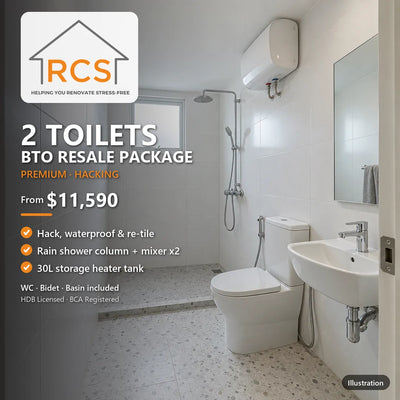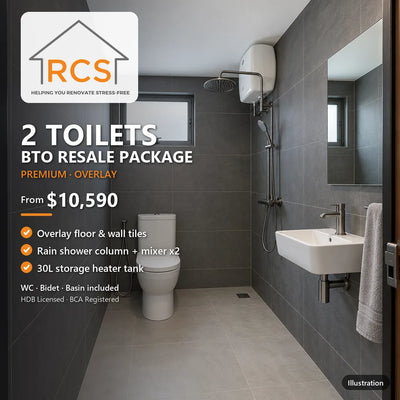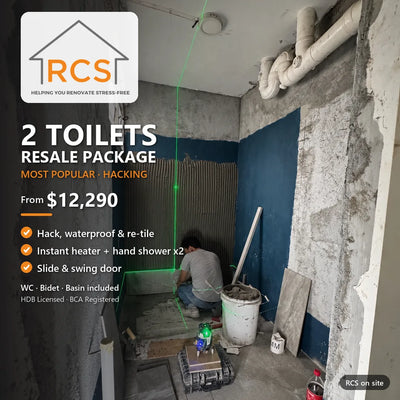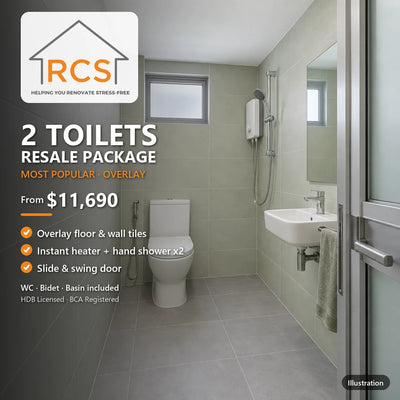

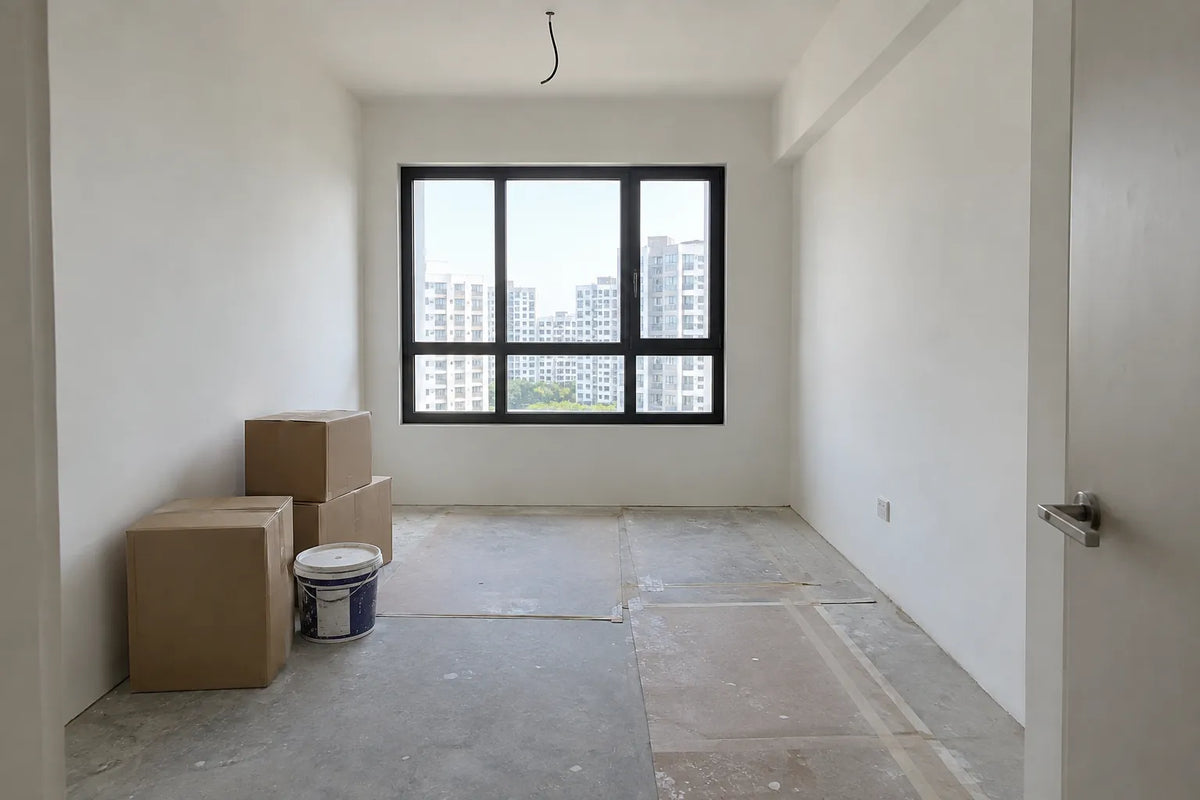

Renovating a property in Singapore is a unique challenge. It sits at the intersection of high-density urban living, strict statutory regulations, and the personal desire to create a sanctuary. Whether you are collecting keys to a brand-new Build-To-Order (BTO) flat in Punggol, restoring a Resale HDB in Tampines, or upgrading a private condominium, the journey from bare concrete to a dream home is complex.
This comprehensive guide serves as your definitive roadmap. We cover every phase: from navigating HDB's draconian hacking permits to selecting the right interior design themes like Japandi or Modern Luxury, and finally, ensuring a defect-free handover.
PART 1: THE REGULATORY FOUNDATION (ZERO RISK COMPLIANCE)
Before you look at mood boards or tile samples, you must understand the legal parameters. Singapore's renovation laws are non-negotiable. Ignoring them is not just illegal; it endangers the structural integrity of your building and the safety of your neighbors.
1.1 The HDB Renovation Permit System
For public housing, the Housing & Development Board (HDB) is the ultimate authority. Most major works require a Written Permit before commencement.
Renovation Works That Require HDB Permits:
| Work Type | Legal Requirement | Timeline |
|---|---|---|
| Wall Hacking (Non-Load Bearing) | Written Permit Required | 3 consecutive days maximum |
| Floor Hacking or Raising (>50mm) | Written Permit Required | Included in overall permit duration |
| Bathroom Tile Hacking (BTO >3 years) | Written Permit Required | Use Overlay Method for <3 years |
| Window Replacement | Written Permit + BCA Approval | 2 weeks completion |
| Door Replacement (Fire Escape Route) | Written Permit Required | Must maintain 600mm corridor clearance |
| New Plumbing Points | Written Permit Required | Part of wet works approval |
| Major Electrical Rewiring | Written Permit + EMA License | Licensed Electrician mandatory |
| Air-Con Installation (30-amp switch) | Written Permit + Load Check | 14-day installation report to HDB |
Key Insight: You cannot start any of these works without official HDB approval. Hiring an unlicensed contractor to perform permitted works makes you legally liable, not the contractor.
Why Load-Bearing Walls Are Absolutely Off-Limits
The prohibition on hacking load-bearing walls is not a suggestion—it is law under the Building Control Act. Here's why:
-
Load-bearing walls (reinforced concrete, typically 150mm+) support the weight of floors, roof, and residents above.
-
Hacking these walls can trigger a domino effect of structural failure, affecting not just your unit but your neighbors' units as well.
-
Even if a contractor claims they can "hack just a bit," it is illegal and dangerous.
Identification Tip: On your floor plan, load-bearing walls are marked with thick, solid black lines. When in doubt, hire a Professional Engineer (PE) to verify (cost: S$800–S$2,000).
The Critical 3-Year Restriction for BTO Flats
New BTO homeowners face a unique regulation: You cannot hack bathroom and toilet wall/floor tiles for 3 years from key collection.
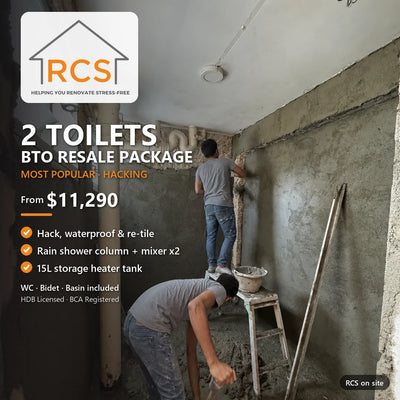
Why? The waterproofing membrane installed by HDB's contractors needs time to stabilize. Hacking damages this membrane, causing ceiling leaks in the unit below—a nightmare for you and your downstairs neighbor.
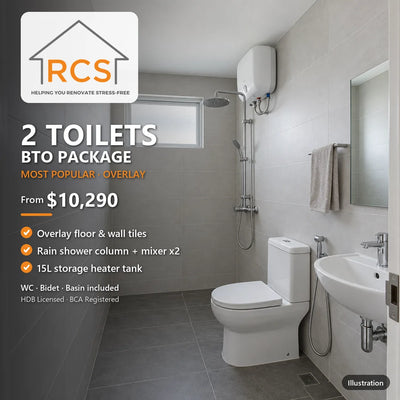
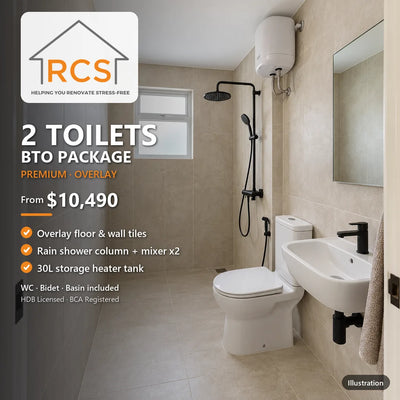
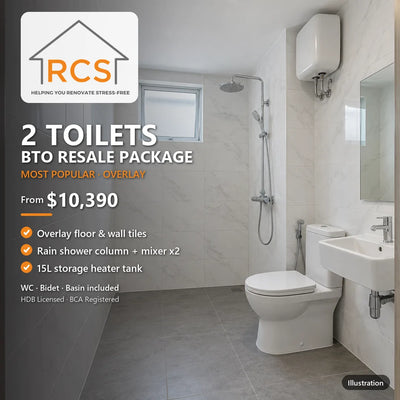
The Legal Workaround: Use the Overlay Method. Lay new tiles directly over existing ones using specialized adhesives, leaving the waterproofing membrane intact.
👉 Expert Solution: Explore Bathroom Renovation Packages that comply with the 3-year restriction using the overlay method.
1.2 Private Property & Condo Guidelines (BCA & MCST)
Private properties fall under stricter scrutiny. You face a dual layer of governance:
BCA (Building and Construction Authority)
-
Oversees structural safety across all properties (HDB, Condo, Landed).
-
Requires plan approval from the Commissioner of Building Control for any structural modification.
-
Licenses all structural engineers and window contractors.
MCST (Management Corporation Strata Title)
-
Manages the condo's common property and aesthetics.
-
Often imposes stricter working hours (e.g., 10:00 AM – 5:00 PM weekdays only).
-
May require a Renovation Deposit (typically S$2,000–S$5,000) before work commences.
-
Enforces facade consistency (no unauthorized colors, grilles, or external modifications).
Practical Tip: Before engaging a contractor for your condo, obtain a copy of your MCST's Renovation Guidelines. They are often stricter than HDB rules.
1.3 Critical Utility Licensing (EMA & PUB)
Singapore does not allow DIY work for critical utilities. This is non-negotiable.
Electrical Work (EMA Licensing)
Under the Electricity Act, only an EMA-Licensed Electrical Worker (LEW) can carry out electrical installations.
What's Illegal:
-
A handyman touching your distribution board (DB box).
-
Installing new wiring without an LEW license.
-
Modifying your electrical sub-panel.
Penalties: Fines up to S$10,000 and potential jail time.
Three Classes of Licensed Electrical Workers:
| Class | Max Load | Authorized Works |
|---|---|---|
| Licensed Electrician | 45kVA | Installation, repair, testing (1,000V and below) |
| Licensed Technician | 150kVA (design) | Design + all electrician works |
| Licensed Engineer | No limit | High-voltage systems + design |
Verification: Always check your electrician's license on the EMA e-Licence portal.
Plumbing & Water Safety (PUB)
-
Any work involving potable water pipes must be done by a PUB Licensed Plumber.
-
This protects Singapore's water supply from contamination.
Gas Safety (Tuas Power/Gas Lines)
-
Gas riser pipes must maintain specific clearance distances from stoves and sinks.
-
The industry standard: minimum 0.6 meters from gas source to cooking hob and sink.
-
Gas pipes cannot be fully concealed in walls where they cannot be inspected.
Interior Design Implication: When planning your open-concept kitchen, ensure your contractor accounts for these gas safety distances.
PART 2: BUDGETING & FINANCIAL PLANNING (2026 PRICES)
A successful renovation is one that aligns with your financial reality. In 2026, material and labor costs in Singapore have stabilized but remain significant.
2.1 Estimated Renovation Costs by Property Type
HDB BTO (Build-To-Order) Flats
New HDB units come with basic finishes. Costs are lower because minimal hacking is required.
| Unit Size | Low Budget | Mid-Range | Premium |
|---|---|---|---|
| 2-Room | S$18,000 | S$30,000 | S$50,000 |
| 3-Room | S$25,000 | S$45,000 | S$70,000 |
| 4-Room | S$30,000 | S$55,000 | S$90,000 |
| 5-Room | S$40,000 | S$70,000 | S$120,000 |
What's Included: Flooring overlay, carpentry (wardrobes), painting, electrical switches/lights, plumbing fixture upgrades, kitchen cabinet overhaul.
HDB Resale Flats
Older units require extensive demolition, rewiring, and waterproofing renewal. Costs are significantly higher.
| Unit Size | Budget Range |
|---|---|
| 3-Room | S$51,000 – S$90,000 |
| 4-Room | S$60,000 – S$80,300 |
| 5-Room | S$80,000 – S$97,000+ |
Why Higher? Older flats (20+ years) often need:
-
Full electrical rewiring (old wiring is fire-hazard prone).
-
Extensive hacking and structural repairs.
-
Waterproofing renewal in bathrooms.
-
Plumbing upgrades or relocation.
Private Condominiums
Condo renovations vary wildly based on luxury finishes, site access, and MCST requirements.
| Scope | Budget Range |
|---|---|
| Basic Update | S$60,000 – S$80,000 |
| Moderate Overhaul | S$80,000 – S$120,000 |
| Luxury Renovation | S$120,000 – S$200,000+ |
2.2 Hidden Costs to Watch For
The advertised quote often masks additional expenses:
| Hidden Cost | Typical Price | Why It Happens |
|---|---|---|
| Electrical Load Upgrade | S$800–S$1,500 | Installing multiple heavy appliances (induction hob, System 4 air-con) requires 32A → 40A upgrade via SP Services |
| Debris Haulage | S$1,500–S$3,000 | Regulated disposal of concrete and construction waste |
| Chemical Cleaning | S$800–S$1,200 | Heavy-duty industrial clean before handover |
| Professional Engineer (PE) Assessment | S$800–S$2,000 | Required for structural modifications or load-bearing wall confirmation |
| MCST Renovation Deposit (Condo) | S$2,000–S$5,000 | Refundable, held for potential damage to common areas |
Pro Tip: Always request a detailed, itemized quotation that breaks down labor, materials, licensing fees, and disposal costs. Vague lump-sum quotes hide surprises.
👉 Transparent Pricing: Review Singapore Home Renovation Guide 2026 for benchmark costs and package breakdowns.
PART 3: INTERIOR DESIGN STRATEGIES & MATERIAL SELECTION
This is where your house becomes a home. In Singapore's compact living spaces, Space Planning is just as important as aesthetics.
3.1 Popular Interior Design Styles in Singapore (2025–2026)
1. Japandi (Japanese + Scandinavian)
The dominant trend in Singapore. It combines Japanese minimalism with Scandinavian warmth.
Key Characteristics:
-
Light wood finishes (oak, ash, natural walnut).
-
Neutral color palette (beige, soft grey, cream).
-
Clean lines and clutter-free spaces.
-
Natural materials (wood, stone, linen).
-
Functional storage (hidden cabinets, minimalist shelving).
Best For: HDB flats and smaller condos where space is premium.
2. Modern Luxury
Emphasizes sophistication and high-end materials. Popular among high-income earners.
Key Characteristics:
-
Dark tones (charcoal, navy, black walls).
-
Premium materials (marble, terrazzo, sintered stone).
-
Gold or brushed steel accents.
-
Mirrored features and statement lighting.
-
Open-concept layouts.
Best For: Large condos and landed properties.
3. Minimalist Industrial
Exposed pipes, raw textures, and functional design.
Key Characteristics:
-
Exposed conduits and ductwork.
-
Cement screed or cement-look tiles.
-
Track lighting and pendant lights.
-
Raw brick or concrete features.
-
Metal frames and utilitarian furniture.
Best For: Younger homeowners and creative professionals.
4. Biophilic Design (Nature-Inspired)
Integrating natural elements to boost wellness.
Key Characteristics:
-
Indoor plants and vertical gardens.
-
Natural wood and stone textures.
-
Maximized natural light.
-
Earthy color palette (greens, browns, terracotta).
-
Water features (fountains, aquariums).
Best For: Health-conscious families seeking a calming environment.
3.2 Material Selection Guide
Flooring: The Foundation
Your flooring choice affects both aesthetics and functionality. In Singapore's humid climate, durability and moisture resistance are critical.
| Material | Pros | Cons | Cost | Best For |
|---|---|---|---|---|
| Vinyl (LVT/SPC) | Waterproof, cheap, easy overlay, mimics wood perfectly | Can feel plastic-like, limited lifespan (10-15 years) | S$3–S$8/sqft | HDB BTO, overlay method, rental properties |
| Laminate | Affordable, huge design variety, durable | Not waterproof, can swell if wet, requires underlay | S$5–S$12/sqft | Bedrooms, living areas (NOT wet areas) |
| Porcelain Tiles | Extremely durable, low maintenance, timeless | Cold, echoing, noisy footsteps, hacking required to change | S$8–S$20/sqft | Kitchens, bathrooms, high-traffic zones |
| Engineered Wood | Natural look, better stability than solid wood | More expensive, requires climate control, limited warranty | S$15–S$40/sqft | Living rooms in high-end condos |
Singapore-Specific Tip: Humidity is relentless. Avoid solid wood in kitchens and bathrooms. Vinyl or porcelain tiles are the safest choices for wet areas.
Kitchen Countertops: The Workstation
| Material | Heat Resistance | Scratch Resistance | Maintenance | Cost |
|---|---|---|---|---|
| Quartz (Engineered Stone) | Excellent | Excellent | Easy (non-porous) | S$100–S$200/ft |
| Laminate | Poor (can melt) | Poor | Easy but chips easily | S$30–S$80/ft |
| Solid Surface | Good | Good | Moderate (repairable) | S$120–S$180/ft |
| Granite | Excellent | Excellent | High (requires sealing) | S$120–S$250/ft |
| Sintered Stone | Excellent | Excellent | Easy | S$150–S$300/ft |
Trend Alert 2026: Sintered Stone (man-made stone) is overtaking quartz as the premium choice. It's more heat-resistant and offers unlimited design options.
Cabinetry & Carpentry: Storage Solutions
| Material | Durability | Aesthetics | Cost | Best For |
|---|---|---|---|---|
| Plywood + Laminate | Excellent | Modern | S$800–S$1,200/meter | Industry standard for HDB flats |
| Acrylic Doors | Good | High-gloss, contemporary | S$1,200–S$1,800/meter | Modern luxury interiors |
| Melamine | Good | Basic, flat finish | S$600–S$1,000/meter | Budget-conscious renovations |
| Solid Wood | Excellent | Warm, premium | S$1,500–S$3,000+/meter | High-end condos |
RCS Insight: Professional Kitchen Cabinet Packages use plywood + laminate as the industry-standard balance of durability and cost-efficiency.
Wall Finishes: Paint & Texture
| Finish Type | Humidity Resistance | Maintenance | Cost | Best For |
|---|---|---|---|---|
| Emulsion (Matte) | Poor | Stains easily | S$1–S$3/sqft | Bedrooms, low-traffic areas |
| Silk Finish | Moderate | Wipeable | S$1.50–S$4/sqft | Living rooms, hallways |
| Satin/Eggshell | Good | Easy to clean | S$2–S$5/sqft | Kitchens, bathrooms |
| High-Gloss | Excellent | Very wipeable | S$3–S$6/sqft | Humidity-prone areas, feature walls |
| Textured/Feature Walls | Varies | Dust-catching | S$3–S$8/sqft | Accent walls, contemporary designs |
Singapore Renovation Best Practice: Use High-Gloss or Satin Finishes in kitchens and bathrooms. They resist humidity and mold growth better than matte finishes.
👉 Professional Paint Services: Check out Professional Painting Services for compliant, quality finishes.
PART 4: THE CONSTRUCTION WORKFLOW & TIMELINE
Understanding the sequence of work helps you manage expectations and spot delays.
4.1 The Typical Renovation Phases
Phase 1: Pre-Commencement (Weeks 1–4)
Activities:
-
Submit HDB permit application via contractor.
-
Approve final 3D designs and material samples.
-
Arrange financing (renovation loan, if needed).
-
Notify neighbors in writing.
Typical Wait: 2–3 weeks for HDB permit approval.
Phase 2: Site Setup & Demolition (Weeks 5–7)
Activities:
-
Site protection (corrugated board, plastic sheeting).
-
Dismantling fixtures (old cabinets, tiles, appliances).
-
Hacking of non-load bearing walls (if permitted).
-
Debris removal and site cleanup.
Key Compliance: Hacking must be completed within 3 consecutive days. Noisy work only between 9:00 AM – 5:00 PM.
Phase 3: Rough-In Works (Weeks 8–11)
Activities:
-
Plumbing first fix (water pipes concealed in walls/floors).
-
Electrical rewiring and conduit installation.
-
Waterproofing screed application in wet areas.
-
Structural repairs (if needed).
Critical Milestone: Waterproofing must be tested via Water Ponding Test before proceeding to tiling.
Phase 4: Finishing Works (Weeks 12–16)
Activities:
-
Carpentry: Fabrication and installation of cabinets, wardrobes.
-
Tile laying in kitchen and bathrooms.
-
Flooring installation (vinyl, laminate, or tiles).
-
Plastering and drywall finishing.
Quality Check: Inspect carpentry alignment and gaps before final payment to contractor.
Phase 5: Final Fit-Out (Weeks 17–19)
Activities:
-
Plumbing second fix (taps, shower heads, toilet bowls).
-
Electrical second fix (light fixtures, switches, outlets).
-
Painting (final coats).
-
Installation of doors, mirrors, and accessories.
Phase 6: Final Inspection & Handover (Weeks 20–22)
Activities:
-
Comprehensive walkthrough (defect inspection).
-
Testing of all systems (plumbing flow, electrical, ventilation).
-
Chemical cleaning of the entire unit.
-
Rectification of any defects (contractor's responsibility).
Final Payment: Only after you are satisfied with all works.
4.2 Timeline Variations
| Property Type | Typical Duration | Fastest Possible | Delays Expected |
|---|---|---|---|
| HDB BTO (Basic) | 12–14 weeks | 8 weeks | Material delays, hacking backlogs |
| HDB Resale (Full) | 16–20 weeks | 12 weeks | Structural issues, rewiring complexities |
| Condo (Standard) | 16–18 weeks | 12 weeks | MCST coordination, facade issues |
Pro Tip: Build in a 2-week buffer for unforeseen issues (e.g., discovering old electrical wiring, mold in walls, plumbing blockages).
👉 Detailed Breakdown: For a phase-by-phase walkthrough, review the Kitchen Renovation Strategy Guide.
PART 5: WHY HIRING THE RIGHT PROFESSIONAL MATTERS (EXPERIENCE & EXPERTISE)
The Singapore renovation market is vast and fragmented. The distinction between Interior Designers, Contractors, and one-man-band handymen is crucial.
5.1 Who Should You Hire?
Interior Designer (ID)
-
Role: Conceptualization, 3D rendering, space planning, aesthetic direction.
-
Cost: Typically 8–12% of renovation budget.
-
Pros: High-quality design, professional renderings, brand coordination.
-
Cons: May lack hands-on execution experience; additional cost layer.
Renovation Contractor
-
Role: End-to-end project execution, sourcing materials, managing subcontractors.
-
Cost: Direct labor + materials + overhead margin (typically 15–25%).
-
Pros: Direct pricing, accountability, single point of contact.
-
Cons: Variable quality; contractor's experience matters.
Designer-Contractor Hybrid (Like RCS)
-
Role: Design consultation + full execution.
-
Cost: Blended pricing (often more economical than separate ID + Contractor).
-
Pros: Seamless workflow, reduced miscommunication, integrated quality control.
-
Cons: Limited if you need ultra-high-end design expertise.
5.2 The "Zero Risk" Professional Choice: RCS Renovation Contractor Singapore
For a balance of design capability, contractor pricing, and regulatory compliance, RCS stands out.
Why RCS Ensures Peace of Mind:
1. Regulatory Compliance (Authoritativeness)
-
✅ Fully registered in HDB's Directory of Renovation Contractors (DRC).
-
✅ Licensed by BCA for structural works.
-
✅ Employs only EMA-licensed electricians and PUB-licensed plumbers.
-
✅ Submits all permits to HDB, BCA, EMA before commencement.
2. Quality Assurance (Expertise)
-
✅ 300+ completed projects since 2017 (proven track record).
-
✅ In-house carpentry workshops (quality control on materials).
-
✅ Defect liability period (1-year warranty on workmanship).
-
✅ Final inspection before handover (defect rectification included).
3. Financial Transparency (Trustworthiness)
-
✅ Itemized quotations (no hidden costs).
-
✅ Progress-based payment schedule (aligned with project milestones).
-
✅ No "surprise upgrades" mid-project.
4. Experience & Customer Support (Experience)
-
✅ Dedicated project manager for each job.
-
✅ Weekly progress updates and site transparency.
-
✅ After-sales support for warranty claims.
RCS Renovation Packages 2026 (Indicative Pricing)
| Property Type | Package Level | Price Range | What's Included |
|---|---|---|---|
| HDB BTO 3-Room | Standard | S$35,000–S$50,000 | Flooring overlay, kitchen cabinets, painting, plumbing/electrical upgrades |
| HDB Resale 3-Room | Full Renovation | S$60,000–S$80,000 | Hacking, rewiring, new flooring, full kitchen, bathroom waterproofing |
| Condo 3-Room | Luxury Update | S$80,000–S$120,000 | Premium finishes, custom carpentry, designer consultation |
Contact RCS for Custom Quotes:
👉 RenovationContractorSingapore.com
PART 6: FINAL CHECKLIST FOR HOMEOWNERS
Before you sign any contract, run through this checklist:
| Checklist Item | Action | Status |
|---|---|---|
| ✅ Verify Contractor License | Check HDB DRC, BCA registry, insurance certificates | ☐ |
| ✅ Request Itemized Quotation | Break down labor, materials, licensing fees, disposal | ☐ |
| ✅ Review Warranty Terms | Confirm workmanship warranty (typically 1 year) | ☐ |
| ✅ Understand Payment Schedule | Align with project milestones (not full upfront) | ☐ |
| ✅ Plan Permit Timelines | Buffer 2–3 weeks for HDB approval | ☐ |
| ✅ Set Defect Inspection Date | Schedule before final payment (2-week defect liability) | ☐ |
| ✅ Verify Subcontractors | Confirm EMA license for electrician, PUB for plumber | ☐ |
| ✅ Notify Neighbors Formally | Written notice 5+ days before work | ☐ |
OFFICIAL GOVERNMENT REFERENCES & COMPLIANCE DISCLAIMER
This guide is intended for informational purposes and reflects regulations active as of late 2025/2026. Renovation laws are subject to change by statutory boards.
For verification and the most current information, please consult official government sources:
HDB Resources:
-
Living in an HDB Flat: Renovation — Official HDB renovation guidelines, permitted works, and penalty information.
-
MyNiceHome: HDB Permits 101 — Step-by-step permit application guide.
BCA Resources:
-
Private Property Renovation & Safety — Structural safety standards and contractor registration.
-
Window Safety Installation & Maintenance — Window standards and mandatory safety requirements.
EMA Resources:
-
Worker Licences — Electrical worker licensing requirements and verification.
FINAL RECOMMENDATION
Renovating in Singapore requires precision, compliance, and professional guidance. Every dollar invested in hiring the right contractor is an investment in peace of mind, legal compliance, and quality outcomes.
For a seamless, fully compliant, and stress-free renovation experience:
👉 Contact RCS Renovation Contractor Singapore Today
-
✅ HDB Registered & BCA Approved
-
✅ Transparent Pricing with No Hidden Costs
-
✅ 1-Year Workmanship Warranty
-
✅ 300+ Completed Projects (Proven Track Record)
-
✅ Professional Project Management from Start to Finish
This guide is your roadmap. Use it wisely. Renovate confidently. Live comfortably.
For more information on specific services, explore the complete range of RCS renovation packages: