
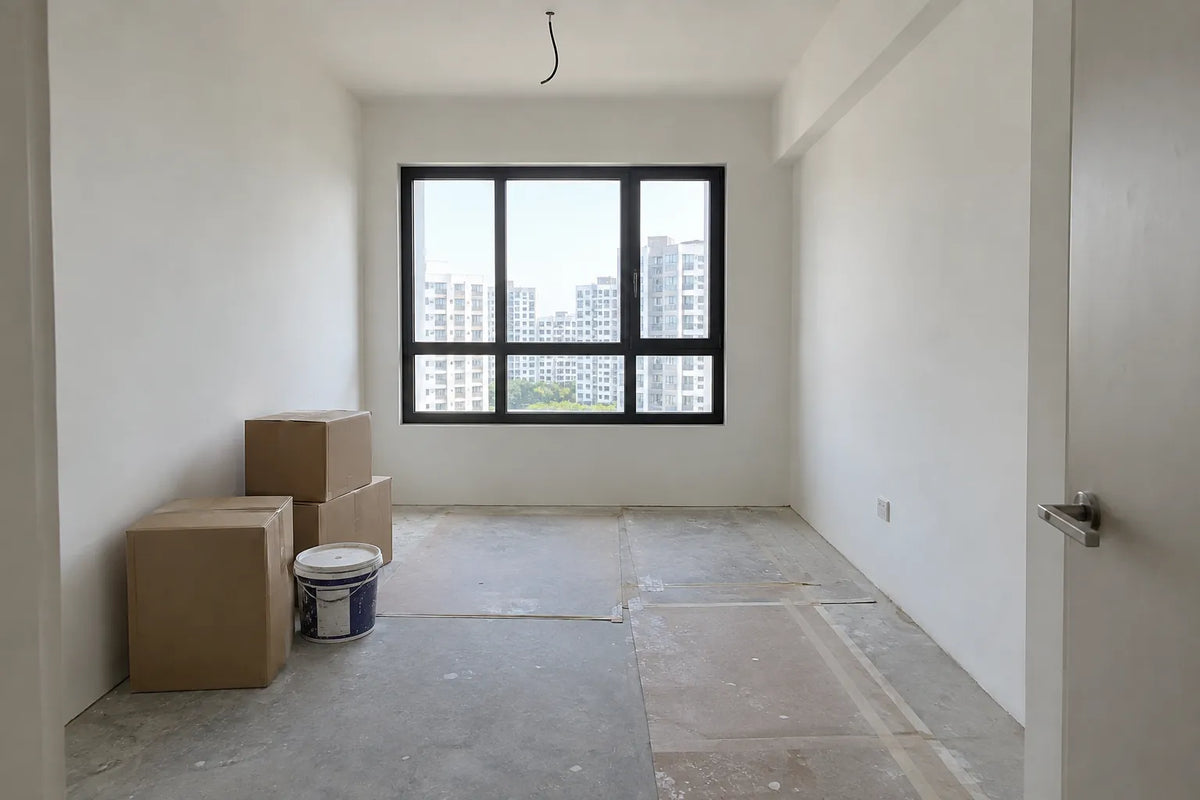

Your renovation is almost done. Fresh paint on the walls, false ceiling up, cove lighting set. Then the aircon installer arrives and says he needs to cut through your finished surfaces. Suddenly you have exposed trunking across a freshly painted wall — or worse, a patch-and-repaint bill on top of your installation cost.
Aircon installation and trunking is the trade HDB owners sequence wrongly more than any other. Get the order right and the pipes vanish cleanly behind your ceiling. Get it wrong and you pay twice: once to install, once to hide. This guide tells you exactly when to schedule aircon trunking during your HDB renovation in Singapore in 2026, what each trade covers, and how to avoid the most expensive mistakes.
Key Takeaway: Aircon trunking must be done before your false ceiling closes and before final painting — not after. The aircon unit supply and installation is handled by a separate aircon contractor, while your renovation contractor coordinates the trunking route and concealment within the renovation works. Concealed trunking costs more upfront but delivers a cleaner finish. Exposed trunking is cheaper and easier to service. Sizing BTU correctly to each room prevents weak cooling. RCS move-in BTO packages start at SGD 7,290 and include trunking coordination.
What Aircon Installation and Trunking Each Cover
Aircon installation and trunking are two linked but separate jobs. Confusing them causes gaps in your quote and clashes on site.
Aircon installation covers mounting the indoor and outdoor units, running copper refrigerant pipes, charging the gas, and commissioning the system. This work is performed by a specialist aircon contractor — not your main renovation contractor. The aircon firm is responsible for cooling performance and the compressor warranty. When planning your HDB renovation budget for 2026, cost both trades separately to avoid gaps in your quote.
Trunking is the rectangular casing that conceals refrigerant pipes, condensate drainage, and power cabling between the indoor and outdoor units. Without trunking, bare copper and insulation would run visibly across your walls. The trunking route determines where pipes travel and how well they are hidden. According to HDB renovation guidelines (2026), external pipe routing must not breach the building facade or common areas. RCS plans each route to stay compliant and visually clean.
Why Supply and Concealment Are Split Between Two Trades
This split is standard practice in Singapore and worth understanding before you brief anyone. The aircon contractor warranties the compressor and the gas charge. Your renovation contractor handles the trunking, false ceiling, and wall finishes that conceal the pipes. RCS coordinates both trades so the installer completes all piping before the ceiling boards go up — preventing the classic clash where finished surfaces block the pipe run. Confirm in writing who owns each task. This split also protects your warranty, as detailed in our guide to hidden HDB renovation costs beyond the headline quote.
The Correct Sequence: When Aircon Fits Into Your HDB Renovation
Sequencing is the single most expensive aircon mistake Singapore HDB owners make. Trunking and piping must happen before the false ceiling and before final painting. Do it after and you pay to undo finished work.
Why Trunking Must Come Before the False Ceiling
Concealed pipes run inside the ceiling void, so the route must be set while that space is still open. Once plasterboard goes up, the route is sealed and the installer has no choice but to surface-mount pipes on finished walls. RCS schedules piping before any ceiling board is fixed — which is why aircon timing links directly to your false ceiling and cove lighting works. Open access is the requirement, and once that window closes, it does not reopen cheaply.
Why Final Painting Must Come After Trunking
Mounting brackets and routing pipes can chip or mark a finished wall. A wall that is painted before the installer arrives almost always needs touching up afterwards. RCS sequences trunking first, then patching and skimming, then the final paint coat. This keeps your paint finish unbroken from the start. Painting before services are run wastes the coat entirely and adds a repaint cost. The rule is simple: services first, finishes last. Ignoring this is one of the HDB renovation budget mistakes Singapore owners regret most.
Why Doing Aircon Last Costs You More
Leaving aircon to the end forces surface-mounted trunking, a second round of wall patching, and a repaint. It also removes the concealment option entirely unless you are willing to break into finished surfaces — which adds cost and delays. The cheapest concealed finish is the one planned before any ceiling board or paint goes on. RCS coordinates the aircon installer into the early services stage so this trap never applies to their projects.
How Aircon Timing Slots Into the Full Renovation Schedule
Aircon piping sits in the early services stage alongside electrical and plumbing first-fix — before tiling, ceiling, and carpentry. The standard order is: hacking and masonry first, then all services, then surface finishes. Many HDB owners assume aircon is a final, plug-in step. In a concealed setup, it is one of the earliest trades on site. A realistic HDB renovation timeline for 2026 places piping near the start, not the end.
Concealed vs Exposed Trunking: Cost, Finish, and Maintenance
The trunking choice shapes your ceiling look, your project budget, and how easy future servicing will be. Both options are valid depending on where in the flat they are used.
| Factor | Concealed Trunking | Exposed Trunking |
|---|---|---|
| Finish and look | Pipes hidden in false ceiling — clean, seamless | Visible casing along walls and ceiling line |
| Upfront cost | Higher — requires false ceiling and coordination | Lower — no ceiling work required |
| Maintenance access | Harder — access panels needed for servicing | Easier — casing opens for quick access |
| Best for | Living, dining, master bedroom | Common bedrooms, service yards, tight budgets |
| Sequencing | Must be done before ceiling and painting | More flexible, but still before final paint |
When Concealed Trunking Is Worth the Extra Cost
Concealed trunking delivers the cleanest result in living rooms, dining areas, and master bedrooms where a seamless ceiling is the goal. Pipes disappear into the false ceiling void, leaving walls completely clear. The trade-off is cost and maintenance access — repairs require a discreet access panel. RCS plans concealment alongside the ceiling design so the route stays serviceable. For your main living spaces, concealed trunking consistently earns its price in the finished look it delivers.
When Exposed Trunking Is the Smarter Choice
Exposed trunking suits common bedrooms, service yards, and projects where a false ceiling is not part of the plan. The visible casing keeps costs down and makes servicing simple — a technician opens the casing rather than cutting into a board. RCS uses neat, colour-matched casing to keep exposed runs as tidy as possible. For rooms where ceiling aesthetics matter less, exposed trunking is the practical and budget-sensible pick.
BTU Sizing: Matching Aircon Capacity to Each HDB Room
BTU is the cooling capacity of an aircon unit. Undersize it and the room never reaches a comfortable temperature. Oversize it and you waste energy, spend more upfront, and end up with a clammy, humid space. Matching BTU to room area is the foundation of a well-performing system.
As a planning baseline, allow approximately 400 to 600 BTU per square metre for typical HDB rooms. West-facing rooms, rooms with large windows, and kitchens need the higher end of that range. Your aircon contractor confirms the exact cooling load calculation. RCS coordinates the trunking route to match confirmed unit positions before the ceiling closes.
| Room Type | Approx. Floor Area | Suggested BTU Range |
|---|---|---|
| Small bedroom | 7–9 sqm | 9,000 BTU |
| Common bedroom | 9–12 sqm | 9,000–12,000 BTU |
| Master bedroom | 12–16 sqm | 12,000–18,000 BTU |
| Living and dining | 18–28 sqm | 18,000–24,000 BTU |
| Open living with kitchen | 28–40 sqm | 24,000 BTU or multi-split |
Why Oversizing the Aircon Wastes Money
An oversized aircon short-cycles — it cools the room quickly then shuts off before removing humidity properly. The result is a cold but clammy space and higher electricity bills. Bigger is not better with cooling capacity. A correctly matched unit runs at a steady pace, removes moisture effectively, and maintains comfortable conditions throughout the day. Over-specifying also inflates your upfront unit cost without improving comfort. Right-sizing protects both your wallet and your long-term experience.
2026 Cost Factors for Aircon Trunking in HDB Flats
Trunking cost depends on pipe length, the number of indoor units, the concealment method chosen, and whether external condenser ledge works are involved. These variables move your aircon budget more than the unit brand itself.
What Drives Your Trunking Cost in 2026
Trunking cost rises with copper pipe length, unit count, and concealment complexity. A long run from the service yard to a far bedroom needs more copper pipe and more casing. Concealed routes also add false ceiling scope to the bill. HDB rules require the outdoor condenser to sit on the designated air-conditioner ledge — not the building facade — which limits routing options and adds planning considerations. RCS plans each route to keep pipe lengths efficient. Shorter, well-planned runs cost less to install and perform better thermally. Budget trunking as a separate line item from the aircon unit, as explained in our HDB renovation cost guide for Singapore 2026.
How Aircon Fits Into a Fixed-Price Move-In Package
A move-in renovation package coordinates trunking, ceiling, and surface finishes so your aircon installer slots cleanly into the schedule. RCS publishes fixed package prices rather than open-ended quotations. A 3-room move-in BTO package starts at SGD 7,290, and a 4-room move-in BTO package starts at SGD 7,390. These prices cover renovation works that conceal your trunking. The aircon unit supply remains with a separate specialist. Coordinating both trades early is what keeps the aircon stage on schedule and on budget.
Permits and Compliance for Aircon Works in Singapore
Aircon trunking that involves wall chasing or external pipe routing may require HDB approval before works begin. Internal trunking is generally straightforward, but breaking into walls can trigger a permit requirement. According to HDB renovation guidelines (2026), structural and facade works require written approval before commencement. RCS checks the full scope against current HDB rules before any chasing starts. The outdoor condenser must use the approved ledge provided in the flat. Confirm permit requirements early to avoid work stoppages or rectification orders, as covered in our HDB renovation permit and APEX fees guide for 2026.
Common Aircon Trunking Mistakes HDB Owners Make in Singapore
Most aircon regrets in HDB renovations trace back to a small number of avoidable errors. Recognising them before you start saves money and prevents a cluttered finish.
Choosing the indoor unit position after the ceiling is designed. The unit location should drive the trunking plan — not the other way around. A poorly positioned unit blows air at a wall or a structural beam, and the pipe run becomes longer and harder to conceal. RCS sets unit positions with the aircon installer before any ceiling drawing is finalised.
Forgetting the condensate drainage gradient. The drain pipe must fall continuously and steadily towards its discharge point. A flat or back-pitched run causes water to pool and eventually drip inside the room. This fault is hidden above the ceiling and only discovered when a stain appears. RCS confirms drainage gradient during the piping stage, before boards close the ceiling. Fixing it after the ceiling is up means reopening finished work.
Skipping servicing access on concealed runs. Concealed trunking still needs a discreet access panel near each indoor unit so technicians can reach the pipes for gas top-ups and drainage checks. Without one, the next service call may involve cutting into a finished ceiling board. RCS plans access panels during the ceiling design stage — low-profile, reachable, and invisible to casual inspection. Concealment should hide the pipes, not lock out the person who services them every two to three years.
FAQ: Aircon Installation and Trunking for HDB Renovation Singapore
When should aircon trunking be done during an HDB renovation?
Aircon trunking should be done before the false ceiling is closed and before final painting. The pipes run inside the ceiling void or behind wall casing, so the route must be set while surfaces are still open. RCS coordinates the aircon installer into the early services stage. Leaving trunking until the end forces surface-mounted casing and a second round of repainting.
Does the renovation contractor supply the aircon unit?
No — in standard Singapore practice, the aircon unit supply and installation is handled by a separate aircon specialist who warranties the compressor and gas charge. The renovation contractor coordinates the trunking route, false ceiling, and concealment. RCS plans the timing so the installer completes all piping before the ceiling closes. Confirm in writing who owns each scope of work before the project starts.
Is concealed or exposed trunking better for an HDB flat?
Concealed trunking delivers a cleaner look but costs more and requires a false ceiling. Exposed trunking is cheaper and easier to service, though the casing remains visible. Most Singapore HDB owners conceal trunking in the living room and master bedroom, then use exposed casing in common bedrooms. The right approach balances the look you want against your renovation budget.
What BTU aircon do I need for an HDB bedroom in Singapore?
A typical HDB common bedroom of 9 to 12 sqm suits a 9,000 to 12,000 BTU unit. A master bedroom of 12 to 16 sqm generally needs 12,000 to 18,000 BTU. West-facing rooms need the higher end of each range. Your aircon contractor confirms the exact cooling load before selecting the unit.
Do I need an HDB permit for aircon trunking?
Internal trunking is usually straightforward, but wall chasing and external works may require HDB approval before works begin. The outdoor condenser must be positioned on the approved air-conditioner ledge provided in the flat — not on the facade. RCS checks all scope against current HDB rules before any chasing starts. Confirming permit requirements early prevents work stoppages and rectification orders.
How much does aircon trunking cost for an HDB flat in 2026?
Trunking cost depends on copper pipe length, the number of indoor units, and whether the route is concealed or exposed. Concealed runs add false ceiling scope, which raises the price. Longer pipe runs to distant rooms also cost more. Budget trunking as a separate line item from the aircon unit, and plan the route to keep runs short and efficient.
Plan Your Aircon Trunking With a Licensed HDB Renovation Contractor
Aircon installation is less about the unit and more about timing and coordination. Get the sequence right and your pipes vanish cleanly behind a seamless ceiling. Plan trunking before the false ceiling is closed, paint after all services are run, and size the BTU to each room based on actual floor area and orientation.
Keep the aircon unit supply with a specialist contractor and let your renovation contractor coordinate the trunking route, concealment, and ceiling works around it. RCS operates as a direct HDB-licensed renovation contractor under Licence HB-11-5877Z, holds BizSafe Level 3 certification, and publishes fixed BTO and resale packages with 3D rendering included — no open-ended quotes.
Book a renovation consultation with RCS from SGD 150 to map out your aircon sequence before any works begin.
Sources: HDB Renovation Guidelines · Building and Construction Authority Singapore · National Environment Agency Singapore
Prices and HDB rules accurate as of June 2026. Verify current package prices and permit requirements before signing. Published by RCS Renovation Specialists — HDB-licensed renovation contractor in Singapore.