

Key Takeaway
An HDB household shelter is a protected civil-defence structure governed by SCDF's Technical Requirements for Household Shelters. You must not hack, tile internal walls, tamper with the door or ventilation openings, or make structural fixings without confirming against SCDF's permitted-works list. The safest storage approach for homeowners is freestanding, no-drill storage — tension shelving, standalone racks, and over-door organisers. RCS plans shelter-safe storage as part of our move-in BTO packages from SGD 7,290, keeping the shelter compliant and the rest of your flat clutter-free.
What Is an HDB Household Shelter, and Why the Rules Matter
An HDB household shelter is a reinforced concrete room designed to protect occupants during a war emergency. It has been a mandatory requirement in all new HDB flats since 1997, when the Civil Defence Shelter Act came into force. It is governed by civil-defence regulations — not ordinary renovation rules — which is why its walls, door, and ventilation cannot be altered like the rest of your flat.
What the household shelter is for
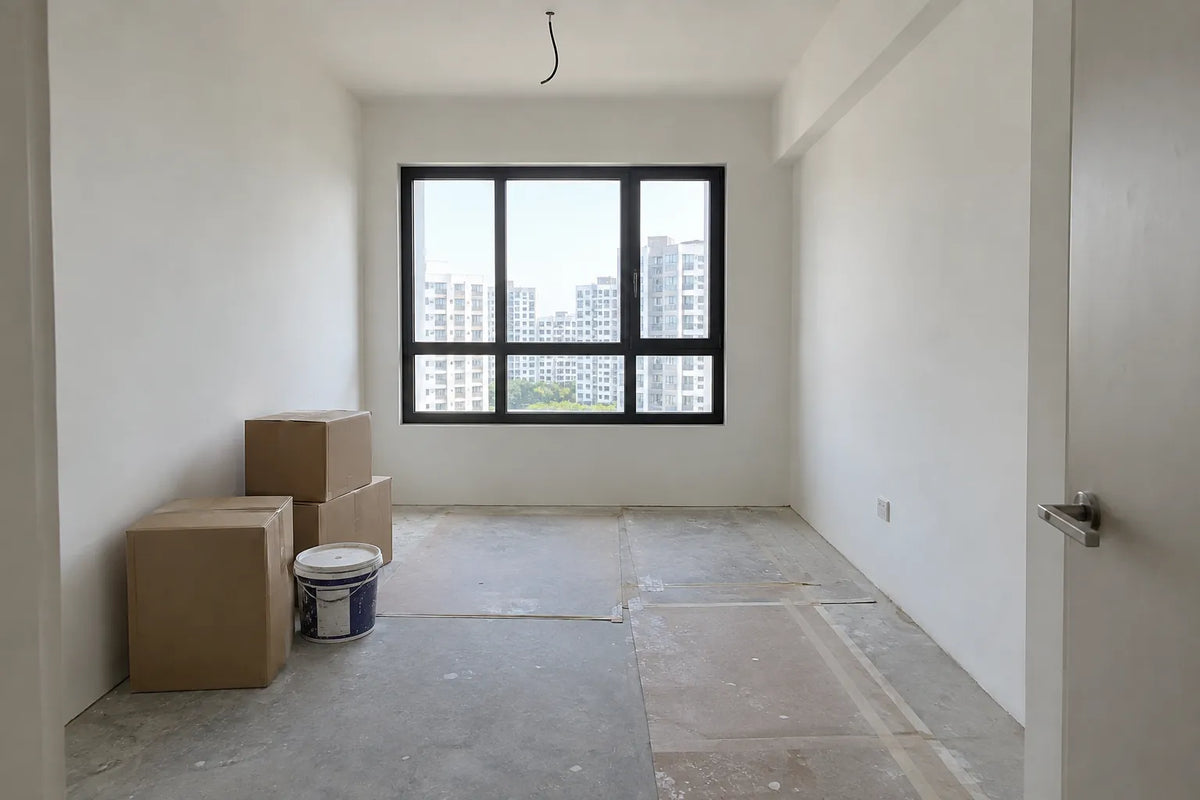
A household shelter is a hardened refuge built into newer HDB flats for civil-defence protection. The Singapore Civil Defence Force (SCDF) sets the technical requirements that keep it functional in an emergency, while the Building and Construction Authority (BCA) co-regulates shelter plans and commissioning. The walls are thick reinforced concrete, and the door is a heavy blast-resistant steel unit designed to seal fully when closed. Because the room must work when needed, its structure stays sealed and unmodified. Most owners only ever use it for storage, which is permitted — but the key is storing items in ways that never damage or block the protective shell. Treat the shelter as a structure you borrow, not one you renovate.
★ Why shelter works are strictly controlled
SCDF's published technical requirements and permitted-works list set out exactly what you may and may not do inside a household shelter. The general rule is that you must not hack or drill the shelter structure indiscriminately, and you must not use finishes or fixtures that may be hazardous to shelter occupants during a war emergency. The steel door must seal fully, so nothing may interfere with its operation. The ventilation openings must remain accessible at all times. These are safety obligations, not cosmetic preferences. Owners who carry out non-permitted works risk enforcement action and costly reinstatement. Before any works near a shelter, confirm the current limits using SCDF's official Permitted and Not Permitted Works for Household Shelters and HDB renovation guidelines. When in doubt, choose freestanding storage that touches nothing structural.
Who governs the household shelter rules
Three authorities share responsibility for household shelters.
-
SCDF — issues the Technical Requirements for Household Shelters and the Permitted and Not Permitted Works list; governs what keeps the shelter functional for civil defence.
-
HDB — oversees flat renovation approvals and requires a permit for works that affect the flat's structure, including works adjacent to the shelter.
-
BCA — authorises shelter plans during construction and commissions shelters to verify they meet technical criteria; co-regulates with SCDF under the Civil Defence Shelter Act.
Your renovation contractor should be familiar with all three sets of requirements before quoting any works near or inside the shelter. RCS, an HDB-licensed contractor under Licence HB-11-5877Z, plans shelter storage without touching the protected shell. For broader flat works, our team also handles the HDB renovation permit and APEX fees. Clarifying the rules first prevents an expensive mistake later.
Allowed vs Not-Allowed: Household Shelter Works
The table below sets out what you can and cannot do inside an HDB household shelter. Use it to brief your contractor before any storage idea goes ahead. For the full permitted-works list, refer to SCDF's official document.
No-Drill Storage Systems That Work in a Shelter
The best shelter storage stands on the floor or braces between surfaces without a single structural fixing. These systems give you full height and easy removal. They also keep the structure compliant and your deposit safe.
Freestanding shelving units
Freestanding shelving is the safest household shelter storage option because it needs no drilling at all. A standalone steel or boltless wire rack carries boxes, tools, and pantry goods on the floor without contacting any structural surface. Choose a unit sized to leave a clear gap around the ventilation opening. Adjustable shelves let you fit tall and short items in the same footprint. Wire racks also allow airflow, which suits a sealed concrete room well. When you move out, the rack leaves with you and the shelter stays untouched — simple, removable, and fully compliant. Pair this idea with the rest of your flat for a coordinated, clutter-free result.
Tension-pole and pressure-fit systems
Tension-pole systems brace between floor and ceiling using spring pressure, with no drilling required. They turn the shelter's full height into usable shelving or hanging space. Because they grip by pressure, they leave the reinforced shell completely intact. Position the poles so they never press against or obstruct the ventilation opening. Load limits matter, so keep heavy items low and lighter goods up high. These systems suit shoes, cleaning supplies, and seasonal storage well. They install in minutes and come down just as fast. For a wider fit-out, see how this links to your HDB renovation cost guide and overall budget.
Over-door and freestanding organisers
Over-door organisers hook over the top edge of the shelter door without any fixings or screws. They hold shoes, gloves, torches, and small emergency items within easy reach. Make sure the organiser does not prevent the door from sealing fully when closed — this is a civil-defence requirement, not just a preference. Slim freestanding cabinets also work well against an unused shelter wall. Both options keep the structure, door label, and ventilation plate untouched. They suit households that want order without committing to built-in carpentry. Removable storage also protects your flexibility for the next renovation.
★ Ventilation-Safe Storage: The Detail Most Owners Miss
The single rule owners forget most often is the ventilation opening. It must stay clear, accessible, and unobstructed at all times — SCDF treats it as essential to the shelter's emergency function.
Why the ventilation opening must stay accessible
The ventilation sleeve lets filtered air into the shelter during an emergency and must remain fully accessible and unobstructed. Stacking boxes in front of it, or positioning a cabinet that blocks access, is not compliant. Always confirm the exact location of both ventilation sleeves in your shelter before arranging any storage. Keep a clear, reachable gap in front of each opening at all times. This single habit keeps your shelter both safe and rule-compliant. Confirm current SCDF requirements through the official SCDF Acts and Requirements page before fitting anything near the vent.
How to plan storage around the vent
Plan your shelter storage so the ventilation opening stays reachable in one easy movement — no unstacking required. Measure the vent position first, then size racks to leave a clear gap in front. Place tall shelving on the opposite wall, away from the vent opening. Keep frequently moved boxes low so nothing leans against the vent. A simple layout sketch prevents accidental blocking later. Good airflow planning mirrors the care needed in aircon installation and trunking elsewhere in the flat. Treat vent clearance as a fixed design constraint, not an afterthought.
Humidity, dampness, and what to store
A sealed concrete shelter can trap humidity, so store moisture-tolerant items rather than delicate goods. Tools, canned food, cleaning supplies, and hard plastic bins suit the room well. Avoid storing important documents, photographs, leather goods, or fabrics that can mould in damp air. A small dehumidifier box or silica-gel moisture absorber helps keep contents dry. Leave gaps between items for airflow rather than packing the room solid. Wire racks beat solid shelving here because air moves freely between levels. These habits protect your stored items and the room's long-term condition.
Shelter Storage Ideas by Household Type
The right shelter setup depends on what you own and how often you reach for it. Each layout below stays fully no-drill, freestanding, and ventilation-safe.
The compact pantry shelter
A pantry shelter turns the room into a dry-goods store using freestanding wire shelving. Rice, canned food, and bulk supplies sit on adjustable levels off the floor. Keep heavier sacks low and lighter packets at eye height for easy reach. Leave the ventilation opening clear so air circulates around the stock. Label boxes so you find items fast without disturbing the layout. This suits families who buy in bulk and want a tidy kitchen overflow. It also pairs neatly with a well-planned kitchen renovation nearby — no drilling, no fixings, full compliance.
The utility and tool store
A utility shelter holds tools, cleaning gear, and household spares on a sturdy freestanding rack. A pressure-fit system adds hanging space for brooms, mops, and cables. Store paint, batteries, and tools in clearly marked plastic bins on each shelf. Keep the door's swing clear so access stays easy and the door seals fully — a civil-defence requirement. Position everything away from the ventilation opening at all times. This layout suits hands-on households that fix and maintain things regularly.
The seasonal and luggage store
A seasonal shelter stores luggage, festive decorations, and bulky items you rarely need. Stack hard cases and labelled boxes on a robust freestanding rack. Place rarely used items higher and seasonal goods within easy reach. Keep a clear path to the ventilation opening even when the room is full. Vacuum bags shrink bedding and clothing to save valuable height. Everything lifts out cleanly when the next renovation begins, leaving the structure completely untouched.
Getting Shelter Storage Done With Your Renovation
Shelter storage works best when planned alongside the rest of your flat, not as an afterthought. A licensed contractor keeps the solution compliant and tidy from the start.
Planning shelter storage into your package
Plan shelter storage early so freestanding units match the flat's overall style and dimensions. RCS includes practical storage planning within its fixed-price renovation packages. A 4-room move-in BTO package starts at SGD 7,390, with project management and 3D rendering included. A 3-room move-in BTO package starts at SGD 7,290. Because the shelter stays no-drill, planning focuses purely on layout, access, and load distribution. Fixed pricing keeps your storage budget predictable.
When to book a consultation
Book a consultation when you want a shelter-safe storage plan tailored to your exact flat layout. A renovation consultation with RCS costs SGD 150 per hour and covers layout, compliance, and material choices. The session confirms what you may and may not do inside the shelter based on current SCDF requirements. It also coordinates the storage with the rest of your renovation scope. As an HDB-licensed contractor with BizSafe Level 3, RCS keeps both safety and compliance in view at every stage.
FAQ: HDB Household Shelter Storage
Can I drill into my HDB household shelter walls?
SCDF prohibits indiscriminate drilling, hacking, or nailing into the shelter's walls, ceiling, floor slab, or door. Very limited drilling may be permitted under specific technical conditions set out in SCDF's requirements — but homeowners must confirm the current permitted-works list directly with SCDF or their HDB branch office before proceeding. For storage, using freestanding or pressure-fit systems eliminates this risk entirely.
What storage can I legally use in a bomb shelter?
You can use any freestanding or no-drill storage inside a household shelter. Standalone wire racks, boltless shelving, tension-pole systems, slim freestanding cabinets, and over-door organisers all work. None of these touch or damage the protected structure. Keep every unit clear of the ventilation opening and the door's full swing.
Can I cover the ventilation opening with shelving?
No. The ventilation opening must stay accessible and unobstructed at all times. SCDF treats the ventilation sleeve as essential to the shelter's emergency function. Never stack boxes over it or position a cabinet that blocks access to it. Plan your shelving layout to keep a clear, reachable gap in front of the vent at all times.
Can I paint or tile my household shelter?
You must not paint over shelter markings or the door label, as these must remain legible for civil-defence purposes. Tiling internal shelter walls is not permitted. Floor tiling with wet cement mortar up to 50 mm build-up is permitted under SCDF rules, but confirm current specifications with SCDF or your HDB branch office before proceeding.
Is it safe to store items long-term in a bomb shelter?
Yes, with care. A sealed concrete shelter can trap humidity, so store moisture-tolerant items like tools and canned goods. Avoid documents, photographs, and fabrics that mould in damp conditions. A moisture absorber and wire shelving improve airflow. Keep the ventilation opening clear so the room functions as intended at all times.
Can a renovation contractor build storage inside the shelter?
A contractor can plan and supply freestanding storage, but must not drill or fix anything into the shelter structure without confirming it against SCDF's current permitted-works list. RCS, an HDB-licensed contractor, designs no-drill shelter storage within its renovation packages in compliance with SCDF and HDB rules. Built-in carpentry that anchors into the shell without SCDF/HDB approval is not permitted.
Plan a Shelter-Safe Storage Solution With RCS
Your HDB household shelter can be the most organised room in the flat — without breaking a single civil-defence rule. The principle is simple: store generously, but never hack, use indiscriminate structural fixings, or block the ventilation opening. Freestanding racks, tension-pole systems, and over-door organisers give you height and order, and they all lift out cleanly later. RCS plans shelter-safe storage as part of fixed-price BTO and resale packages from SGD 7,290, with 3D rendering included. As an HDB-licensed contractor under HB-11-5877Z, with BizSafe Level 3, we keep both compliance and tidiness in view. Book a consultation, confirm the limits, and turn that concrete box into genuinely usable space.
Sources: SCDF Acts and Requirements · SCDF Technical Requirements for Household Shelters 2023 · BCA Household and Storey Shelters · HDB Important Information on Renovations · HDB Directory of Renovation Contractors
Household shelter rules in this guide are based on SCDF's Technical Requirements for Household Shelters and HDB's renovation guidelines current as of June 2026. SCDF permitted-works specifications are subject to change — always verify the latest list directly with SCDF or your HDB branch office before carrying out any works inside or adjacent to your household shelter. Package prices stated are guide prices by RCS as of June 2026 and subject to confirmation at consultation.