
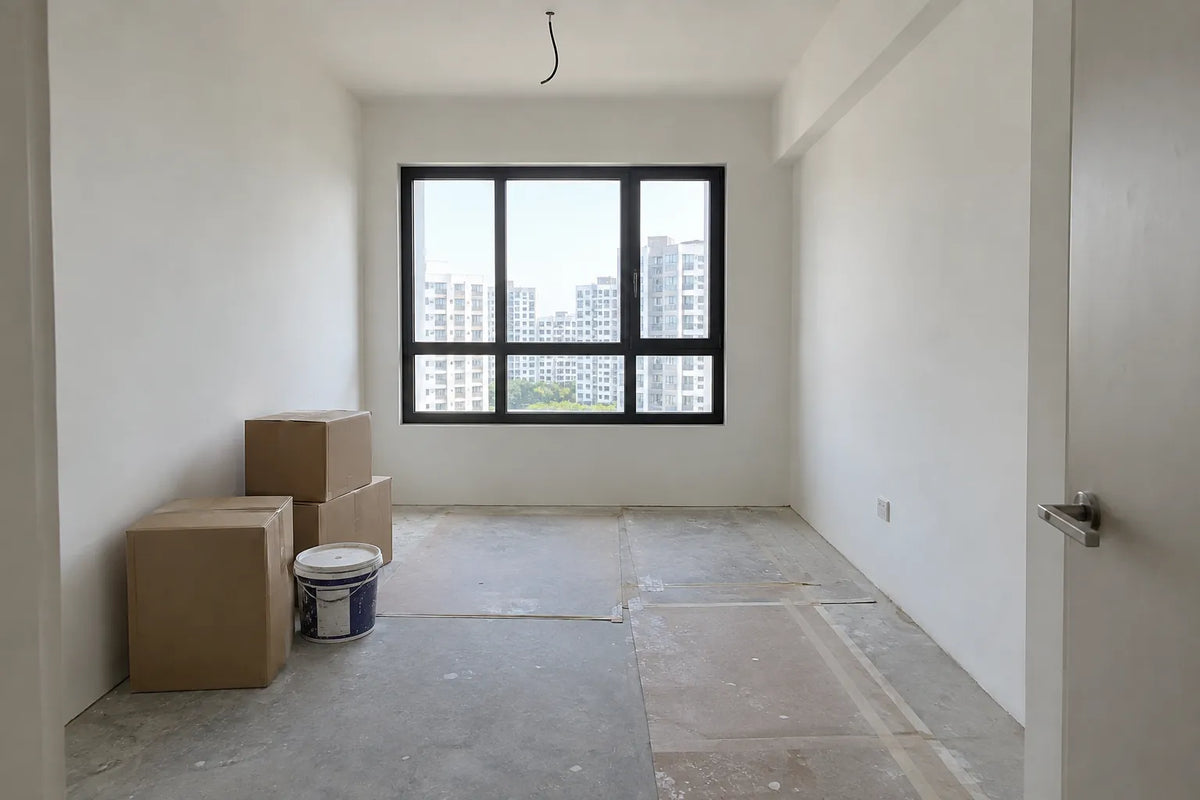

You collected your BTO keys this morning, and the flat looks flawless. Then you switch on the lights, open a window, and run a tap. Suddenly the hairline cracks, hollow tiles, and a door that will not close come into focus. A proper BTO defects check is the difference between HDB fixing those faults for free and you paying your contractor to patch them later. Miss the Defects Liability Period window, and the bill becomes yours. This guide gives you a complete, room-by-room HDB BTO defects checklist for 2026 — what to inspect, the tools to bring, how to submit defects to HDB, and exactly what HDB will and will not repair.
Key Takeaway
Your BTO defects check covers structural and builder-supplied items that HDB must rectify free of charge during the Defects Liability Period — typically one year from key collection for most defects, with some structural items covered longer; confirm the current window directly with HDB before your inspection. Inspect every room before you renovate, log faults with timestamped photos, and submit through HDB's official channels. HDB fixes qualifying construction defects; your contractor handles renovation works. RCS, an HDB-licensed contractor (Licence HB-11-5877Z, BizSafe Level 3), offers move-in BTO packages from SGD 7,290 once defects clear.
What Is a BTO Defects Check and Why It Matters
A BTO defects check is your formal inspection of a new flat to find construction faults that HDB is obligated to repair. It happens right after key collection, before renovation begins. Catching defects early protects your money — every qualifying fault you log now is a repair you avoid paying for later.
What counts as an HDB BTO defect
An HDB BTO defect is a fault in the builder-supplied flat that arises from construction, not from use or renovation. Common examples include:
-
Hollow floor or wall tiles (poor bonding during construction)
-
Hairline or structural cracks in walls and ceilings
-
Uneven plaster or patchy paintwork
-
Dripping taps, leaking pipes, or a malfunctioning cistern
-
Misaligned, sticking, or non-latching doors and windows
-
Dead or miswired electrical sockets
-
Poor bathroom floor gradient causing standing water
-
Gaps in grout lines or silicone seals
These are construction faults in the builder-supplied flat. Logging them with clear photos creates a formal record HDB can act on. Before you start, review our BTO key collection checklist so nothing is missed on handover day.
Why timing your defects check matters
Timing decides who pays. HDB only rectifies defects raised within the Defects Liability Period. Submit a fault after that window closes, and the repair cost shifts entirely to you. Inspect the flat before any renovation, because hacked walls, overlaid floors, and new cabinetry can hide or damage original surfaces — complicating or invalidating a later defect claim. Do the full check on an empty, untouched flat first. This keeps the builder responsible for builder faults. For the official position on new flat owner obligations, see HDB's renovation guidelines.
★ How the HDB Defects Liability Period works
The Defects Liability Period (DLP) is the contractual window in which HDB must rectify qualifying construction defects at no cost to the flat owner. It begins at key collection. For most BTO flats, the standard DLP for general defects such as hollow tiles, paintwork faults, and fitting failures is one year from key collection date; certain structural defects may carry a longer coverage period. Confirm the exact current window and coverage tiers directly with HDB before your inspection — terms can be updated.
After the DLP ends, repairs become your full responsibility. HDB inspects each reported item and arranges rectification for qualifying defects. What HDB will not cover is damage caused by your own renovation or daily use. Knowing this line protects your claim — our note on hidden renovation costs beyond your quote explains why a missed defect claim quietly inflates your renovation budget.
Tools to Bring for Your BTO Defects Inspection
The right tools turn a vague walk-through into a precise, documented inspection. Pack these before you visit the flat:
Mark every fault with masking tape immediately after finding it so HDB's officer can locate each one fast. Photograph each marked spot with the date and time visible on your phone's camera settings.
Room-by-Room BTO Defects Checklist 2026
Work through this checklist room by room on an untouched flat. Mark, photograph, and log every fault before any renovation begins.
Living room and bedrooms
-
Tap every floor tile in a grid pattern; a hollow ring signals poor bonding HDB should rectify
-
Shine a torch sideways along walls to reveal bumps, dents, and uneven paint
-
Inspect skirting for gaps at floor junctions and corners for chipped plaster
-
Check wall finishes at every junction, including where walls meet ceilings
-
Look for hairline cracks running along corners, window frames, and beam lines
-
Open the household shelter and inspect the door, bolts, hinges, and seal
Log floor and wall defects now — before any living room renovation covers the original surfaces and complicates a later claim.
Kitchen
-
Fill the sink to the brim, then drain; watch the pipe below for drips during and after draining
-
Test tap flow and pressure at both hot and cold settings
-
Tap all wall and floor tiles for hollow sounds; scan grout lines for gaps or voids
-
Place a spirit level on the builder-supplied worktop to confirm it sits flat
-
Check the gas point cover and any provided cabinet for alignment and smooth operation
-
Inspect the kitchen window and service-yard door for alignment and seal
Complete this before fitting cabinetry — a kitchen renovation can permanently conceal original defects HDB would otherwise fix free.
Toilets and bathrooms
-
Pour water across the full floor area and watch it drain completely toward the floor trap; standing water signals a gradient defect
-
Inspect silicone bead around the basin, WC pan, and shower area for gaps, voids, or early mould
-
Test the cistern flush and time its refill; look under the basin for any drips
-
Tap wall and floor tiles for hollow spots; check the floor trap cover fits flush
-
Test the bathroom door for swelling, scraping, or poor clearance at the floor
-
Flush tissue paper down the toilet to confirm waste clears fully
The original waterproofing membrane sits beneath the builder's floor screed. Read our guide on toilet waterproofing and the HDB 3-year rule before you overlay or hack any bathroom surface.
Doors and windows
-
Open and close each door slowly through its full arc; it should swing without scraping, sticking, or bouncing off the frame
-
Test each latch and lock; a door that will not latch fully is a clear, easily logged defect
-
Check all hinges and handles for smooth operation and firm fixing
-
Slide and lock each window through its full range; confirm the locking mechanism engages
-
Pass a paper strip through the closed gap of each window to detect poor seal fit
-
Inspect rubber weatherstrips and drainage holes on window frames for gaps or blockage
Before adding window grilles or safety features, compare options in our invisible grille vs window grille guide.
Electrical points
-
Plug a socket tester into every outlet in sequence; confirm correct wiring polarity and live supply
-
Flip every light switch and confirm each fitting responds
-
Test the doorbell, bathroom heater point, and aircon ledge supplies
-
Open the distribution board and check that each circuit is labelled correctly; look for scorch marks or loose covers
-
Photograph the full DB layout for your renovation contractor's reference
Settle all electrical defects before any rewiring or new circuits are added. Our HDB renovation permit and APEX fees guide explains which electrical works require approval.
Ceilings
-
Shine a torch at a low angle across each ceiling to reveal uneven plaster, cracks, or dips
-
Look for water stains, rust marks, or discolouration that signal moisture ingress from above
-
Check that light fittings are centred and flush, and that any provided ceiling fan point is secure
-
Inspect where the ceiling meets walls for gaps or cracking
★ How to Submit BTO Defects to HDB
Finding defects is only half the task — submitting them correctly gets them fixed. Follow HDB's defined process precisely so nothing falls outside the liability window.
The submission process, step by step
-
Complete the full inspection first — do not submit in fragments; inspect every room in one session on an untouched flat
-
Mark each fault with masking tape — label with a number matching your written log
-
Photograph every marked fault — timestamp visible, taken from two angles (close-up and location shot)
-
Compile a written room-by-room fault list — include fault type, exact location, and photo reference number
-
Submit through HDB's official channel — via the My HDBPage portal or the HDB branch office; confirm the current submission method with HDB
-
Record your submission reference number — keep a copy of everything submitted
-
Follow up promptly — if an item is missed on the first repair visit, raise it immediately within the DLP
Keep your own full copy of the fault list and all images. Group faults by room so the HDB officer can verify each one quickly. Submit early in the DLP window — not at the last moment. Official submission details and current channels are on HDB's renovation and new flat owner pages.
HDB defects vs your contractor's responsibility
Keep the two responsibility streams separate in your records. This clarity prevents a fault bouncing unresolved between parties. To engage the right firm for renovation works, confirm your contractor's licence in our HDB licensed renovation contractors guide.
What HDB Will and Will Not Fix
Defects HDB covers free of charge
HDB covers genuine construction defects in the builder-supplied flat at no cost during the DLP. Covered items typically include:
-
Hollow floor and wall tiles
-
Cracked or uneven plaster and paintwork
-
Leaking builder-supplied taps, pipes, and cisterns
-
Faulty builder-provided fittings (door locks, window latches, socket covers)
-
Misaligned, sticking, or non-latching original doors and windows
-
Poor bathroom floor gradient causing standing water
-
Gappy grout lines and failed silicone seals (construction-origin)
-
Dead or miswired original electrical sockets
Report all of these with evidence, and HDB arranges the repair. Each free repair is real money removed from your renovation budget. Use our HDB renovation cost guide to plan your scope around what HDB already covers.
What HDB will not fix
HDB will not cover:
-
Damage caused by your renovation (hacked surfaces, drilling marks, new tile cracks)
-
Faults introduced by fittings or carpentry you install
-
Use damage (chips from furniture movement, scratched surfaces)
-
Faults in items you add beyond the builder-supplied flat
-
Defects reported after the DLP closes
This is precisely why a full inspection before any works is non-negotiable. Once you hack or overlay an original surface, you weaken or invalidate any defect claim on it. Review the renovation budget mistakes that catch new BTO owners out to protect your budget from this gap.
After Defects Clear: Planning Your Renovation
Once HDB rectifies the defects, your renovation begins on a clean, verified, defect-free flat. Fixed-price packages give you a clear budget for the works ahead.
Move-in BTO packages after defects clearance
RCS publishes set prices rather than open-ended quotes, so your budget is fixed from the start:
-
4-room move-in BTO package — from SGD 7,390, includes project management, 3D rendering, and technical drawing
-
3-room move-in BTO package — from SGD 7,290
-
Full range of HDB BTO renovation packages by room size and finish level
Prices are guide prices as of June 2026 and subject to confirmation at consultation.
Starting renovation after defects clear keeps HDB responsible for builder faults — not your contractor.
FAQ: HDB BTO Defects Check 2026
When should I do my BTO defects check?
Do your BTO defects check immediately after key collection, on an untouched flat before any renovation begins. Inspecting before works start keeps the builder responsible for construction faults and keeps your claim valid. Report all faults within the Defects Liability Period — confirm the current window with HDB. Renovation works can hide original surfaces and weaken a later claim.
How long is the HDB Defects Liability Period?
For most BTO flats, the standard DLP for general defects is one year from key collection. Certain structural items may carry a longer coverage period. These terms can change, so confirm the current DLP duration and coverage tiers directly with HDB before your inspection. Reporting after the window closes shifts all repair costs to you.
What are the most common BTO defects?
Common BTO defects include hollow floor and wall tiles, hairline wall cracks, uneven or patchy paint, misaligned or sticking doors, leaking taps, poor bathroom drainage gradient, dead electrical sockets, and gaps in grout or silicone seals. Tap every tile with a knocking tool, test every socket, and pour water on bathroom floors. Mark and photograph every fault immediately.
Does HDB fix BTO defects for free?
Yes — HDB rectifies genuine construction defects in the builder-supplied flat free of charge within the DLP. This covers hollow tiles, cracked plaster, leaking original fittings, and faulty builder-supplied items. You must report them within the DLP window. Damage from your own renovation, use damage, and faults in fittings you add are not covered.
Can I renovate before my BTO defects are fixed?
You can, but it carries real financial risk. Renovation works can hide or damage original surfaces, weakening any claim on builder defects HDB would otherwise fix free. Complete the full defects check and submit all faults first. Begin renovation only after HDB has rectified the qualifying defects on a cleared, verified flat.
Who fixes defects that appear during renovation?
Your contractor is responsible for faults caused by renovation works — hacking damage, carpentry issues, or problems with fittings they install. HDB only covers original construction defects in the builder-supplied flat. Keep both responsibility streams separate in your documentation and photos. Always confirm a contractor's HDB licence number on HDB's Directory of Renovation Contractors before engaging.
Start Your Renovation Once Defects Are Cleared
A thorough BTO defects check is the cheapest protection you will take as a new flat owner. Inspect every room before works start, log faults with timestamped photos, and submit them to HDB within the Defects Liability Period — confirm that current window with HDB, since it sets who pays for every repair. HDB fixes qualifying builder defects free; your contractor handles the renovation that follows. RCS works as a direct HDB-licensed contractor under Licence HB-11-5877Z, with BizSafe Level 3 and move-in BTO packages from SGD 7,290. Clear your defects first, then renovate a verified flat with transparent, fixed pricing.
Sources: HDB Official Renovation Guidelines · HDB Directory of Renovation Contractors · BCA Singapore
Defects Liability Period duration, HDB rules, and package prices in this guide are based on HDB's published guidelines current as of June 2026. DLP terms and HDB procedures are subject to change — always confirm the current window, submission method, and coverage scope directly with HDB before relying on any date or figure. Package prices stated are guide prices by RCS as of June 2026 and subject to confirmation at consultation. This guide does not constitute legal or financial advice.
Published by RCS Renovation Specialists — HDB-licensed renovation contractor, Licence HB-11-5877Z, BizSafe Level 3, Singapore.