

Executive Summary
Selecting the right HDB renovation contractor in 2026 represents one of Singapore homeowners' most critical investment decisions. With average renovation budgets ranging from SGD 36,000–97,000 depending on flat type and scope, choosing a qualified, licensed contractor ensures successful project execution while maintaining full regulatory compliance. This 2026 guide provides actionable insights into verified contractors, updated regulatory requirements, compliance mechanisms, and realistic cost expectations.
Understanding HDB's Directory of Renovation Contractors (DRC)
The Housing and Development Board maintains the official Directory of Renovation Contractors, accessible at services2.hdb.gov.sg. Only contractors listed in the DRC can legally perform renovations in HDB flats. Engaging unlicensed contractors violates the Housing & Development (Renovation Control) Rules 2006 and carries penalties including substantial fines and mandatory restoration at homeowner expense.
A critical distinction: HDB does not endorse or guarantee contractor work quality. Renovation agreements constitute private contracts exclusively between homeowners and contractors. However, DRC-listed contractors possess current knowledge of HDB renovation guidelines and can submit HDB renovation permits through proper electronic channels—a critical service unlicensed contractors cannot provide.
The demerit point system ensures contractor accountability. Contractors accumulating 24 demerit points within 24 months face delisting from the DRC, preventing legal HDB renovation work. This self-regulation mechanism, administered through Residents' Committees, creates powerful incentives for professional standards and regulatory compliance.
HDB vs. BCA Licensed Contractors: Critical Differences
HDB Licensing authorizes contractors specifically for public housing projects. HDB-licensed contractors demonstrate comprehensive knowledge of HDB renovation guidelines, can apply for HDB renovation permits, and meet specific standards for public housing compliance.
BCA Licensing (Building and Construction Authority) covers broader construction activities across all property types in Singapore. BCA issues different license grades (GB1, GB2 for general building; RW01 for windows; CR06 for interior finishing) based on project complexity and contractor capabilities.
For HDB renovations, homeowners specifically require HDB-licensed contractors. Some contractors maintain both licenses for maximum flexibility across residential, commercial, and public housing projects. However, HDB licensing is non-negotiable for legal HDB flat renovations.
2026 HDB Renovation Cost Breakdown
Understanding realistic renovation costs enables effective project budgeting and prevents financial overruns. For comprehensive pricing details across different flat types, refer to the HDB Renovation Budget 2026 Complete Cost Guide which provides real-world pricing data from verified contractor portfolios.
BTO Flat Renovation Costs
-
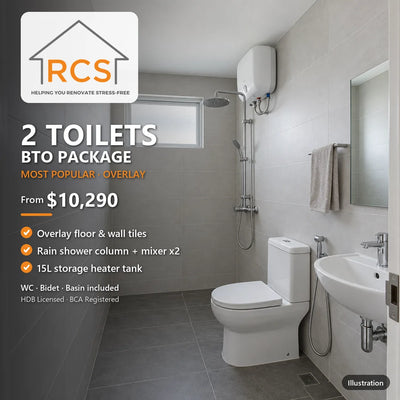
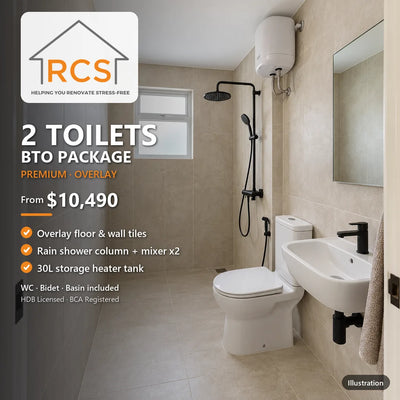
Basic Kitchen Packages: SGD 5,590–7,590
-
Move-In Packages: SGD 7,590–14,000
-
Complete Renovations: SGD 36,000–82,000 (overall average range)
BTO flats typically require less extensive work since they are newer and in better condition. This translates to lower demolition costs, less structural remediation, and faster project timelines.
Resale Flat Renovation Costs
-
Kitchen Renovations: SGD 5,590–11,490
-
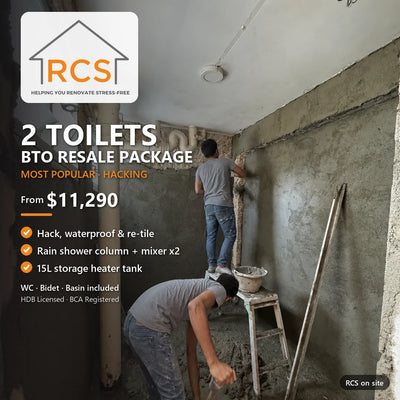
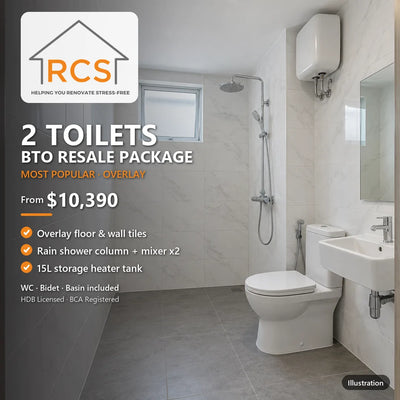
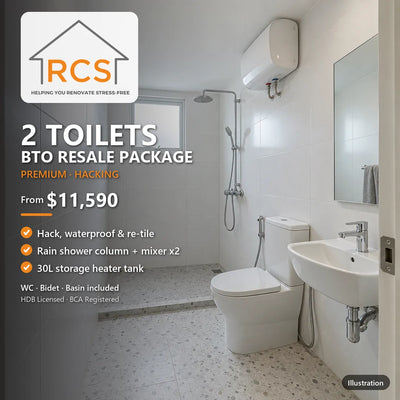
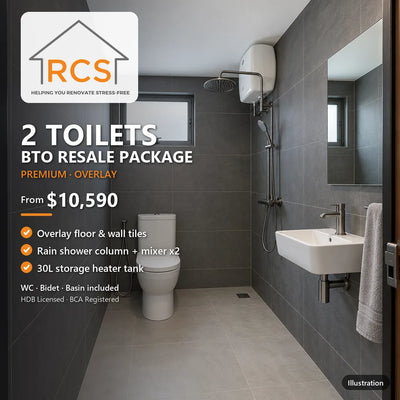
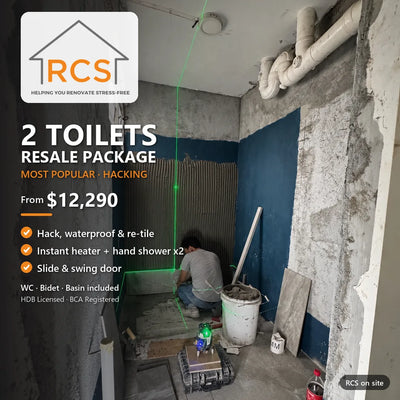
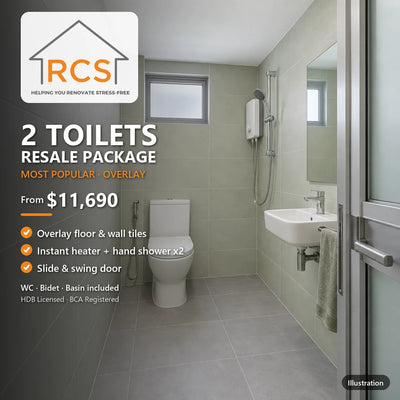
Bathroom Upgrades: SGD 11,490–25,000
-
Whole House Makeovers: SGD 51,000–97,000 (overall average range)
For detailed resale flat pricing specifics, explore the HDB 4 Room Resale Renovation Cost Singapore 2026 guide and the 5-Room HDB Renovation Cost 2026 guide which break down costs by specific room types and renovation scope.
Cost Distribution by Category
| Work Category | Percentage | SGD Range (BTO) | SGD Range (Resale) |
|---|---|---|---|
| Carpentry (Cabinets, Wardrobes, Built-in Furniture) | 30–40% | SGD 10,800–32,800 | SGD 15,300–38,800 |
| Electrical & Plumbing | 15–20% | SGD 5,400–16,400 | SGD 7,650–19,400 |
| Flooring & Tiling | 15–25% | SGD 5,400–20,500 | SGD 7,650–24,250 |
| Painting & Finishing | 10–15% | SGD 3,600–12,300 | SGD 5,100–14,550 |
| Permits & Miscellaneous | 5–10% | SGD 1,800–8,200 | SGD 2,550–9,700 |
Why Resale Costs Are Higher: Renovating resale flats requires extensive hacking of old fixtures, complete electrical rewiring for safety, plumbing replacements for aging infrastructure, and addressing wear including spalling concrete, cracks, and water damage. Older properties often require compliance upgrades to modern HDB standards.
2026 Cost Drivers: Labour costs remain elevated due to skilled worker shortages. Material pricing has stabilized at higher baseline levels. Quality expectations have increased, driving up service delivery costs. Regulatory compliance requirements remain strict, adding to project administration time.
Important Note: Renovation costs vary significantly by HDB estate, flat location, complexity of works, and material choices. The ranges provided represent typical costs but may be higher or lower based on your specific project requirements. Obtain multiple quotations for accurate budgeting.
Budgeting Best Practice: Allocate an additional 10–15% contingency fund for unexpected expenses. Labour shortages may extend timelines, potentially increasing overall costs. Always obtain multiple quotations before finalizing contractor selection and budget allocation.
HDB Renovation Permits and Guidelines 2026
Works Requiring HDB Renovation Permit
Detailed guidance on the complete HDB Renovation Permit application process is available for homeowners planning structural changes or major modifications.
Structural Works: Wall demolition, hacking, repositioning, and archway installation require permits to ensure demolition doesn't compromise structural integrity. Load-bearing walls demand professional engineer supervision. For detailed information on wall hacking permits, refer to the HDB & Condo Wall Hacking Permit Guide Singapore.
Floor Replacement: Removing existing floor finishes requires approval. Thickness restrictions apply: total floor finish depth cannot exceed 50mm from the existing structural floor to the top surface of the new finish.
Window Installation: Permits are mandatory for window replacement. Only BCA-approved window contractors (RW01-registered) can perform this work. Window designs must align with HDB's approved facade designs for the building. This requirement ensures safety, structural integrity, and aesthetic consistency across HDB estates.
Bathroom Renovations: Wall and floor replacements require permits. Critical restriction: New BTO flats prohibit all bathroom wet works for the first 3 years from key collection, protecting HDB's waterproofing membrane. Learn more in the HDB Bathroom Renovation Rules & Restrictions Singapore guide.
Electrical & Gas Works: All electrical modifications require EMA-licensed electricians. AC installation requires BCA-trained technicians. Gas work requires EMA-licensed gas service technicians. These specialized trades demand additional qualifications and certifications beyond standard contractor licensing.
Plumbing Modifications: New plumbing points and pipe relocations require PUB-licensed plumbers and written permits. All sanitary fitting changes must comply with PUB specifications and engineering standards.
Identifying Load-Bearing Walls
Load-bearing walls are absolutely off-limits for modification. You cannot hack, remove, or alter them under any circumstances, even partially. These walls—marked on your HDB floor plan with thick, solid black lines—support the building's structural integrity.
How to Identify:
-
Thick, solid black lines on floor plans = load-bearing walls
-
Thin lines = non-structural walls (may be hacked with permit)
-
When in doubt: Engage a Professional Engineer (PE) to verify (typical cost: SGD 800–2,000)
Why This Matters: Hacking a load-bearing wall can cause structural damage, ceiling collapses, and safety hazards for all residents. Violations result in hefty fines (up to SGD 50,000) and mandatory reinstatement at your own expense.
Hacking Work Duration Limits
Critical Regulation: Wall hacking and demolition work must be completed within 3 consecutive days maximum. This restriction prevents prolonged noise and disruption while ensuring proper cleanup.
Power Tool Restrictions:
-
Maximum 2 handheld power tools operating simultaneously
-
HDB maintains an approved tools list
-
Unapproved tools may result in work stoppages
-
Noise limits: 10:30 PM – 7:00 AM hacking prohibited
Contractors exceeding these limits face penalties and stop-work orders. Ensure your contractor understands and plans for these strict requirements.
Professional Engineer (PE) Requirements
Certain renovation works require certification from a Professional Engineer (PE) registered with Singapore's Professional Engineers Board. PE involvement ensures structural safety and regulatory compliance.
PE is Required For:
-
Wall demolition and load-bearing wall assessment
-
Window replacement with structural assessment
-
Floor loading calculations for major modifications
-
Balcony enclosure work requiring SCDF approval
-
Any work that modifies the building's load paths
PE Certification Includes:
-
Structural calculations and safety analysis
-
Written certification of safe execution
-
Submission of design plans to relevant authorities
-
On-site inspection and sign-off upon completion
Cost: Typical PE engagement ranges from SGD 800–2,000 depending on project complexity.
Why PE Matters: HDB and BCA require PE certification for complex works to ensure structural integrity. Missing PE approval for required works results in permit rejection, work stoppages, and potential penalties.
HDB Permit Application Timeline
The permit application process takes significantly longer than commonly assumed. Plan accordingly:
Document Preparation: 3–5 days (gathering all required documents and completing forms)
Initial Review by HDB: 3–5 days (preliminary compliance check)
Technical Assessment: 5–10 days (detailed structural and safety review)
Final Approval: 2–3 days (permit issuance with conditions)
Total Realistic Timeline: Minimum 2–3 weeks for simple works; 3+ weeks for complex renovations involving structural changes, PE assessment, or specialist reviews.
Simple Works: 2 weeks minimum (non-structural changes, minor modifications)
Standard Works: 2–3 weeks (typical renovations with one or two permit categories)
Complex Structural Changes: 3–4 weeks (demolition, load-bearing assessment, PE involvement)
Permit Validity Periods:
-
BTO Flats: 3 months for completion from approval date
-
Resale Flats: 1 month for completion from approval date
Exceeding deadlines requires permit renewal and may incur additional fees. Contractors must submit final completion notice within the validity period and obtain clearance from both HDB and Town Council.
Step-by-Step HDB Permit Application Process
Step 1: Select HDB-Licensed Contractor
Verify contractor registration in HDB's Directory of Renovation Contractors. Review license number, establishment date, and completed HDB project portfolio. Request references from recent clients and verify their claims.
Step 2: Develop Comprehensive Renovation Plans
Prepare detailed floor layouts, electrical diagrams, and material specifications. For works involving wall removal or demolition, scanning of layout plans, elevations, and sections must be submitted to HDB for review and approval.
Step 3: Gather Required Documents
Collect signed acknowledgment forms from ALL co-owners, technical drawings meeting HDB standards, material specifications, and contractor's detailed scope of work documentation. Ensure all documents are legible and complete before submission.
Step 4: Contractor Electronic Submission
Your contractor submits the permit application through HDB's electronic system (APEX). You receive SMS notification upon submission receipt. For step-by-step guidance, visit the comprehensive HDB Renovation Guide 2025: Complete Rules, Permits & Budget Calculator which walks through the entire APEX process.
Step 5: HDB Review and Approval
HDB conducts preliminary compliance check (3–5 days), technical assessment (5–10 days), and final approval (2–3 days). Complex applications involving structural changes or PE assessment may require longer review periods.
Step 6: Town Council Approval
Obtain concurrent Town Council approval (usually processed simultaneously with HDB review). Town Council evaluates impact on common areas and building facade compliance.
Step 7: Display Notice of Renovation
Upon approval, prominently display the Notice of Renovation outside your flat for the entire renovation duration, showing start and end dates. This informs neighbors and provides HDB inspectors with documentation during surprise inspections.
Permits and Fees
HDB charges no direct permit application fee, but homeowners must pay a refundable renovation deposit to HDB. This deposit ensures compliance and protects common property from damage. Deposit amounts typically range from SGD 500–2,000, depending on renovation scope and building location. Upon completion with no violations, HDB refunds the deposit within 30 days of final inspection approval.
HDB Renovation Safety Guidelines and Noise Rules 2026
Noise Control Requirements
Weekday Noise Rules (Monday–Friday):
-
Noisy work (hacking, drilling, demolition): 9:00 AM – 6:00 PM only
-
Lunch break (quiet hours): 1:00 PM – 2:00 PM (mandatory quiet period)
-
Drilling/hammering: Prohibited 10:30 PM – 7:00 AM daily
Weekend and Holiday Rules:
-
Saturday: Light work morning hours only (no heavy/noisy work permitted)
-
Sunday & Public Holidays: No renovation work permitted
Notice Requirements:
-
Display Notice of Renovation showing start/end dates outside your flat
-
Provide neighbors written notification minimum 14 days before work begins
-
Offer advance notice before particularly noisy tasks
-
Maintain professional demeanor with neighbors throughout project duration
Violating noise rules may result in complaints to Town Council, which can lead to work stoppage orders or project delays.
Site Safety Compliance
All contractors must implement comprehensive safety measures:
-
Appropriate Personal Protective Equipment (PPE) for all workers
-
Temporary barriers and warning signs in all work areas
-
Proper debris containment and disposal per Town Council requirements
-
First aid stations and emergency contact information clearly posted
-
Safety briefings for all workers on HDB-specific safety requirements
Specialized Work Requirements
Electrical Work Licensing: All electrical modifications must be performed by EMA-licensed electricians. Unlicensed electrical work carries severe penalties including fines up to SGD 10,000 and potential criminal charges. Always verify your electrician's license on the EMA e-Licence portal.
Plumbing Work Licensing: All plumbing modifications require PUB-licensed plumbers. Improper plumbing work can cause water damage to neighboring units and result in liability claims.
Load-Bearing Wall Modifications: Never attempt modifications without professional engineer supervision. Load-bearing walls support the entire building structure. Unauthorized modifications compromise safety for all residents and result in mandatory reinstatement at your expense.
Penalties for Non-Compliance
Understanding the severity of violations is critical for homeowner protection.
Using Unlicensed Contractors:
-
Fines ranging from SGD 5,000 to SGD 50,000
-
Mandatory restoration/reinstatement of the flat to original condition
-
Costs for reinstatement typically exceed SGD 10,000–30,000
-
Delayed property sale or significantly reduced resale value
-
Insurance coverage may be voided
Unauthorized Electrical Work:
-
Fines up to SGD 10,000
-
Potential criminal charges and jail time
-
Risk of electrical fires and safety hazards
Load-Bearing Wall Damage:
-
Substantial fines (SGD 20,000–50,000+)
-
Mandatory structural repairs and PE certification
-
Potential building inspection closure orders
-
Liability for damage to neighboring units
Exceeding Permit Validity:
-
Stop-work orders issued by HDB
-
Permit revocation and new application required
-
Work delay costs and potential contractor disputes
-
Project timeline extensions of weeks or months
Bomb Shelter Renovation Restrictions 2026
Singapore HDB flats contain household shelters (bomb shelters) that are non-removable, mandatory safety features under civil defense requirements.
Prohibited Modifications
-
No drilling, nailing, hacking, or structural alteration of walls, floors, ceilings, or door frames
-
No modification of doors or ventilation sleeves regardless of condition
-
No permanent fixtures (built-in cabinets, false walls, permanent shelving)
-
No removal of existing floor covering (tiling is permitted if total thickness ≤50mm)
-
Maximum fixture depth: 50mm maximum penetration into shelter interior
-
Fixtures must use only non-metallic inserts and detachable screws (no welding or permanent installation)
-
No hazardous materials storage (paint, chemicals, flammable substances, pesticides)
Bomb shelters must remain accessible and usable for civil defense purposes at all times.
Permitted Work
-
Painting walls, ceilings, or doors (after removing existing paint to prevent thickness buildup)
-
Tiling floors if total finish thickness doesn't exceed 50mm including existing floor
-
Mounting non-structural features on external walls using power-driven nails only
-
Installing removable storage solutions (shelving units that can be easily detached)
Violation Penalties: Non-compliance results in substantial fines ranging from SGD 1,000–5,000 and mandatory restoration at homeowner expense. HDB conducts regular inspections during final completion audits, and violations are documented in property records, significantly affecting future property sales and valuations.
Window Installation: BCA Approval Requirements 2026
Window installation represents specialized work requiring specific BCA approval. Only contractors registered with BCA under regulatory workhead RW01 (Window Contractors) can perform window work in HDB flats.
RW01 Registration Requirements
-
Minimum 2 trained window installers on firm staff
-
Each installer must complete BCA "Safety on Windows" training course and pass examinations
-
Must pass written examination and practical skill verification tests
-
Minimum 12 months practical window installation experience in Singapore
-
Completion of "Module on Replacement and Reinstatement of Safety Barriers Integrated with Windows" for barrier-related works
Window Approval Process
Any window replacement must:
-
Align with HDB's approved window designs for building facade (cannot deviate from approved designs)
-
Use RW01-registered BCA approved contractors exclusively
-
Include written HDB renovation permit obtained before commencement
-
Include completion reports signed by contractor and submitted to HDB within 7 days of completion
Approved contractors typically retrofit existing casement windows with stainless steel rivets (Type 304 BS EN 10088 equivalent) replacing aluminum rivets, addressing safety concerns.
BTO vs. Resale Flat Renovation Differences
New BTO Flat Restrictions
3-Year Waterproofing Protection Period:
-
No removal of bathroom tiles or floor finishes during first 3 years
-
No hacking of bathroom walls or floors (to protect waterproofing membrane)
-
Reason: HDB's waterproofing membrane requires stabilization period before any wet works
-
Breach causes ceiling leaks in units below and potential liability claims
Advantages of BTO Renovations:
-
Newer condition reduces demolition work and associated costs
-
Less hacking required for structural modifications
-
Lower overall costs (SGD 36,000–82,000 typical range)
-
Shorter project timelines (6–10 weeks typical)
-
Better existing finishes requiring less remediation
For specific guidance on newly completed BTO projects, explore the 13480 HDB Flats MOP 2026: Renovation Guide Singapore which covers renovation packages and timelines for recently completed estates.
Resale Flat Considerations
Additional Costs from Age and Wear:
-
Extensive hacking for layout modifications and old fixture removal
-
Complete electrical rewiring often necessary for safety and code compliance
-
Plumbing replacements for aging infrastructure and updated standards
-
Wear and tear remediation (spalling concrete, water damage, cracks)
-
Compliance upgrades to modern safety and building standards
Cost Range: SGD 51,000–97,000 (40–50% higher than BTO flats)
Timeline: 8–12 weeks typical duration including permits and inspections
Resale flat renovations require more extensive contractor management and coordination due to complexity and scope of work involved.
How to Choose the Best HDB Renovation Contractor 2026
Verification Process
Check HDB License Status
Visit services2.hdb.gov.sg and search the Directory of Renovation Contractors. Verify contractor's license number, renewal status, and registration validity. Check when their DRC listing expires to ensure ongoing compliance.
Confirm Additional Certifications
-
BCA Registration: Verify at www1.bca.gov.sg (BCA Contractors Registry) for GB1, GB2, or specialized licensing
-
bizSAFE Certification: Indicates safety compliance commitment and workplace safety management
-
ACRA Registration: Verify through bizfile.acra.gov.sg that business is properly registered
-
Industry Awards: Check for recognition from Singapore Renovation Contractors and Material Suppliers Association (RCMA)
Portfolio and Experience Review
Portfolio Analysis:
-
Request 5–10 recent HDB project examples with clear photographic documentation
-
Review before/after photographs showing finish quality and attention to detail
-
Verify projects include both BTO and resale flats (not just condominiums which have different rules)
-
Request contact details of 3–5 recent client references for independent verification
Experience Verification:
-
Confirm minimum 3–5 years HDB renovation experience (newer contractors may lack regulatory knowledge)
-
Request list of completed projects in your building or neighborhood
-
Ask about experience with your specific flat type (2-room, 3-room, 4-room, 5-room, executive maisonette)
-
Inquire about team stability and key personnel tenure with the company
Competitive Quotation Process
Obtain Multiple Quotations:
-
Request detailed itemized quotations from minimum 3 contractors for fair comparison
-
Ensure cost breakdown by category (carpentry, electrical, plumbing, flooring, painting, permits)
-
Compare materials specifications and quality grades between quotations
-
Assess warranty terms and after-sales support duration (should be minimum 12 months)
Red Flags in Quotations:
-
Unusually low pricing compared to industry standards (may indicate corner-cutting)
-
Vague line items or missing cost breakdowns (lack of transparency)
-
No mention of permit costs or Town Council approval (hidden costs may emerge)
-
Unclear payment schedules or milestone-based billing (creates dispute risk)
Communication and Project Management
Initial Consultation Quality:
-
Contractor responsiveness to initial inquiries and follow-up communications
-
Clear explanation of HDB process and realistic timelines
-
Ability to answer detailed regulatory questions and compliance requirements
-
Professional presentation and ethical business conduct
Project Management Approach:
-
Designated project manager with clear contact information for your renovation
-
Regular progress updates (weekly or bi-weekly) with photographic documentation
-
Transparent communication regarding delays or issues affecting timeline
-
Clear escalation procedure for concerns or disputes
Warranty and After-Sales:
-
Defect warranty period (should be minimum 12 months from completion)
-
Procedure for defect reporting and timely rectification
-
Response time for warranty claims (should be within 7 days)
-
Comprehensive documentation of all work performed with specifications
For comprehensive insights on contractor selection and the entire renovation process from planning through completion, refer to the Ultimate HDB Renovation Tips Singapore Guide 2025 which provides 12 expert tips and a detailed renovation checklist.
Dispute Resolution and Consumer Protection
Amicable Resolution Process
If disagreements arise regarding pricing, schedules, or quality:
-
Document the issue with photographs, videos, and written communication
-
Raise concerns immediately with contractor's project manager in writing
-
Request written explanation for quality concerns, delays, or cost overruns
-
Negotiate resolution with clear timeline and expectations for remediation
Formal Dispute Resolution
CASE (Consumers Association of Singapore):
-
Free mediation services for renovation disputes
-
Neutral third-party facilitation between parties
-
Non-binding mediation with enforcement options
-
Website: www.case.org.sg
Singapore Mediation Centre:
-
Professional mediation services for construction disputes
-
Structured dispute resolution process with neutral mediators
-
Enforceable settlement agreements through formal channels
-
Website: www.mediation.org.sg
Small Claims Tribunal:
-
For disputes under SGD 10,000 in value
-
Fast-track resolution (typically 6–8 weeks from filing)
-
Lower costs than civil court proceedings
-
Limited appeal options but binding decisions
-
Suitable for minor quality disputes or payment disagreements
Legal Consultation:
For large disputes exceeding SGD 10,000, consider engaging a lawyer specializing in construction contracts. Some contractors may have liability insurance covering remediation costs, which can be pursued through insurance claim processes.
Key Action Steps and Conclusion
Prioritize Licensed DRC Contractors: Engaging contractors from HDB's official Directory of Renovation Contractors protects you legally and ensures regulatory compliance throughout the project.
Verify All Credentials: Check HDB DRC listing, BCA registration (if applicable), and bizSAFE certification through official government portals before engagement or deposit payment.
Understand Your Flat Type: BTO flats have different restrictions (3-year waterproofing period) and lower renovation costs compared to resale flats requiring more extensive work and remediation.
Budget Realistically: Allocate SGD 36,000–82,000 for BTO flats and SGD 51,000–97,000 for resale flats, plus 10–15% contingency. Labour costs remain elevated in 2026 due to skilled worker shortages.
Plan Permit Timeline: Allow minimum 2–3 weeks for complete permit application (not 1 week), HDB review, and Town Council approval before work commences.
Respect Noise Rules: Weekday renovation hours are 9:00 AM – 6:00 PM (with mandatory 1:00 PM – 2:00 PM lunch break). No drilling/hammering 10:30 PM – 7:00 AM. No work on weekends or public holidays. Display Notice of Renovation 14 days before start date.
Plan Hacking Duration: Wall hacking and demolition work must complete within 3 consecutive days maximum. Maximum 2 handheld power tools simultaneously.
Protect Bomb Shelter: Adhere strictly to bomb shelter restrictions. Non-compliance results in substantial fines and mandatory restoration at your expense, plus potential impact on property resale value.
Engage PE When Required: For structural work, wall demolition, or load-bearing wall assessment, engage a Professional Engineer early. PE certification costs SGD 800–2,000 but ensures compliance and prevents costly delays.
Obtain Multiple Quotations: Request itemized cost breakdowns from minimum 3 contractors. Compare materials, warranties, project management approaches, and contractor experience carefully.
Document Everything: Keep all permits, quotations, contracts, payment receipts, and completion certificates for compliance verification, future property transactions, and dispute resolution if needed.
Plan for Disruption: Typical renovations require 8–12 weeks for resale flats, 6–10 weeks for BTO flats. Arrange temporary housing arrangements if complete flat renovation is required.
For additional insights into Singapore's renovation landscape and a broader understanding of market dynamics and regulatory requirements, explore the Singapore Home Renovation Guide 2026: HDB & Condo Costs and the Singapore Renovation Laws 2026: Complete HDB & Condo Guide.
Selecting the best HDB renovation contractor in 2026 requires balancing cost considerations with regulatory compliance, contractor experience, and clear communication regarding expectations. Through thorough credential verification, competitive quotation comparison, and structured project communication, homeowners can confidently transform HDB flats into personalized living spaces while ensuring full regulatory compliance and financial protection.
Important Legal Notice: This guide provides general information based on publicly available HDB guidelines and regulations as of January 2026. Regulations may change, and individual circumstances vary significantly. Always consult current HDB regulations (hdb.gov.sg), verify contractor credentials through official directories, and engage qualified professionals for specific project requirements before commencing any renovation work.
Useful Resources:
-
HDB Directory of Renovation Contractors: services2.hdb.gov.sg
-
HDB Renovation Guidelines: hdb.gov.sg/renovation
-
BCA Contractors Registry: www1.bca.gov.sg
-
EMA e-Licence Portal: www.ema.gov.sg (verify electrician licenses)
-
Professional Engineers Board: www.peb.gov.sg
-
CASE Mediation Services: www.case.org.sg
-
Singapore Mediation Centre: www.mediation.org.sg
-
Renovation Contractor Singapore: renovationcontractorsingapore.com
If a neighbour complains: noisy works are the most common source of friction during an HDB renovation. Our guide to renovation noise complaints in Singapore explains who to contact and what happens next.